
Last reviewed: 13 November 2026
Electric vehicle service centres face routine workshop leaks as well as a much less routine problem: a damaged high-voltage traction battery. A battery that is crushed, swollen, hot, hissing, smoking or leaking may be unstable and capable of thermal runaway. Staff must not assume that a chemical absorbent kit makes that incident safe.
Separate the vehicle and battery hazards
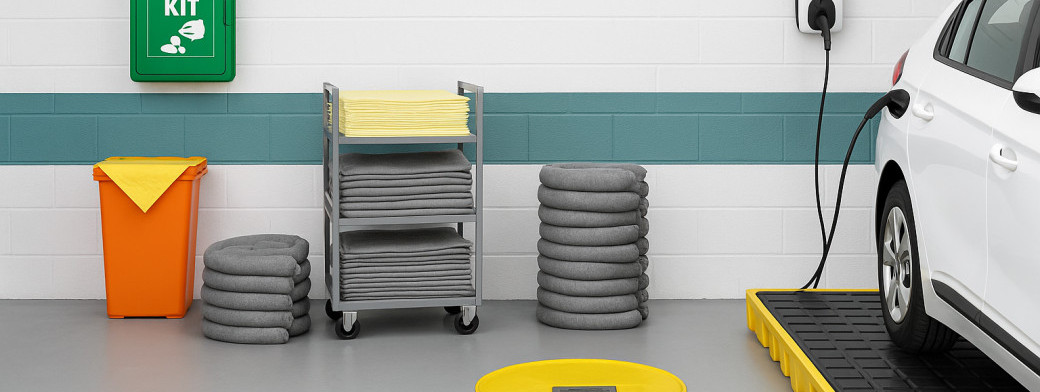
Service work may involve coolant, hydraulic oil, lubricants and washer fluids. For an identified small leak from support equipment, compatible absorbents, oil-only absorbents or drip trays may be appropriate after electrical hazards are controlled. That does not apply automatically to a battery pack showing damage or abnormal heating.
EV batteries contain high-energy electrical systems and can release toxic or flammable gases during failure. Follow the manufacturer’s isolation and handling instructions. If there are signs of a developing battery incident, stop work, restrict access and activate the organisation’s specialist emergency and fire-service arrangements.
Quarantine and storage need competent planning
Assess incoming damaged vehicles and battery packs before moving them. Establish quarantine locations, separation distances, monitoring and escalation procedures appropriate to the hazard. Do not place damaged packs with ordinary workshop waste or return them to the usual returns stock.
A leaking electrolyte may require specialist assessment and suitable containment, but approaching a suspect pack solely to apply chemical absorbents could be dangerous. Trained personnel must consider ignition risk, electrical isolation and vapour exposure first.
Practical checks
- Train staff to identify swelling, heat, venting, impact damage and leakage.
- Separate battery quarantine from ordinary liquid spill stations.
- Keep documented manufacturer emergency contacts and recovery procedures.
- Prevent contaminated run-off reaching surface drains where safe.
- Arrange authorised transport and disposal of damaged batteries.
See the Environment Agency’s waste-battery acceptance and tracking measures for the relevant permitted facilities in England. Site-specific fire and EV manufacturer procedures remain essential.