
Last reviewed: 13 November 2026
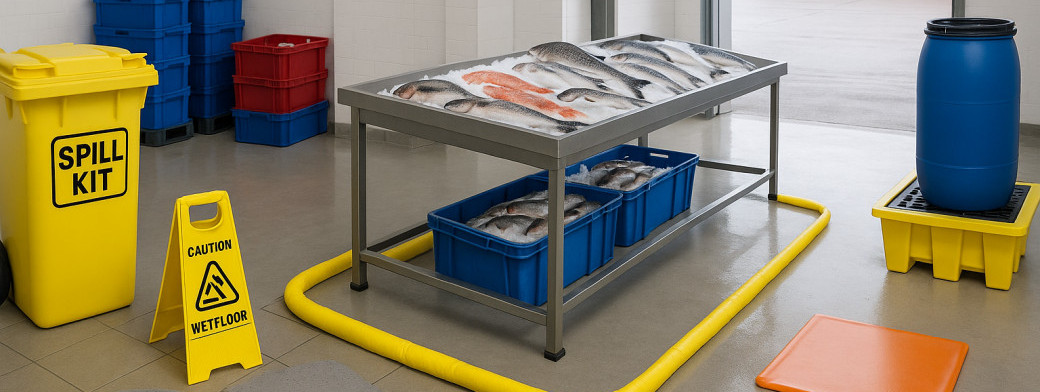
Wet fish markets and seafood-processing rooms have an unusually persistent slip problem. Meltwater, fish oils, blood and rinse water can collect under benches or migrate into pedestrian lanes. These are primarily hygiene and workplace risks, but the disposal route also matters: organic residues should not be washed indiscriminately into surface-water drains.
Prevent liquid building up under workstations
Inspect chillers, ice bins, unloading points, fish counters and processing tables. Use suitably designed drainage, removable catchment and a cleaning schedule matched to production. Floors must provide adequate slip resistance under wet conditions; absorbent materials alone will not solve poor drainage or unsuitable floor finishes.
Keep waste containers closed and replace damaged tubs before their contents leak onto routes used by staff and visitors. Maintain separation between clean handling areas and contaminated equipment.
Respond without compromising food hygiene
Isolate the affected section and use the approved wash-down and sanitation process. Certain absorbents may be appropriate in non-food-contact maintenance areas, but general industrial pads should not automatically be introduced into hygienic processing zones. Check material shedding, contamination risk and the site’s food-safety requirements.
A cleaner must not assume that a visually dry floor is sanitised. Follow the appropriate cleaning, disinfecting and verification procedure, keeping raw material and chemical cleaning residues separate.
Build response into the shift
- Check ice-melt and drainage routes before opening.
- Keep barriers and suitable cleaning tools readily available.
- Investigate repeat leaks from refrigeration equipment.
- Label and route contaminated material for proper disposal.
- Provide training on slips and product-specific cleaning agents.
HSE HSE slips and trips guidance and HSE COSHH guidance are useful reference points. Where fish waste or dirty water leaves the premises, confirm the authorised disposal or trade-effluent arrangement.
