
Last reviewed: 13 November 2026
A busy hotel, restaurant or commercial kitchen deals with cooking oil, sauces, drinks, detergents and wastewater throughout the day. Speed matters, but so does choosing the correct response: a kitchen oil spill, a guest’s dropped drink and a leaking cleaning-chemical container should not be handled identically.
Separate public areas from food preparation
In a lobby or dining room, stop people walking through a spill, provide a safe alternative route and clean the floor thoroughly before reopening. In kitchens, control contamination of food, utensils and work surfaces as well as slips. Follow the food business’s cleaning and food-safety procedures.
Cooking oils and grease can leave slippery films that remain after a quick wipe. General absorbents and absorbent socks can help with suitable spills, but cleaning must remove residual grease. For slow, predictable leaks beneath containers or dispensing points, drip trays are often more effective than repeatedly cleaning the floor.
Cleaning chemicals need a different approach
Concentrated sanitisers, descalers and degreasers require a COSHH assessment. Never mix bleach with acids or ammonia-containing products. If an unidentified or aggressive chemical escapes, restrict access and follow the safety data sheet and site procedure; ordinary pads may not be compatible.
Respond without disrupting the whole venue
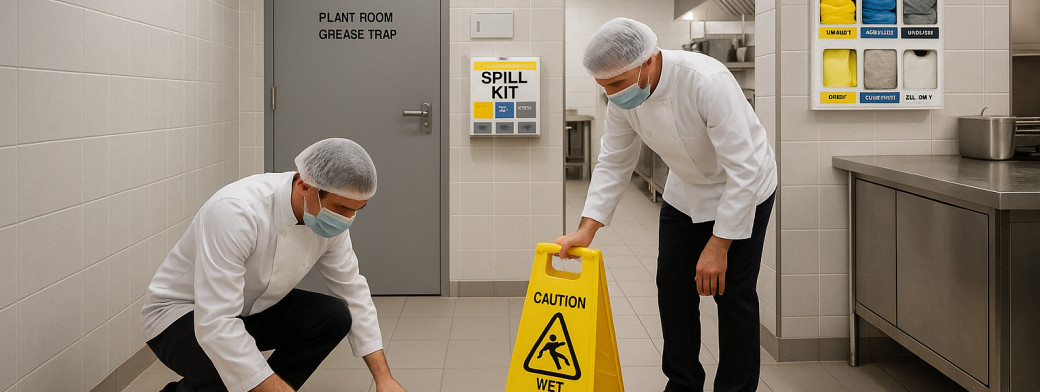
- Make the area safe first, including physical barriers where needed.
- Identify the liquid and stop the source if it is safe to do so.
- Use suitable equipment and PPE for an authorised, manageable clean-up.
- Remove residues, check the surface and reopen only when safe.
- Segregate used absorbents and inform the relevant manager of damage, exposure or near misses.
Bins, grease traps and outdoor drainage
Used cooking oil, grease-trap waste and contaminated cleaning water require controlled collection and appropriate disposal. Do not tip them into surface water drains. Suitable spill kits and drain covers may support trained staff in relevant back-of-house areas, but they are not substitutes for grease-management and drainage arrangements.
The HSE catering guidance and Food Standards Agency HACCP guidance provide useful context. The aim is a safe, hygienic site that can respond to predictable spills without improvisation.