
Last reviewed: 13 November 2026
Aircraft maintenance and airport operations bring together jet fuel, hydraulic fluids, lubricants, cleaning chemicals and de-icing products. A small hangar leak may be manageable with routine spill equipment; an apron fuel release or uncontrolled de-icing run-off may need a very different response.
Match the controls to the location
Inspect fuelling points, aircraft servicing bays, ground-support equipment, hydraulic connections and chemical storage. Around fuel handling, establish exclusion zones, ignition controls and emergency arrangements under the site’s procedures. The HSE DSEAR guidance is relevant to work involving flammable substances.
In hangar maintenance areas, oil-only absorbents may suit oil and fuel traces, while general purpose absorbents may suit specified water-based liquids. A product labelled “universal” should not be relied on for an unidentified chemical.
De-icing fluid is not ordinary oily run-off
Glycol-based de-icers can enter drainage networks in substantial volumes. When released to receiving waters, glycol degradation may exert a high oxygen demand. Conventional oil-water separators do not remove dissolved glycol; airport operating procedures may require dedicated collection, storage and treatment systems.
Use portable absorbents only for small, suitable releases within the agreed response scope. Staff should not improvise chemical neutralisation or wash spilled material into drainage systems. See the CAA safety management information and locally applicable permit conditions.
Prepare equipment and people
- Identify spill scenarios separately for fuel, hydraulic oil, de-icer and cleaning chemicals.
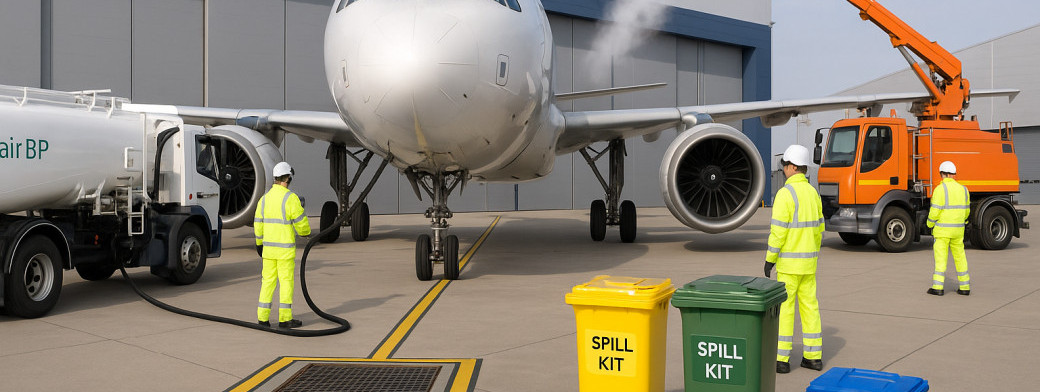
- Place compatible spill kits close to routine servicing areas without obstructing escape routes.
- Keep drain covers available where trained staff can use them without creating a greater hazard.
- Train contractors as well as airport employees in the relevant notification and stop-work arrangements.
- Record incidents and replenish equipment before the next shift.
Waste and incident reporting
Recover free liquid where safely practicable. Classify used absorbents and other waste by the substances they contain, and report any environmental release in accordance with the aerodrome’s procedures and applicable law. The official hazardous waste guidance provides useful direction for England.
Good aviation spill management starts with selecting the correct response for the specific fluid, task and airside environment.