
Last reviewed: 13 November 2026
A few millilitres of the wrong liquid can disrupt electronics production. Solvents, flux removers, etchants, adhesives, plating solutions and cooling fluids introduce different risks, while sensitive components may also be vulnerable to contamination from the clean-up materials themselves.
Distinguish production chemistry from ordinary leaks
An aqueous rinse, a solvent spill and an etching chemical require different responses. Start with the process chemical inventory and safety data sheets. Isolate the area and alert trained personnel when the substance is uncertain, highly corrosive, toxic, reactive or volatile. Appropriate ventilation and ignition controls may be essential for solvent releases.
Never assume an absorbent is suitable for acids, oxidisers or aggressive solvents on the strength of its colour. Confirm compatibility and avoid improvised neutralisation. In clean or electrostatic discharge-sensitive areas, only use materials approved under the site's contamination and ESD controls.
Prevent movement between work cells
Likely spill sources include wet-process tanks, chemical delivery points, dosing equipment, printers, maintenance stations and stored liquids. Keep transfer routes separate where practical, inspect fittings and use compatible drip trays where minor drips are foreseeable.
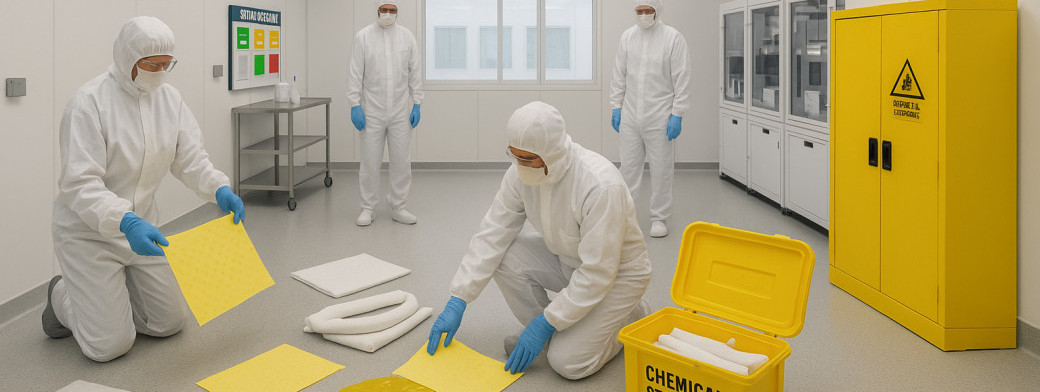
Outside controlled production areas, selected chemical absorbents and chemical spill kits can help trained responders contain minor assessed releases. Spill materials must not obstruct escape routes, drain access or critical machine isolators.
Waste and restart decisions
A completed clean-up needs more than a dry floor. Check whether assemblies, tooling, ventilation systems or process baths were affected. Site engineering and quality teams should agree any inspection or recleaning before restart.
Separate incompatible residues and collect used absorbents using the correct waste classification and packaging. Follow authorised waste arrangements; do not wash chemicals into drains or mix unknown residues together.
Practical next steps
Place compatible containment near known transfer and maintenance points, but keep high-hazard releases within the site emergency procedure. An appropriately stocked kit is support equipment, not permission for untrained intervention.