
Last reviewed: 13 November 2026
A DIY retailer may receive paint, oil, cleaning liquids, adhesives and garden chemicals on the same delivery vehicle. A leaking carton in the stockroom can contaminate unrelated products or spread along a busy replenishment aisle. The most effective response is to identify the product before anyone tries to mop it up.
Catch package damage at goods-in
Train goods-in staff to look for damp cardboard, cracked lids, bulging containers, damaged closures and staining beneath pallets. Put suspicious deliveries on hold in a safe designated area; do not break the wrapping or move a leaking load through the store without a controlled plan. Keep the product label and stock records available to those assessing the hazard.
Match the equipment to the stock
An identified motor-oil leak may be manageable with oil-only absorbents, but paint thinners, bleach, pool chemicals and garden products can need very different precautions. Check the safety data sheet before using chemical absorbents. Incompatible substances must be segregated, including in any secondary containment or drip trays.
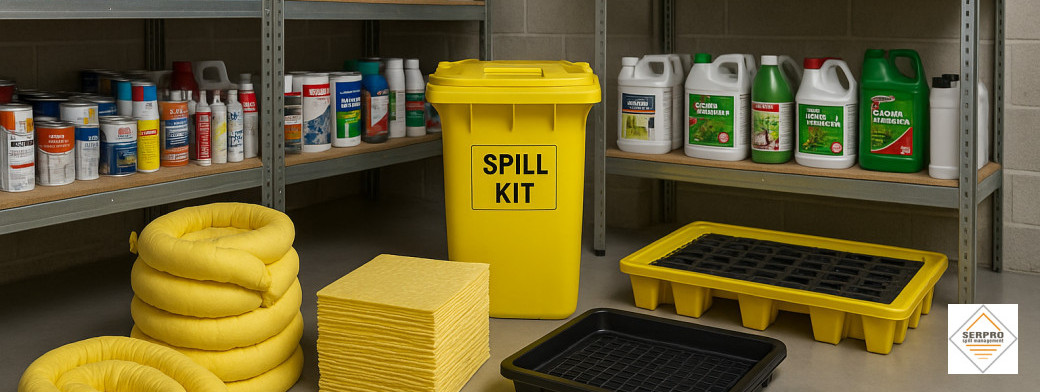
Place appropriately stocked spill kits where competent staff can reach them quickly, without putting the kit inside a hazardous storage location. Keep escape routes and pallet-truck routes clear. HSE COSHH guidance and slips guidance are useful for training and risk assessment.
Protect the shop as well as the stockroom
Prevent members of the public entering the affected area; isolate ignition risks if flammable liquids are involved. Stop any release threatening drains or neighbouring stock only where safe and authorised. Unknown mixtures, significant fumes or uncontrolled reactions require emergency escalation rather than routine cleaning.
Record the damaged product, disposal route and supplier claim. Replenish response supplies and inspect adjoining packaging before returning the area to normal use.
