
Published: 3 September 2026
Last updated: 26 August 2026
Why Do DIY Stockrooms Need Spill Management?
DIY stockrooms need spill management because they store and handle mixed retail goods that can leak, split or be dropped, including paints, adhesives, oils, cleaners and garden chemicals. In practice, a DIY stockroom is the back-of-store storage and handling area where tins, tubs, bottles and cartons are received, stacked, moved and prepared for replenishment. These areas need clear spill controls because even a small leak can create slip hazards, expose staff to hazardous substances, damage stock and allow liquids to reach drains. Suitable controls usually include absorbent pads, absorbent rolls, drip trays, labelled spill kits, safe segregation of products and a simple response procedure aligned with UK health, safety and environmental guidance.
The importance is both practical and legal. Stockrooms are busy spaces with frequent lifting, trolley movement and temporary storage, so spills can spread quickly across walking routes and picking areas. Paints and adhesives may leave slippery residues, while some chemicals require stricter handling under COSHH. Good spill management helps reduce injuries, supports safer housekeeping, limits contamination and shows that the business has taken reasonable precautions in line with UK expectations on workplace safety and pollution prevention.
What kinds of spills are common in DIY stockrooms?
Common spills in DIY stores usually come from damaged packaging, loose lids, punctured containers or unstable stacking. Typical examples include emulsion and solvent-based paints, wood treatments, sealants, adhesives, white spirit, cleaning products, oils and garden chemicals such as feeds, weedkillers or pesticides. Some are mainly a slip risk; others may also present skin, inhalation or environmental hazards. Because stockrooms often hold different product types close together, the response should match the substance rather than assume every leak can be treated the same way.
Why does control matter for safety and compliance?
Uncontrolled leaks can cause falls, cross-contaminate stock, increase manual handling risks during clean-up and create avoidable staff exposure. The HSE highlights the need to control contamination on floors in retail settings to reduce slips and trips, including prompt clean-up and suitable housekeeping: HSE retail slips and trips guidance. Where substances are hazardous to health, employers must assess risks and put suitable controls in place under COSHH. Environmental duties also matter: if liquids escape to external areas or drains, businesses should follow pollution prevention principles set out by GOV.UK pollution prevention guidance.
For that reason, DIY stockrooms benefit from basic containment at storage points, quick-access absorbents near likely leak areas, and clear rules on when to isolate an area, protect drains, use PPE and separate waste for disposal. Spill management does not mean overcomplicating routine retail work; it means having proportionate controls ready before a leak turns into an injury, exposure incident or reportable environmental problem.
What Types of Liquids Are Commonly Found in DIY Stockrooms?
DIY stockrooms commonly hold a mixed range of liquids, and each brings its own spill risk. The most frequent examples are paints, solvents, adhesives and garden chemicals. In practice, these products can leak from dented tins, split bottles, loose caps or damaged outer packaging, creating slip hazards, contamination risks and, in some cases, exposure to harmful substances. Because stockrooms often store different product types close together, it is important to match the spill response to the liquid involved rather than treating every leak the same way.
Water-based and oil-based paints are common in decorating stock, but both can leave floors dangerously slippery and can spread quickly if a tin is punctured. Solvents such as white spirit, thinners and cleaners may present added concerns including strong vapours, skin contact risks and fire hazards, so they usually need a more controlled response using suitable chemical absorbents. Adhesives, sealants and resins can be messy rather than fast-flowing, but they still create trip risks, contaminate nearby stock and can be difficult to remove once spread under foot traffic.
Garden chemicals, including weed killers, pesticides and liquid feeds, deserve particular care because a spill may affect both staff safety and the environment. If these products escape into drains or external yard areas, the consequences can extend beyond the stockroom. Where oil-based products such as lubricants or maintenance fluids are also stored, dedicated oil-only absorbents may be more appropriate than general materials. Overall, the main hazards in DIY stockrooms are slips, accidental mixing of substances, exposure to hazardous ingredients and poor waste segregation after clean-up.
Where Do Spills Typically Occur in Stockrooms?
Spills in DIY store stockrooms most often occur in aisles, on storage shelves and around loading docks, because these are the points where products are moved, stacked, opened or transferred. Paint tins, adhesives, sealants, oils and garden chemicals are especially vulnerable to punctures, split lids, over-stacking and impact damage. Identifying these hotspots makes it easier to position absorbents, improve housekeeping and reduce slip, trip and contamination risks before a minor leak spreads.
In practice, the highest-risk areas are usually the busiest ones. Repeated handling, mixed stock, tight turning space for cages or pallet trucks, and delayed clean-up all increase the chance that a small leak becomes a wider floor hazard. The HSE’s guidance on slips and trips in retail is a useful reference when reviewing how contamination builds up in working stock areas.
Aisles
Aisles are a common spill location because goods are constantly being picked, moved and set down. Containers can be knocked from low pallets, clipped by handling equipment or damaged when staff try to move awkward loads too quickly. Narrow walkways also mean that even a small leak can create an immediate slip hazard. Keeping absorbent rolls close to aisle ends can help staff contain and cover a spill promptly while the area is isolated and cleaned.
Storage shelves
Storage shelves are another frequent source of leaks, particularly where tins, bottles and tubs are stacked too high, stored unevenly or placed with damaged packaging still in circulation. Slow drips from loose caps or crushed containers may go unnoticed until liquid reaches the floor. Risk can be reduced by checking shelf condition, separating incompatible products and inspecting for early signs of seepage during routine stock checks.
Loading docks
Loading docks present added risk because stock is being unloaded, repalletised and exposed to weather, uneven surfaces and vehicle movement. Drops, fork impacts and rushed handling can all lead to ruptured containers. If liquids could escape towards external drains, keeping drain covers nearby is a sensible precaution, in line with wider UK guidance on preventing pollution from business premises.
What Spill Management Supplies Should Be Kept Nearby?
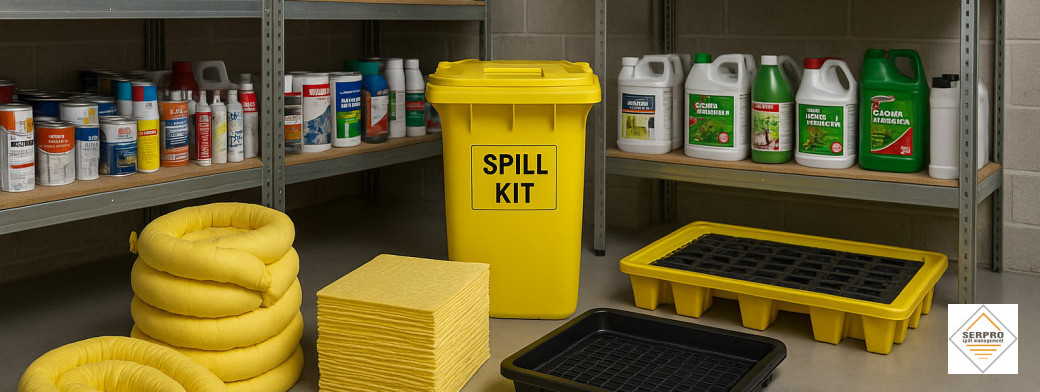
DIY store stockrooms should keep a small, clearly labelled set of spill response supplies close to likely leak points, not locked away in a distant cupboard. At minimum, that means absorbent pads, rolls, absorbent socks, small spill kits, drip trays, drain covers and suitable personal protective equipment such as gloves. The aim is to let staff contain a leak quickly, protect walkways, and stop liquids reaching drains or spreading under racking.
The exact mix should reflect what is stored in the area. General purpose absorbents may suit mixed retail stockrooms, while chemical absorbents may be more appropriate where cleaners, treatments or garden chemicals are handled. This practical approach supports safer housekeeping and aligns with wider UK expectations on slip prevention and substance control set out by HSE retail slip guidance and COSHH essentials.
Core items to keep within easy reach
- Absorbent pads for fast response to drips, splashes and small floor spills from tins, bottles and tubs.
- Absorbent rolls for covering wider contaminated areas, especially along walkways or in front of shelving.
- Absorbent socks to surround a spill, stop spread under pallets, and protect doorways or stockroom thresholds.
- Small spill kits for quick first response, ideally positioned near paint, adhesive and garden chemical storage zones.
- Drip trays beneath leak-prone containers or decanting points to catch slow releases before they reach the floor.
- Drain covers to block spills from entering surface water or foul drainage, supporting good pollution prevention practice.
- PPE such as gloves so staff can respond without direct skin contact with unknown or hazardous liquids.
- Disposal bags for used absorbents and contaminated clean-up materials; keep dedicated disposal bags with each spill station.
Keep these supplies together at visible spill stations, check them during routine inspections, and replace used items promptly. Clear labelling matters: staff should be able to identify the right absorbent type and PPE without hesitation when a leak is found.
Who Should Be Responsible for Spill Response?
Spill response should never be left to chance. In a DIY store stockroom, responsibility is usually shared between designated spill response team members, supervisors and the wider staff team, with each person knowing exactly what to do when a leak or spill is found. A clear structure helps stores contain hazards quickly, protect staff and customers from slips, and reduce the risk of uncontrolled releases from products such as paint, adhesives, oils and garden chemicals.
In practice, the first person to spot a spill should make the area safe, warn nearby colleagues and report it immediately, but only trained staff should lead the clean-up where there is any uncertainty about the substance or the level of risk. This approach supports sensible workplace controls under COSHH guidance and fits with wider HSE advice on slips and trips in retail.
Designated spill response team members should be identified on each shift, especially in stockrooms handling mixed liquids. These team members may include duty managers, warehouse supervisors or other trained employees who know where spill kits, absorbent pads, socks, drain covers, gloves and disposal bags are kept, and when an area needs to be isolated rather than cleaned immediately. They should also understand when a spill is beyond in-house capability and requires escalation.
Training matters for more than the response team alone. All staff should receive basic instruction on spotting leaks, protecting themselves, preventing people from walking through contamination and reporting incidents without delay. Those expected to deploy absorbents or handle waste need more detailed, role-specific training, supported by refresher sessions and practical drills. For structured learning, stores can use spill response training to build confidence and consistency.
Clear communication is equally important during a spill incident. Staff should know who to call, what information to give, and how to alert others if access routes, stock or drains may be affected. Simple reporting lines, visible signage and clear spill station labelling help avoid confusion at the point when quick decisions matter most.
How Should Spill Waste Be Separated and Disposed Of?
Spill waste in a DIY store stockroom should be separated according to what has been spilled and what the absorbent has come into contact with. In simple terms, waste from water-based, low-risk leaks may be non-hazardous, while absorbents, gloves, packaging or debris contaminated with paints, solvents, oils, pesticides, weed killers, adhesives or other chemicals may need to be treated as hazardous waste. The key point is that the absorbent usually takes on the classification of the spilled substance, so disposal decisions should be based on the product involved rather than on the pad, sock or roll alone.
Staff should bag and label used absorbents promptly, keep incompatible wastes apart, and store filled disposal bags or containers in a secure area until collection. This helps reduce cross-contamination, protects staff handling the waste, and supports compliance with UK waste rules and site procedures under COSHH guidance. If there is any doubt about the substance, treat the waste cautiously, check the safety data sheet, and escalate to a supervisor or waste contractor before disposal.
Separate hazardous and non-hazardous waste
Non-hazardous spill waste may include absorbents used on clean water or other clearly non-dangerous liquids, provided they have not mixed with chemicals. Hazardous spill waste can include materials contaminated by solvent-based paint, wood treatment, fuel, lubricants, strong cleaners, resins, sealants, garden chemicals or unknown liquids. Different waste streams should never be mixed, as this can increase disposal costs and create avoidable risk.
Use the right disposal route
Place contaminated absorbents, PPE and clean-up debris into suitable sealed bags or lidded containers, then arrange disposal through an authorised waste service. Hazardous materials should go through a specialist route, with records kept where required. For a practical overview, see hazardous waste management. Stores should also follow local authority and contractor requirements, and ensure waste is handled in line with wider UK pollution prevention guidance for businesses.
How Can Regular Inspections Improve Spill Management?
Regular inspections improve spill management by making sure a DIY store stockroom stays ready for leaks before they become slip hazards, contamination risks or stock losses. In practice, routine checks confirm that absorbents are in the right places, spill kits are complete, drip trays are intact, drain protection is available and staff can reach the correct equipment quickly. They also help spot early warning signs such as damaged packaging, overstacked shelves, staining, blocked access routes or poor segregation of paints, adhesives and garden chemicals.
For DIY retailers, inspections should be treated as a practical prevention tool rather than a paperwork exercise. A short, consistent inspection routine supports safer housekeeping, quicker spill response and better control of hazardous substances. It also provides a clear record of what was checked, what defects were found and when corrective action was completed, which is useful alongside wider workplace safety arrangements and COSHH controls.
What should a spill management inspection checklist include?
A simple checklist helps stockroom teams inspect the same key points each time. It should cover both the condition of the area and the readiness of spill-control equipment. For example:
- Spill kits are present, clearly labelled and easy to access.
- Absorbent pads, rolls and socks are stocked in suitable quantities for likely spills.
- General purpose, oil-only or chemical absorbents are matched to the liquids stored nearby.
- Drip trays under vulnerable stock or decanting points are clean and undamaged.
- Drain covers, disposal bags and gloves are available where needed.
- Shelving is stable, stock is not overhanging, and heavier containers are stored safely.
- Damaged tins, bottles, tubs or lids are identified and removed promptly.
- Floors are clean, dry and free from residue, staining or trip hazards.
- Emergency access routes and spill stations are not blocked.
- Staff know who to report leaks to and when an area should be isolated.
A more detailed template can be built around a spill management checklist so checks remain consistent across shifts or sites.
How often should inspections be carried out and documented?
Frequency should reflect the stockroom’s risk level. In many DIY stores, a quick visual check each day, a fuller weekly inspection and an additional check after deliveries, breakages or layout changes is a sensible approach. Higher-risk areas storing chemicals or leak-prone containers may need more frequent review.
Each inspection should be documented with the date, location, name of the person checking, issues found and actions taken. Records do not need to be complicated, but they should show follow-up, such as replacing used absorbents, clearing blocked spill stations or removing damaged stock. This creates accountability, helps managers spot recurring problems and supports a more reliable spill response over time.
What Are the Best Practices for Spill Management in DIY Stockrooms?
The best spill management practices in DIY stockrooms combine preparation, fast response and clear communication. Staff should be trained to recognise different spill types, isolate the area quickly, choose the right absorbents for the liquid involved and dispose of waste safely. A proactive approach matters because stockrooms often hold paint, adhesives, oils, cleaning products and garden chemicals, all of which can create slip risks, contamination issues or exposure concerns if handled poorly.
In practice, this means keeping suitable spill equipment close to likely risk points, checking storage areas routinely and making sure everyone knows who responds and how. Good housekeeping supports this approach, but it should be backed by controls aligned with HSE guidance on slips and trips in retail, wider workplace slip prevention advice and, where hazardous substances are involved, the principles set out under COSHH essentials.
Core spill management best practices
- Train staff regularly: cover how to spot leaks early, assess whether a spill is minor or needs escalation, use PPE, select general purpose, oil-only or chemical absorbents as appropriate, and report incidents accurately.
- Place equipment where spills are most likely: keep small spill kits, absorbent pads, absorbent rolls, absorbent socks, gloves, disposal bags and drain protection near paint storage, chemical shelving, goods-in areas and decanting points.
- Use clear communication: label spill stations clearly, display response steps, and make sure staff know when to stop access, call a supervisor or isolate an area.
- Adopt a proactive routine: inspect containers, shelving and drip trays, separate incompatible products, and deal with damaged packaging before it becomes a floor-level incident.
- Manage waste correctly: used absorbents may need separating according to the substance absorbed, especially where oils, solvents or garden chemicals are involved.
A proactive system is usually more effective than relying on emergency clean-up alone. Routine inspections, sensible stock segregation and visible spill stations help reduce both incident frequency and response time. Where there is a risk of liquids reaching drains or the external environment, stockrooms should also consider the wider pollution prevention principles outlined by GOV.UK guidance for businesses.