
Last reviewed: 13 November 2026
Remote water-treatment kiosks often leave little room between chemical drums, dosing pumps and electrical controls. A small leak can spread quickly through the enclosure, while lone working or delayed access may make the response harder. Prevention, remote alarms and a clear withdrawal procedure matter as much as the spill kit stored on site.
Look first at dosing lines and containment
Inspect transfer hoses, pump heads, non-return valves, couplings, level indicators and secondary containment. Separate incompatible products, particularly acids and sodium-hypochlorite solutions, with dedicated compatible bunding. Check chemical identity and containment capacity before relying on a drip tray. Electrical equipment should be protected from liquid migration by the site’s engineering design.
Know what should trigger an immediate withdrawal
Unidentified substances, strong chemical odours, suspected gas release, significant reaction or a major loss of containment require the emergency response arrangements. Incompatible dosing chemicals can create toxic gases; staff must not approach to investigate an unsafe atmosphere. Lone-worker systems should specify who receives an alarm and how help is summoned.
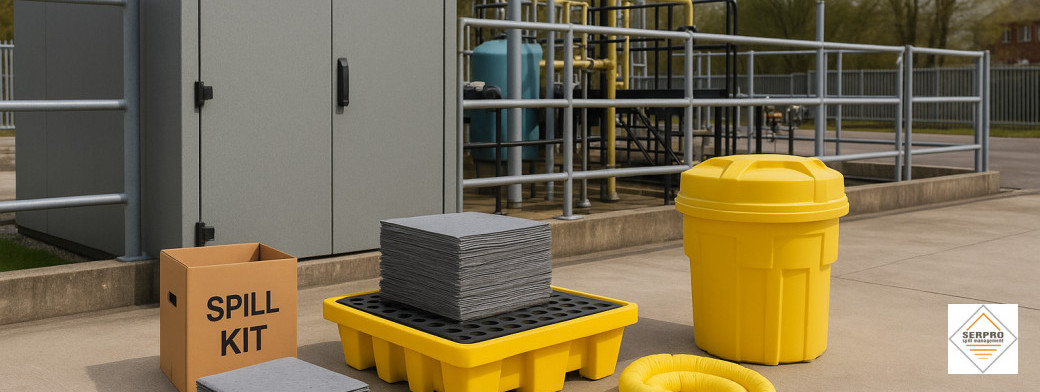
Where a small identified liquid release is within the competence of trained workers, suitable chemical absorbents may be considered after reviewing the safety data sheet. Do not use ordinary oil-only pads for an aqueous chemical just because both are supplied in a spill kit. HSE COSHH guidance addresses exposure assessment and safe controls.
Close the loop after repairs
Recheck fittings, alarms, bund condition, enclosure access and any drainage route before recommissioning. Dispose of residues using the approved waste classification and record even a minor dosing-line failure. Repeated leaks at the same connector often indicate a maintenance or design problem rather than a shortage of absorbents.
