
Last reviewed: 13 November 2026
Karting venues have concentrated fuel and maintenance activity around pit lanes, garages and paddocks. Small engines, chain lubricants, brake cleaners and occasional coolant or cleaning liquids can leave slippery surfaces. A well-managed venue protects staff, competitors and visitors while keeping fire safety and track operations paramount.
Assess the pits and workshop separately
Inspect the route from fuel stores to service benches and identify drains, spectator access and emergency exits. Provide stable storage for oils and cleaners and check the condition of containers at opening. Refuelling should follow the circuit’s rules, with suitable fire controls and no loose absorbent material near hot engines.
Use equipment matched to the release
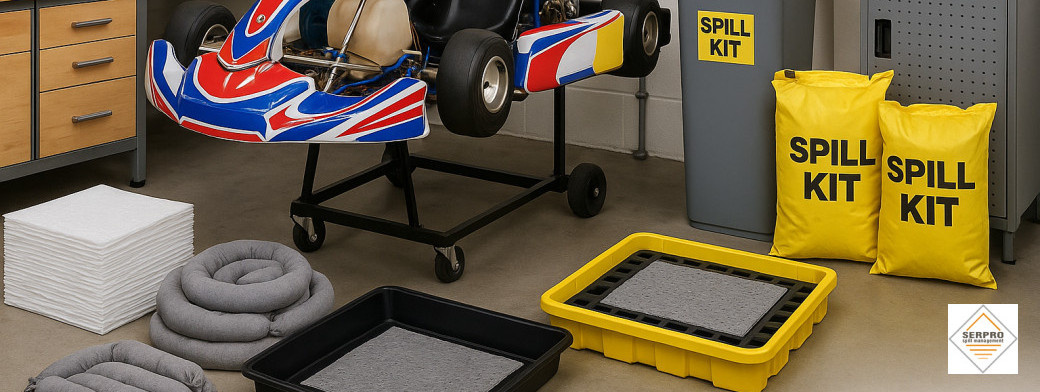
For a small controlled oil drip, oil-only absorbents and drip trays can help stop migration across a garage floor. General absorbents or a compatible chemical product may be needed for other liquids. Place accessible spill kits supplies with staff trained to identify the substance, isolate the source if safe, and protect other users of the venue.
A petrol release is not routine housekeeping: vapour and ignition risks require the circuit emergency procedure. Evacuate or restrict the area as appropriate and let authorised personnel manage significant incidents. The HSE event emergency planning guidance offers a framework for assigning emergency responsibilities at venues.
Keep trackside response disciplined
- Inspect engines and fuel lines before sessions.
- Keep paddock walking routes free of oil residue and loose materials.
- Identify who can suspend activity and summon fire cover.
- Collect waste oil and contaminated absorbents separately.
- Check spill kits after events and restock missing materials.
The HSE slips and trips guidance supports everyday housekeeping, while HSE COSHH guidance helps where chemical cleaners and workshop substances create exposure risks. Good prevention is usually faster, safer and less disruptive than emergency clean-up.