
Last reviewed: 13 November 2026
A marina workshop operates very close to a sensitive receiving environment. Work on engines, stern drives and onboard systems can release diesel, lubricating oil, antifreeze, degreaser or paint products. Even a minor workshop leak becomes more serious if it travels down a slipway, into a yard gully or directly into the water.
Create a controlled maintenance position
Where possible, carry out fluid changes on a designated impermeable surface away from open drainage. Use suitable drip trays beneath engines and gearboxes, and transfer drained fluids to labelled, closed containers. Check hose ends and filters before moving boats or trailers back towards the water.
Fuel and lubricant handling should take account of weather, tidal movement and the difficulty of retrieving pollution once it has entered a marina basin. A floating boom or on-water response arrangement may be needed under the marina’s emergency plan; workshop pads alone are not an adequate strategy for an uncontrolled waterborne release.
Choose absorbents according to the liquid
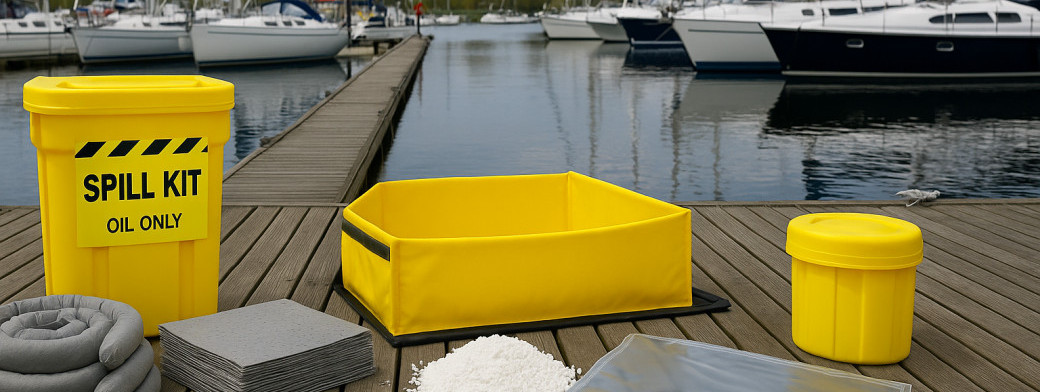
For manageable oil and diesel spills on a safe surface, oil-only absorbents and absorbent socks can help contain migration. Antifreeze, detergents and water-based fluids may need compatible general-purpose absorbents. Solvents and paint chemicals should be assessed individually before staff use chemical absorbents.
Protect nearby gullies with suitable drain covers as part of a planned response. Do not pour recovered fluid or wash-water into the basin, and never rely on dispersing a visible sheen as a clean-up method.
Make the handover between jobs reliable
- Check the boat and ground for leaks before and after maintenance.
- Inspect temporary hoses, funnels and fluid containers.
- Keep spill materials accessible during launching and recovery.
- Arrange collection of oily waste and used absorbents through an authorised route.
- Record any release that reaches water and follow incident-reporting arrangements.
For marinas in England, the Environment Agency guidance for businesses in England sets out general pollution-prevention principles. Local harbour or marina rules and the site contingency plan also matter.