
Last reviewed: 13 November 2026
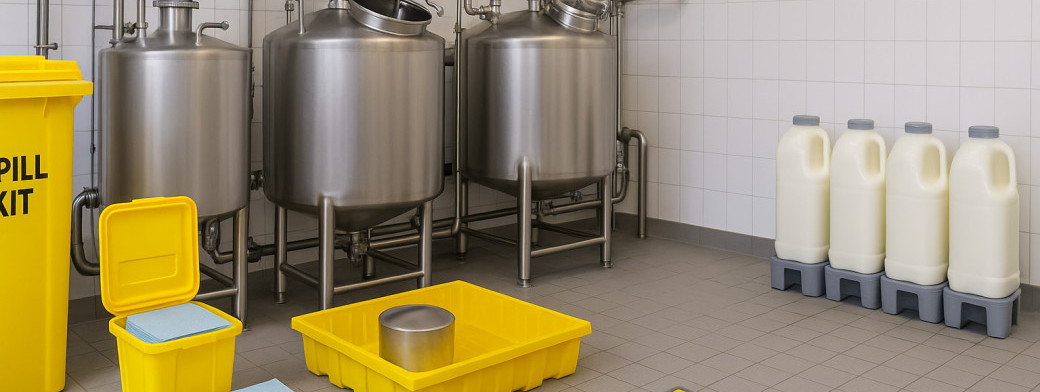
Milk and cream spills are familiar in dairies, but they are not harmless once they reach a drain. Fat deposits and organic loading can create slip risks, foul-water problems and environmental pollution. Meanwhile, clean-in-place systems use caustic and acidic chemicals that require a different and potentially more urgent response.
Control product losses at transfer points
Inspect tanker connections, pasteuriser pipework, valve clusters, filler heads and chilled storage. Install suitable catchment at routine sample and maintenance points. Keep cleaning drains and effluent systems operating to their designed capacity rather than allowing product to escape into surface water.
When a hose breaks, stop the transfer if safe and isolate the work area. Recover product using the site’s food-hygiene procedure. Ordinary absorbents can be useful only where its use is appropriate for the production zone; consider contamination and food-contact requirements before bringing industrial absorbents inside.
Treat CIP chemicals as separate hazards
Caustic soda solutions, nitric or phosphoric acids and sanitising products must not be mixed. Follow the safety data sheet, COSHH assessment and site isolation instructions. For a known small chemical release, trained staff may use compatible chemical absorbents where the manufacturer supports that use. Serious releases, unidentified contents or aggressive reactions require escalation.
Do not assume an oil-only mat will absorb an aqueous cleaning solution. Protect staff from splashes and check whether affected equipment or product requires quarantine.
Prevent the same leak recurring
- Review hose fittings and tanker procedures after incidents.
- Check the capacity and condition of drains and containment.
- Segregate food waste from chemical-contaminated absorbents.
- Maintain records of effluent and disposal arrangements.
- Restock the spill kits serving maintenance areas.
The Environment Agency pollution-prevention guidance for businesses in England specifically notes that milk can pollute water. Use HSE COSHH guidance for hazardous cleaning materials and follow your site’s food-safety controls.