
Last reviewed: 13 November 2026
Temporary construction compounds may only be in place for a few months, but they can still store diesel, hydraulic oil, paints and cleaning chemicals close to unprotected ground. Because the layout changes as work progresses, a spill plan that was suitable at the start of the project may quickly become outdated.
Make temporary storage genuinely controlled
Identify mobile bowsers, generators, fuel cans, lubricants, welfare servicing and vehicle maintenance areas. Put containers on stable ground with suitable secondary containment and protection from plant movements. Where oil-storage regulations apply, a portable drip trays under a small drip is not necessarily sufficient bund capacity.
Keep containers covered or protected where appropriate, check rainfall accumulation in bunds and inspect hoses before each transfer. Arrange deliveries so a tanker or bowser can operate without crossing pedestrian routes unnecessarily.
Plan for muddy ground, rain and changing drains
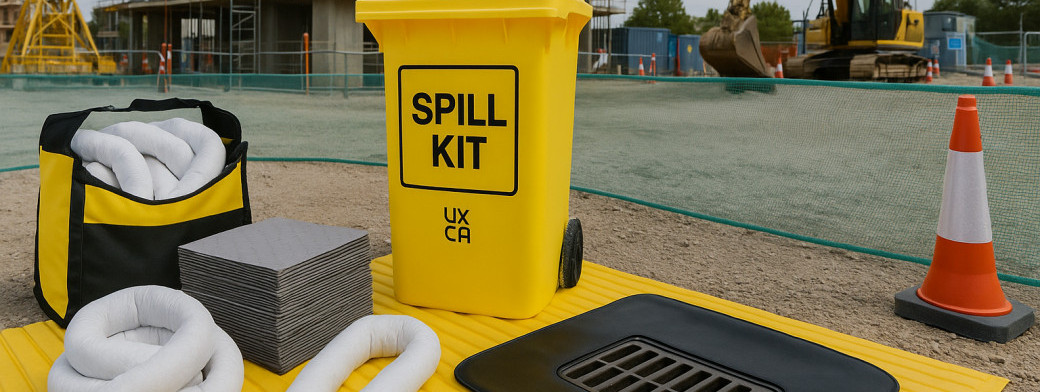
Temporary tracks and excavations can direct oil towards gullies and watercourses. Review drainage after heavy rain or changes in earthworks. drain covers and absorbent socks may help for small, manageable releases on suitable surfaces, but absorbents cannot reliably deal with fuel soaked deep into soil.
Use oil-only absorbents for identified small hydrocarbon spills and other compatible absorbents for known water-based liquids. If a release involves unknown chemicals, a significant fuel quantity or fire risk, stop work and escalate. Do not ask an operative to stand in contaminated ground to place pads.
Make responsibilities clear across contractors
- Keep spill kits close to refuelling and maintenance areas.
- Assign responsibility for daily checks and replenishment.
- Record spills and contaminated soil removal.
- Reassess storage whenever the compound moves.
- Confirm subcontractors know the site emergency contacts and drainage routes.
Refer to GOV.UK oil storage guidance and GOV.UK pollution prevention guidance for England for England-focused guidance and HSE COSHH guidance where substances present health hazards. Check the requirements of the relevant UK nation and site consents.