
Published: 21 June 2026
Last updated: 21 June 2026
Why Are Spill Stations Essential in Maintenance Bays?
Spill stations are clearly marked, easy-to-reach points in a workshop or maintenance bay that hold the basic equipment needed to control small leaks and spills as soon as they happen. In this setting, engineers commonly handle engine oil, hydraulic fluid, coolant, brake fluid, fuel, cutting fluids, detergents and other workshop liquids that can quickly create slip risks, contaminate drains and interrupt work. A well-placed spill station typically includes absorbent pads, absorbent socks, disposal bags, gloves and simple signage, with larger incidents supported by nearby spill kits. In the UK, this matters not only for housekeeping but also for safer floors, faster response and better pollution prevention in line with guidance from the HSE on slips and trips and GOV.UK pollution prevention guidance.
In direct terms, spill stations are essential because they put the right absorbents and containment items at the point of use, where most drips, overfills and hose leaks actually start. When staff can see the station immediately and reach it without leaving the bay, they are far more likely to deal with a spill before it spreads across walkways, under vehicles or towards drainage points. That visibility and accessibility can make the difference between a quick clean-up and a larger safety or environmental problem.
Why location matters as much as contents
Maintenance bays are busy areas with constant vehicle movement, tools, parts and foot traffic, so response time matters. If absorbents are hidden in a store room, locked in a cupboard or mixed in with unrelated supplies, valuable minutes are lost. A spill station should therefore be positioned in plain sight, labelled clearly and kept unobstructed, so anyone in the bay can act straight away. This supports better housekeeping, helps reduce downtime and reinforces a simple message: spills should be managed immediately, not reported and left.
Visible spill stations also help standardise response. Staff know where to find pads for surface spills, socks for stopping liquid spread, and bags for collecting used materials. That consistency is especially useful where different liquids are handled across the day, because the first priority is always the same: contain, absorb, protect drains and keep the floor safe.
What Types of Liquids Should Be Managed in a Maintenance Bay?
Maintenance bays should be prepared to manage the liquids most likely to escape during servicing, inspection and repair work: oils, coolants and cutting fluids first, along with other mixed workshop liquids that can create slip hazards or spread contamination. In practice, this means keeping the right absorbents close to the work area so small leaks can be contained quickly before they reach walkways, drains or stored materials.
Oils are one of the most common spill risks in a workshop. Engine oil, hydraulic oil, gearbox oil and lubricants can drip during routine maintenance, parts changes or hose failures. Because these spills are persistent and slippery, many bays keep dedicated oil absorbents nearby for fast response around vehicles, machinery and plant.
Coolants are another frequent issue. Radiator and process cooling systems can leak during draining, disconnection or component replacement, and coolant spills can spread quickly across smooth floors. Cutting fluids also need attention, especially in engineering and fabrication settings where machines use water-mixed or neat fluids for lubrication and temperature control. These spills can build up gradually around equipment, making housekeeping just as important as emergency response.
Many maintenance bays also deal with mixed, everyday liquids such as dirty water, light chemicals, degreasers and general workshop residues. For these broader spill risks, general purpose absorbents are often useful because they can handle a wider range of non-aggressive liquids during cleaning and maintenance tasks.
Whatever the source, the key point is that liquids in a maintenance bay are rarely limited to one product type. A visible, accessible spill station should reflect the actual fluids used on site, so engineers can respond quickly with the right pads, socks and disposal materials where spills are most likely to happen.
Where Do Spills Typically Occur in Maintenance Bays?
Spills in maintenance bays most often occur where liquids are used, transferred, stored or left to drip after servicing. In practice, that usually means near machinery, around workbenches, and inside or just outside storage areas. Oils, coolants, cutting fluids, fuels and cleaning chemicals can all escape in small amounts long before a major leak is noticed, which is why spill stations should be placed close to these risk points rather than hidden away in a store cupboard.
Strategic placement matters because the first few moments of a spill response are often the most important. Clearly visible, easy-to-reach stations stocked with absorbent pads, socks, disposal bags, gloves and signage help teams contain liquid quickly, reduce slip risks and stop contamination spreading across the bay. This practical approach also supports good housekeeping and aligns with wider UK guidance on floor safety and pollution prevention.
Near machinery and service equipment
Leaks commonly start near machinery, lifts, hydraulic systems, compressors and vehicles under inspection. Drips from hoses, seals and drain points can build up gradually, especially during servicing or parts changes. Positioning spill stations nearby, alongside suitable drip trays, makes it easier to catch minor leaks before they reach walkways or drains.
Workbenches and fluid handling points
Workbenches are another frequent source of spills because fluids are often decanted, measured or handled there. Small splashes from used oil, lubricants or cleaning products can spread quickly across smooth floors. Keeping absorbent pads and socks within arm’s reach supports faster containment and tidier housekeeping.
Storage areas, entrances and transfer routes
Storage areas for drums, containers and maintenance chemicals are high-risk zones, particularly where stock is moved or opened. Spills also occur along transfer routes between storage and the bay. A visible station linked to your wider spill management plan helps staff respond immediately, rather than losing time searching for supplies when a leak is already spreading.
What Essential Items Should Be Included in a Spill Station?
A workshop spill station should include the core items needed to control a small spill immediately at floor level: absorbent pads for fast pick-up, absorbent socks for surrounding and containing leaks, disposal bags for safe waste segregation, and clear signage so the station is easy to find and use without delay. In a maintenance bay, where oils, coolants, fuels and cutting fluids can quickly create slip risks and spread towards drains or walkways, these basics help staff respond quickly and keep contamination localised.
The most effective spill stations are simple, visible and positioned close to likely leak points rather than hidden away in a store room. That matters because a fast first response can reduce slip hazards, protect nearby drains and support better housekeeping, in line with HSE guidance on slips and trips and wider UK guidance on pollution prevention for businesses.
Core absorbents for first response
Absorbent pads are usually the first item reached for. They are useful for wiping up drips, laying over fresh spills and dealing with routine leaks from plant, vehicles or stored parts. The right grade will depend on the liquids handled in the bay, but pads should always be easy to grab in small quantities.
Absorbent socks are essential for stopping spread. They can be placed around the edge of a spill, along thresholds, beside machinery or in front of drains to contain liquids before they travel further. Keeping a ready supply of absorbent socks in the station makes containment much quicker.
Waste handling and clear identification
Disposal bags should be included so used absorbents can be separated and removed safely after clean-up. This helps keep contaminated materials contained and supports tidier waste handling procedures.
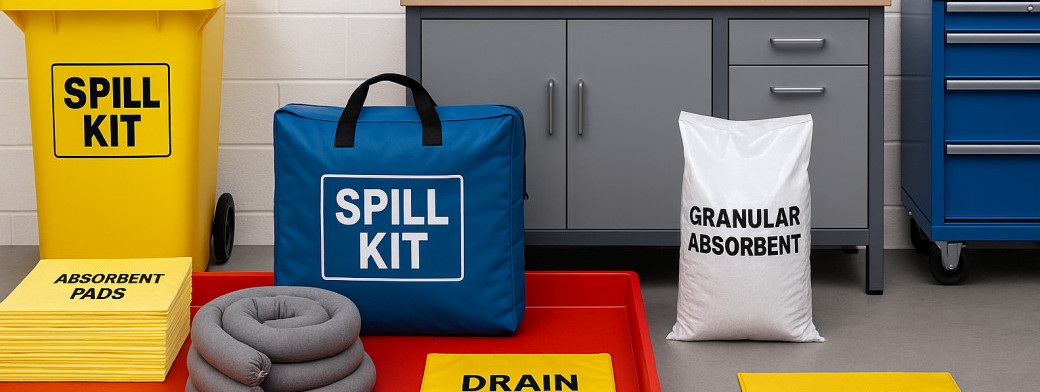
Signage is equally important. Clear labels, wall markers and simple instructions make the station visible at a glance and help staff identify the correct response point in an emergency. Many sites also keep compact spill kits alongside these loose items, provided the station remains accessible, clearly marked and routinely checked for restocking.
Who Should Be Responsible for Spill Management?
Spill management in a maintenance bay should be a shared responsibility, but with clear lead roles. Maintenance staff are usually the first to spot and deal with minor leaks or spills at the point of use, while safety officers should set procedures, check equipment, and make sure the response meets site rules and risk controls. In practice, the best approach is to assign immediate action to the people working in the bay and overall oversight to those responsible for health and safety.
Maintenance teams need to know what they can handle safely and when to escalate. That means they should be able to identify common workshop liquids such as oils, coolants, fuels and cleaning chemicals, choose the right absorbents, isolate the area, and use nearby spill stations without delay. Keeping supplies visible and accessible supports this quick response, especially where slips, contamination or drains are a concern. For practical guidance on response procedures, staff should be directed to a clear spill response process.
Safety officers, supervisors or site managers should take responsibility for planning and verification. This includes deciding where spill stations are positioned, checking that signage is easy to see, confirming that absorbent pads, socks, gloves and disposal bags are stocked, and reviewing whether waste is being separated correctly after use. They should also align spill arrangements with wider control measures under COSHH guidance where hazardous substances are involved.
Training requirements are essential. Staff should not be expected to improvise during a spill. Everyone working in or around the maintenance bay should receive basic instruction on reporting lines, first-response actions, safe clean-up limits and waste handling, with refresher sessions as processes or materials change. Structured safety training helps make responsibilities clear and keeps spill management consistent across shifts.
How Should Waste from Spills Be Handled and Separated?
Waste from spills should be separated by what was spilled, what was used to clean it up, and whether the resulting waste is hazardous. In a maintenance bay, that usually means categorising used absorbent pads, absorbent socks, granules, gloves and debris according to whether they contain oil, coolant, fuel, solvents or mixed workshop liquids. Clear waste categorisation helps prevent cross-contamination, supports safer handling, and makes disposal more straightforward.
As a rule, spill waste should be bagged or placed in suitable containers as soon as the area is made safe, then labelled so staff know whether it is oily waste, chemical-contaminated waste, general waste or recyclable packaging. If oil-only absorbents have been used on a clean oil leak, they should be kept separate from absorbents used on mixed fluids or chemicals. This is especially important where different disposal routes apply and where waste contractors need an accurate description of the material collected.
Waste categorisation in practice
Keep disposal bags, lidded bins and signage at the spill station so responders can separate waste immediately. Used absorbents contaminated with oils, fuels or chemicals should not be mixed with ordinary rubbish. Likewise, any recovered liquid from drip trays or temporary containment should be stored separately in appropriate, clearly marked containers. For broader site procedures, it helps to align spill response with your waste management arrangements.
Disposal methods and environmental considerations
Disposal should follow the nature of the waste, the product safety data, and your duty of care obligations. Hazardous or potentially polluting spill waste may need collection by a licensed waste contractor rather than disposal through general waste streams. Environmental protection matters as much as housekeeping: do not wash residues into drains, and use drain covers where needed to stop contaminated run-off entering surface water systems. UK guidance on pollution prevention for businesses is a useful reference when setting procedures for storage, segregation and disposal.
How Can Spill Stations Be Inspected and Maintained?
Spill stations should be inspected on a routine schedule and maintained so they remain visible, accessible and ready for immediate use. In most maintenance bays, a quick visual check each week and a more thorough monthly inspection is a practical baseline, with extra checks after any spill response or stock use. Regular inspection helps ensure absorbent pads, socks, disposal bags, gloves and signage are present, in good condition and suitable for the liquids handled on site.
Maintenance matters because a spill station that is empty, blocked or poorly labelled can delay response and allow oils, coolants or other fluids to spread across walkways or towards drains. Routine checks also support good housekeeping, safer floors and better control of contamination risks in line with wider UK workplace and pollution-prevention guidance.
What Should Be Included in a Spill Station Inspection?
- Confirm the station is clearly marked and easy to reach, not hidden behind tools, pallets or stored parts.
- Check stock levels of absorbent pads, absorbent socks, rolls, gloves and disposal bags.
- Make sure the correct absorbents are available, such as oil-only, general purpose or chemical absorbents where needed.
- Inspect packaging for damage, damp or contamination that could reduce performance.
- Verify any drain covers, drip trays or small spill kits assigned to the bay are present and clean.
- Review signage so staff can identify the station quickly and know what it is for.
- Record findings using suitable inspection tools or site check sheets.
Why Is Ongoing Maintenance Important?
Ongoing maintenance keeps spill response practical rather than theoretical. Replenishing used items promptly, replacing damaged stock and updating labels or instructions helps engineers act quickly when a leak starts. It also makes inspections more meaningful, as managers can spot recurring issues such as understocking, poor placement or repeated use in certain bays, allowing the spill station layout to be improved over time.
Why Is Visibility and Accessibility Crucial in Spill Management?
Visibility and accessibility are crucial because a spill station only works if staff can find it and use it immediately. In a maintenance bay, even a small leak of oil, coolant or cutting fluid can spread quickly, create slip risks and increase the chance of contamination reaching drains. Keeping spill response equipment in plain sight, close to the point of use, helps engineers act fast with the right materials rather than losing time searching in a store room or borrowing supplies from another area.
A visible station also supports better housekeeping and more consistent spill response. Clearly presented absorbent pads, socks, disposal bags, gloves and signage make it obvious what is available and how it should be used. This practical approach aligns with UK guidance on preventing slips and trips from contaminated floors and reducing pollution risks through prompt containment and clean-up.
Location strategies that support a faster response
Spill stations should be placed where leaks are most likely to start or spread, such as near vehicle lifts, fluid storage points, workbenches, drum handling areas and bay exits leading towards external drains. The aim is to keep equipment close enough for immediate use without blocking walkways or access routes. A compact, well-positioned station is usually more effective than storing all spill materials in one central cupboard. Where needed, teams can also support fixed stations with clearly organised spill station products tailored to the liquids handled in each bay.
Clear labelling reduces hesitation
Clear labelling matters because staff should be able to identify the station at a glance. Simple signs, consistent colour coding and marked contents help users distinguish between oil-only, general purpose and chemical absorbents. This reduces hesitation during clean-up and makes routine inspections easier.
Training for staff keeps stations usable
Staff training is just as important as the equipment itself. Everyone working in the bay should know where stations are located, when to use pads or socks, how to protect drains, and how to separate used absorbents for disposal. Short refresher checks help ensure stations stay stocked, visible and ready for use.