
Published: 1 August 2026
Last updated: 21 June 2026
Why is Spill Preparedness Essential in Temporary Roadworks?
Spill preparedness is essential in temporary roadworks because these short-term, mobile work areas often store and use liquid fuels, oils and chemicals in confined spaces close to live carriageways, drains, verges and watercourses. In this context, temporary roadworks means a time-limited compound or roadside work zone set up for maintenance, repairs, utilities, resurfacing or traffic management, often using fuel bowsers, generators, compressors, pumps and other small plant. Spill preparedness means planning, equipping and training for leaks or spills before they happen, using practical controls such as absorbents, drip trays, absorbent socks, pads, rolls, drain covers and clearly located spill kits. In the UK, this matters not only for housekeeping and safety, but also for pollution prevention and responsible site management in line with guidance from GOV.UK and the HSE.
For fuel bowsers and small plant equipment, the risk is straightforward: even a minor leak during refuelling, storage, transport or maintenance can spread quickly across hardstanding, create slip hazards, enter surface water drains and contaminate ground or nearby water. Common liquids include diesel, petrol, hydraulic oil, engine oil, lubricants, coolants and, on some sites, cleaning agents or other chemicals. Because roadworks compounds are temporary, layouts can change, lighting may be poor during night work, and equipment may be moved frequently, so spill control needs to be simple, visible and close to the point of use.
Preparedness reduces disruption as well as environmental risk. A bowser parked without secondary containment, a generator left over a drain, or a small plant item with a slow hydraulic leak can turn a manageable issue into a reportable incident if nobody has the right materials nearby. Keeping suitable absorbent pads for drips, rolls for walkways, socks for perimeter control, drip trays under standing equipment and drain protection for vulnerable gullies helps teams contain spills early and keep contamination away from drainage systems.
Just as importantly, spill preparedness supports safer day-to-day operations. It encourages routine checks, cleaner compounds, clearer responsibilities and better waste segregation after a spill. In short-term roadworks, where fuel handling and plant movements are frequent, being prepared is the practical way to protect people, prevent pollution and keep the job moving.
What Types of Liquids are Commonly Handled in Roadworks?
Temporary roadworks compounds commonly handle a mix of fuels, oils and site chemicals, and each presents different spill risks. In practice, the liquids most often found around fuel bowsers and small plant include diesel, petrol, hydraulic oil, engine oil, lubricants, coolants, screen wash, greases and occasional cleaning or treatment chemicals. Even a small release can create several problems at once: pollution of drains, soil or nearby watercourses, slip hazards for workers and pedestrians, fire risk in the case of flammable fuels, and reputational or legal issues for the contractor. UK pollution prevention guidance stresses the need to keep these materials controlled and away from surface water drains and sensitive ground.
For short-term roadworks, the main concern is not only the volume stored but the fact that liquids are handled in busy, changing conditions: refuelling at night, plant parked on uneven ground, temporary generators, and frequent vehicle movements. That is why sites typically need the right absorbents close to the point of use, such as oil absorbents for hydrocarbons and chemical absorbents where non-oil liquids may be involved, alongside practical controls set out in UK pollution prevention guidance.
Common liquids found on roadworks sites
- Fuels: diesel for bowsers, generators and plant; petrol for smaller equipment; gas oil where applicable.
- Oils and lubricants: hydraulic oil, engine oil, gear oil, greases and other maintenance fluids.
- Coolants and vehicle fluids: antifreeze, coolant mixtures, brake fluid and screen wash.
- Chemicals: cleaning products, line-marking materials, additives, admixtures or other specialist treatment liquids used for site tasks.
Hydrocarbon spills such as diesel and oil are especially common around refuelling points, hose connections, filler caps and parked plant. These can spread quickly across hardstanding, enter gullies and leave a persistent contamination problem. Chemical spills may be less frequent, but they can be more unpredictable, particularly if the substance is corrosive, harmful to skin, or unsuitable for standard oil-only absorbents.
Why these spills matter
The environmental impact can be disproportionate to the size of the spill. A small amount of fuel reaching a drain may travel into surface water systems, while oil on unmade ground can contaminate soil and require costly clean-up. Public safety is also a major concern: spilled liquids increase the risk of slips, trips and vehicle skids, and petrol or mixed fuels may introduce vapour and ignition hazards. In roadside settings, that risk extends beyond the workforce to passing traffic, pedestrians and nearby properties. Identifying which liquids are present is the first step in choosing suitable containment, absorbents and response procedures.
Where Do Spills Typically Occur in Roadwork Settings?
Spills in temporary roadworks compounds most often happen where fuel is transferred, plant is parked, or small equipment is checked between shifts. In practice, the highest-risk sources are usually fuel bowsers, generators and compressors, because these are handled frequently and may be moved, refuelled or inspected in uneven outdoor conditions. Even a small drip can spread quickly across hardstanding, create a slip hazard and, if it reaches surface water drainage, become a pollution incident. That is why likely spill points should be identified in advance and supported with suitable spill kits and drip trays close by.
The most common spill locations are not always the largest items of plant, but the routine touchpoints around them: hose connections, filler caps, taps, vents, couplings and temporary storage areas. In short-term compounds, repeated start-stop activity, night work, poor lighting and rushed end-of-shift tasks can all increase the chance of small releases being missed until they spread.
Common spill sources in the compound
Fuel bowsers are an obvious source, especially during refuelling, decanting and movement around site. Small plant equipment can also leak from hydraulic lines, engine bays or fuel systems after transport. Generators and compressors are regularly implicated because they are often left running for long periods, topped up on site and positioned close to work areas for convenience. Pumps, traffic management equipment and ancillary plant may also contribute smaller but frequent drips that build up over time.
High-risk areas to check first
Within a roadworks compound, the highest-risk areas are usually near drains, gullies and site edges where liquids can escape into the drainage network. Equipment storage lines are another priority, particularly where several items of plant are parked together and minor leaks are harder to spot. Refuelling points, maintenance corners, loading areas and any place where containers are temporarily set down should also be treated as likely spill zones.
Good housekeeping matters here as much as response equipment. Keeping absorbents and containment close to these hotspots helps reduce spread, while prompt clean-up also supports safer walking surfaces in line with HSE advice on slips and trips. In short, if an area combines liquid handling, parked plant and a route to drainage, it should be assumed to be spill-prone and planned for accordingly.
What Spill Control Measures Should Be in Place?
Roadworks compounds should have spill controls that match the liquids on site, the equipment being used and the risk of runoff reaching drains or verges. In practice, that means keeping the right absorbents close to fuel bowsers, generators, compressors and small plant, with clearly identified spill kits and fast access to drain covers. The aim is to stop a small leak becoming a slip hazard, a larger clean-up job or a pollution incident during refuelling, maintenance or overnight storage.
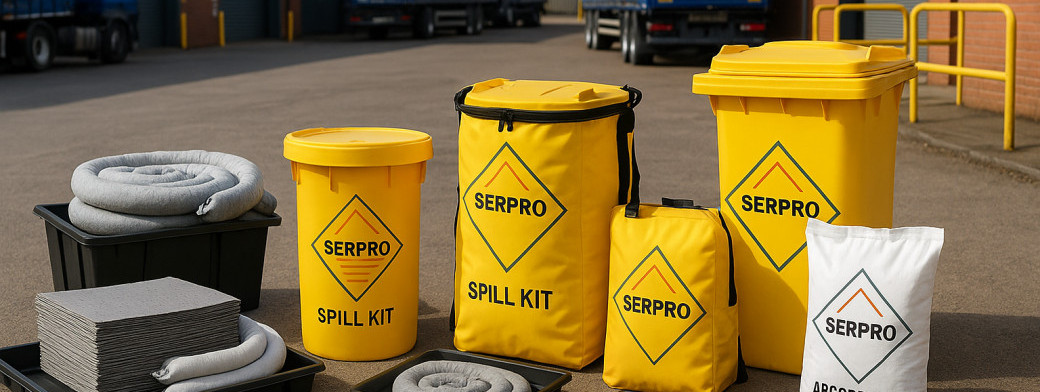
At minimum, sites should hold a mix of absorbent pads, rolls and socks. Pads are useful for wiping up drips, catching splashes and dealing with small spills around couplings or filler points. Rolls help protect work areas beneath plant or along frequently contaminated surfaces. Socks are important for surrounding a leak, protecting drain lines and forming a quick barrier around bowser parking areas or drip-prone equipment. Where fuels and oils are the main concern, oil-only absorbents are often appropriate; where mixed liquids may be present, a general purpose option may be more practical.
What should be kept ready to use?
Each spill response point should be easy to find, labelled and stocked with absorbents, disposal bags and gloves. Drain protection matters just as much as absorbency: if a spill could move towards gullies or channels, drain covers should be stored where they can be deployed immediately, not locked away in a separate vehicle. This reflects wider UK pollution prevention guidance on keeping oils and chemicals out of surface water drains and watercourses.
Where should spill equipment be placed?
Placement should follow the work, not just the compound entrance. Keep spill equipment beside fuel bowsers, near refuelling points, next to static plant, and in any area where night work or poor lighting could delay a response. If the site is spread out, smaller kits should travel with mobile teams rather than relying on one central store. Equipment should stay visible, unobstructed and close enough to reach within moments of a leak, with end-of-shift checks confirming stock levels, access and condition.
Who Should Be Responsible for Spill Response?
Responsibility for spill response in temporary roadworks should be shared, but it must also be clearly led. In practice, the site manager should own the spill plan, workers should carry out the immediate first actions safely, and emergency responders should be contacted when a spill is beyond the site team’s control or threatens drains, soil or nearby watercourses. Short-term compounds often involve fuel bowsers, generators, pumps and small plant, so confusion over “who does what” can waste valuable time.
The most effective approach is to assign roles before work starts. Everyone on site should know how to raise the alarm, where spill kits and drain protection are kept, and who has authority to stop fuelling, isolate equipment or call for outside help. This is especially important on night works or mobile operations, where reduced staffing, poor lighting and frequent movement of plant can make a small leak escalate quickly.
Site managers: planning, equipment and escalation
Site managers or supervisors should be responsible for setting the response procedure, checking that suitable absorbents, drip trays, disposal bags, gloves and drain covers are available, and making sure spill stations are clearly labelled. They should also build spill checks into inspections and end-of-shift routines, in line with wider UK pollution prevention guidance. If a spill reaches surface water drainage, leaves the compound, or cannot be contained safely with on-site resources, the manager should escalate immediately.
Workers: first response and safe containment
Operatives, drivers and plant users are usually the first to spot a leak from a bowser hose, coupling, filler point or parked machine. Their role is to stop work if safe to do so, prevent spread using absorbent socks, pads or rolls, protect nearby drains, and report the incident without delay. They should not improvise or handle unknown liquids without the right PPE and instructions. Good housekeeping also matters: prompt clean-up helps reduce slip risks as highlighted by the HSE.
Emergency responders: when the incident exceeds site control
Emergency services or specialist responders should be involved when there is fire risk, injury, a large release, or pollution affecting the wider environment. Their role is not to replace basic site preparedness, but to support incidents that exceed the compound’s trained capability.
Finally, roles only work if people practise them. Regular toolbox talks, briefings and realistic drills help teams respond faster and with less uncertainty. Formal spill response training can help managers and operatives understand containment priorities, safe waste handling and escalation decisions.
How Should Waste Be Managed After a Spill?
After a spill in a temporary roadworks compound, waste should be separated by type, contained securely and removed through an appropriate waste route. In practice, that means keeping contaminated absorbents, recovered liquids and any damaged packaging apart, labelling them clearly and storing them so they cannot leak into the ground or drains before collection. Good waste handling helps reduce further pollution, supports safer housekeeping and makes it easier to show that the spill was managed properly.
The main waste streams are usually contaminated absorbent pads, rolls, socks and granules; free liquids such as diesel, petrol, oil, coolant or hydraulic fluid; and disposable PPE such as gloves or wipes used during the clean-up. These materials should not be mixed casually, as disposal requirements may differ depending on what has been absorbed and whether the waste is hazardous. Keeping waste separated at the point of clean-up is usually the simplest and safest approach.
Separate spill waste by material and contamination
Use suitable bags, bins or overdrums for solid waste, and sealed containers for any recovered liquid. Oil-only absorbents used on fuel or oil spills should be bagged separately from general purpose or chemical absorbents used on mixed or unknown liquids. If a spill has reached soil, aggregate or other loose material, that contaminated material may also need to be lifted and contained as waste. Keep all waste away from surface water drains, and follow wider pollution prevention principles set out by GOV.UK.
Best practice for disposal
Do not put spill waste into general site skips unless you are certain it is suitable for that route. Store bagged absorbents in a secure area, protect containers from rain, and make sure lids remain closed. If there is any doubt about classification, treat the waste cautiously and seek advice from your waste contractor or internal environmental lead. A planned disposal route, supported by clear records and suitable storage, is far better than leaving used absorbents beside a bowser or plant item at the end of a shift.
For a structured approach to collection, segregation and onward handling, see SERPRO’s waste management guidance.
What Routine Inspections Should Be Conducted?
Routine inspections should be carried out at the start of the shift, during active refuelling or plant use, and again before the site is left unattended. In short-term roadworks compounds, regular checks help spot small leaks, damaged containers, missing absorbents and blocked access to spill response equipment before they turn into a larger pollution or slip hazard. For fuel bowsers and small plant, the aim is simple: confirm that containment is in place, spill kits are complete, drains are protected where needed, and any waste from previous clean-ups has been removed safely.
These inspections matter because temporary compounds change quickly. Equipment is moved, lighting conditions vary, and night work can make a minor drip easy to miss. A short, repeatable inspection routine supports good housekeeping, helps keep oils and fuels away from gullies and surface water, and reinforces the wider pollution prevention principles set out in GOV.UK guidance for businesses. It also helps reduce slip risks from contaminated ground, in line with HSE advice on slips and trips.
What should be checked during routine inspections?
Checks should cover both the equipment that may leak and the materials needed to respond. Inspect fuel bowsers, generators, pumps, compressors and small plant for wet patches, stained ground, loose caps, damaged hoses, overfilled drip trays and signs of seepage around valves or connections. Make sure any drip trays are positioned correctly, absorbent socks are still in place where used, and drain covers can be reached quickly if a spill starts moving.
Spill kits should also be checked for readiness rather than just presence. Confirm that pads, rolls or socks are dry and usable, disposal bags and gloves are available, and the kit has not been partly used and left incomplete. Clear labelling and easy access are important, especially on busy or low-light sites. A simple documented routine, such as a site-specific inspection checklist, makes it easier to prove checks are being done consistently.
End-of-shift inspection checklist
- Check fuel bowser taps, hoses, vents and caps for drips, damage or poor closure.
- Inspect plant parking areas for fresh staining, pooled liquid or saturated absorbents.
- Empty or replace full drip trays and reposition them under likely leak points.
- Confirm spill kits are stocked with suitable absorbents, gloves and disposal bags.
- Make sure drain covers are present, visible and not obstructed.
- Remove used absorbents and segregate waste for proper disposal.
- Verify spill stations remain clearly marked and accessible for the next shift.
- Record defects, replenishment needs and any spill response actions taken.