
Published: 6 September 2026
Last updated: 24 August 2026
Why is Spill Preparedness Essential in Commercial Laundries?
Spill preparedness in commercial laundries means having planned, practical measures to prevent, contain, clean and report liquid releases from routine laundry chemicals and equipment before they cause injury, contamination or disruption. In this setting, the main risks usually come from bulk detergent, alkalis, fabric softeners and dosing line leaks, all of which can create wet, slippery floors and expose staff to hazardous substances. Effective preparedness typically includes suitable containment such as drip trays, ready access to compatible absorbents such as absorbent pads, clear reporting procedures and alignment with UK health, safety and environmental duties.
This matters because commercial laundries handle large volumes of water-based chemicals in fast-moving production areas, where even a small leak can spread quickly under machines, into walkways or towards drains. A split container, loose coupling or cracked dosing tube can interrupt operations, increase slip risk and make housekeeping harder. Being prepared reduces downtime, supports safer working and helps businesses show they are managing chemical and floor safety risks in a structured way.
Common spill risks in laundry operations
Typical spills include bulk detergent releases from drums or containers, alkaline products used in wash processes, viscous fabric softeners that leave very slippery residues, and slow or sudden dosing line leaks around pumps, connections and chemical feed points. These incidents are often not dramatic, but repeated drips and minor overfills can be just as important because they create persistent contamination and can go unnoticed until someone slips or a larger failure occurs.
Why compliance is part of preparedness
Spill preparedness is also essential because commercial laundries must manage both worker exposure and floor safety under UK guidance. The HSE’s COSHH framework is relevant where detergents, alkalis and other laundry chemicals may be hazardous, while HSE guidance on slips and trips is directly relevant to wet floors and contaminated walking surfaces. In practice, this means assessing risks, using suitable controls, training staff, maintaining good housekeeping and making sure spills are contained and dealt with promptly rather than relying on ad hoc clean-up after an incident.
What Are the Common Spill Risks in Commercial Laundries?
Commercial laundries face recurring spill risks from bulk detergents, alkalis, fabric softeners and the dosing lines that move these liquids from storage to machines. In practice, most incidents are not dramatic tank failures but smaller leaks, drips, overfills and loose connections that spread quickly across smooth floors. These spills matter because they can create slip hazards for staff, damage surfaces, interfere with wash operations and, if allowed to reach drains, increase pollution risk under UK pollution prevention guidance.
The highest-risk liquids are usually water-based but still problematic. Bulk detergents can leave a slick residue that is hard to see once diluted. Alkalis used in some wash processes may be more aggressive, posing a greater risk to skin, eyes and nearby materials if a container splits or a dosing point fails. Fabric softeners are often thick and persistent, so even a modest leak can leave an extended slippery area that is difficult to clean without suitable absorbents and prompt reporting.
Where spills usually start
Spills in laundries commonly begin at transfer and storage points rather than inside the washer itself. Typical locations include bulk chemical drums, IBCs, pump stations, dosing cabinets, pipe joints, flexible hoses, quick-connect fittings and machine inlets. Leaks also appear beneath shelving where containers are handled, around decanting areas, and along wall-mounted dosing lines where vibration, wear or accidental knocks can loosen connections over time.
Another frequent problem is slow, repeated dripping. A small weep from a peristaltic pump tube or a poorly seated cap may not trigger an immediate response, but over a shift it can spread underfoot or track towards gullies. This is why laundries often keep small spill kits close to dosing areas and use general purpose absorbents for fast control of water-based liquid releases.
Why wet floors are a major safety issue
Wet floors are one of the most immediate consequences of detergent and softener leaks. Even where the chemical itself is not highly hazardous, the combination of smooth flooring, foot traffic, wheeled laundry cages and hurried movement between machines can make a minor spill dangerous very quickly. Detergent residues may reduce grip, while softeners can leave a greasy film that remains slippery after casual mopping.
For that reason, the spill risk in a commercial laundry is both chemical and physical. The liquid may irritate skin or damage equipment, but the wider operational danger is often slips, trips and contaminated walkways. Identifying likely leak points, protecting drains and keeping absorbent materials nearby helps contain these everyday risks before they spread across the work area.
How Can Spills Be Contained Effectively?
Spills in commercial laundries are contained most effectively by stopping the liquid from spreading, protecting drains, and using the right absorbents for water-based products such as detergents, fabric softeners and dosing chemicals. In practice, that means placing drip trays beneath drums, pumps and dosing points, using absorbent materials to catch leaks quickly, and keeping spill kits close to the areas where leaks are most likely to start. Fast containment helps reduce slip risks, limits disruption to washing operations, and supports safer housekeeping.
Because many laundry spills involve diluted or neat water-based liquids rather than oils, containment should be planned around products that can absorb aqueous solutions safely and efficiently. Staff should know where containment equipment is stored, who to alert, and how to isolate the source before the spill reaches walkways, floor joints or drainage channels. This aligns with wider UK good practice on controlling hazardous substances and preventing slips.
Use drip trays and secondary containment at likely leak points
The first step is to contain spills before they reach the floor. Drip trays placed under detergent drums, softener containers, dosing pumps and pipe connections can catch routine drips and small failures before they spread. This is especially useful around transfer points, line couplings and chemical storage shelves, where slow leaks may go unnoticed during a busy shift. Secondary containment should be sized for the containers and checked regularly so that it remains clean, stable and ready for use.
Choose absorbents suited to water-based laundry liquids
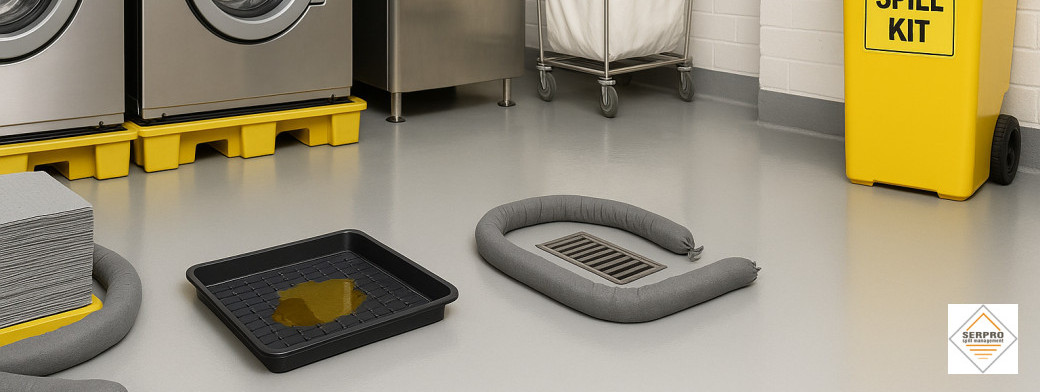
Once liquid escapes secondary containment, absorbents help control its movement and make clean-up safer. For most commercial laundry leaks, general purpose or chemical absorbents are more suitable than oil-only products, because detergents and softeners are usually water-based. Absorbent pads can be placed directly over a small spill, while absorbent rolls are useful for covering wider contaminated floor areas and reducing slip hazards along walkways. Absorbent socks can also be laid around the edge of a spill to stop it spreading towards doors, machinery bases or pedestrian routes.
Compatibility matters. Some laundry chemicals may be alkaline or otherwise irritating, so sites should check product safety data and make sure the chosen absorbents, gloves and disposal method are appropriate for the substance involved. The aim is not just to soak up liquid, but to do so without creating additional handling risks for the person responding.
Protect drains and keep spill kits close to the risk
If there is any chance of detergent or softener entering surface water drainage, drain protection should be part of the response. Keeping drain covers near loading bays, plant rooms or chemical storage areas can help stop spills from escaping the building or entering external drainage systems. This is particularly important where dosing lines run near gullies or washdown areas.
Every laundry handling bulk chemicals should also have spill kits readily available at the point of use, not locked away in a distant store. A practical kit may include absorbent pads, rolls, socks, gloves and disposal bags, with clear labelling so staff can identify it quickly. Easy access makes a major difference: the faster a leak is contained, the less chance it has to spread across floors, affect production, or create a slip hazard for operators moving linen trolleys and loads.
Who Should Respond to Spills and How?
Spill response in a commercial laundry should be role-based, immediate and clearly reported. In practice, all employees should know how to spot a detergent, softener or dosing line leak, make the area safe, and raise the alarm, while only trained staff should carry out the hands-on clean-up beyond very minor, low-risk spills. This approach helps reduce slip hazards, limits the spread of liquid to drains or walkways, and supports safer handling of cleaning chemicals under COSHH guidance from HSE.
A simple rule works well: the first person on the scene should protect people, not improvise a full clean-up. That means warning others, isolating the area if possible, stopping foot traffic, and notifying the designated responder or supervisor. Where safe to do so, they may use nearby controls such as closing a valve, uprighting a small container, or placing absorbent materials to slow the spread, but they should not handle an unfamiliar product without the right instructions and PPE.
Typical spill response roles in a laundry
Most sites benefit from assigning clear responsibilities, such as:
- All employees: identify leaks quickly, avoid walking contamination through the site, and report spills straight away.
- Supervisors or shift leaders: assess the situation, decide whether production should pause, and coordinate the response.
- Trained spill responders or maintenance staff: contain and clean detergent or softener spills, isolate leaking dosing lines, and arrange safe waste handling.
- Managers: review incidents, restock supplies, and correct recurring causes such as damaged hoses or poor drum storage.
Responders should have suitable PPE available, including chemical-resistant gloves, and access to the right absorbents and waste containers. Used materials should then be bagged and separated appropriately using products such as disposal bags, in line with the product’s safety data sheet and the site’s waste procedure.
Why training and reporting matter
Training should not be limited to the maintenance team. Everyone in the laundry should understand the difference between a wet floor, a minor dosing drip and a larger chemical release, as well as when to escalate. Refresher training, spill station signage and simple reporting instructions all improve response times.
Every spill, even a small one, should be reported through a standard process. Record what leaked, where it happened, what action was taken, whether any drain protection was needed, and whether the cause was equipment failure, handling error or housekeeping. This supports safer floors, better maintenance planning and ongoing compliance with HSE advice on slips and trips.
How Should Waste Be Handled and Separated?
Waste from detergent, softener and dosing line leaks should be separated according to what has been spilled, what it has contaminated and how it will be disposed of under UK rules. In practice, that means keeping hazardous spill waste apart from non-hazardous waste, using clearly labelled containers, and making sure absorbents, PPE and any contaminated packaging are assessed before disposal. This helps commercial laundries reduce handling risks, avoid cross-contamination and support compliance with their duty of care.
As a rule, unused product, heavily contaminated absorbents and wash-down materials from chemical leaks should not be mixed with ordinary general waste. Many laundry chemicals, including some detergents and dosing products, may be classed as hazardous depending on their formulation, concentration and safety data sheet. Under COSHH guidance from HSE, employers should identify the substance involved and use that information to decide how spill residues are contained, stored and removed.
Separate hazardous and non-hazardous waste
Best practice is to set up a simple segregation system near the spill response area. For example, clean outer packaging and uncontaminated materials can usually be kept separate from used absorbent pads, socks, gloves or disposal bags that have come into contact with detergent, softener or dosing chemicals. If there is any doubt, treat the waste as potentially hazardous until it has been checked against the product’s safety data sheet and your waste contractor’s requirements. This is especially important where liquids could enter drains or external areas, as wider pollution prevention guidance may apply.
Label containers clearly
Every waste container used during spill response should be easy to identify. Labels should show the waste type, the source area and, where relevant, the chemical involved. Clear identification reduces mistakes during storage and collection, and makes it easier for staff to place used materials in the right stream. Using clear spill station labelling also supports faster decisions during an incident, particularly where teams need to distinguish between general purpose and chemical-contaminated waste.
Follow UK disposal requirements
Commercial laundries should make sure waste is stored securely, collected by an authorised carrier where required, and documented in line with UK waste disposal regulations. Waste classification should be based on the product and contamination level, not assumptions. Keeping labels, safety data sheets and collection records together will help demonstrate that spill waste has been handled responsibly.
How Can Routine Inspections Improve Spill Preparedness?
Routine inspections improve spill preparedness by helping commercial laundries spot small faults before they become larger detergent, softener or dosing line leaks. Regular checks make it easier to find worn hoses, loose couplings, overfilled containers, damaged drip trays, blocked access to spill kits and contaminated floor areas that could lead to slips. They also support safer housekeeping, quicker response times and more consistent control of substances used on site.
In practice, inspections work best when they are scheduled, simple to follow and recorded properly. A clear inspection routine helps staff confirm that containment is in place, absorbents are suitable for the liquids handled, and any defects are reported and corrected without delay. This supports wider duties under COSHH guidance from HSE and good floor safety measures linked to slips and trips prevention.
What should a routine spill inspection checklist include?
- Condition of detergent, alkali and softener containers, including lids, taps and valves
- Signs of seepage around dosing pumps, pipe joints, hoses and connection points
- Drip trays and secondary containment positioned correctly and free from cracks or overflow
- Absorbent pads, rolls or socks stocked, accessible and suitable for water-based or chemical liquids
- Drain covers available near higher-risk areas where a leak could reach surface water drains
- Floors clean, dry where possible and free from residue build-up that could increase slip risk
- Spill kits clearly labelled, easy to reach and replenished after use
- Waste bags, gloves and segregation arrangements ready for used absorbents and contaminated materials
- Staff signage and reporting instructions visible in chemical storage and dosing areas
How often should inspections take place?
Frequency should reflect the level of risk. High-use dosing areas and bulk chemical storage points may need daily visual checks, while more detailed weekly inspections can review containment, stock levels and equipment condition. Monthly supervisor reviews can then confirm trends, recurring defects and whether corrective actions have been completed. A structured approach such as these inspection routines can help standardise checks across shifts and work areas.
Why does documentation matter?
Documenting findings and actions taken is essential because it shows that checks are happening, issues are being followed up and controls are being maintained over time. Records can highlight repeat leaks from the same dosing line, delays in replacing damaged parts or frequent shortages in spill response materials. They also make handovers easier between teams and provide evidence that the laundry is managing spill risks systematically rather than reacting only after an incident.
What Are the Consequences of Poor Spill Management?
Poor spill management in a commercial laundry can lead to legal breaches, staff injuries, operational disruption and avoidable costs. When detergent, fabric softener or dosing line leaks are not contained quickly and safely, the consequences often go beyond a wet floor: they can involve exposure to hazardous substances, slips and falls, damage to equipment, contaminated drains and enforcement action. In practice, even a small leak can become a wider business risk if reporting, containment and clean-up arrangements are weak.
From a compliance perspective, employers are expected to assess risks and put suitable controls in place for substances that may harm health, as outlined under HSE COSHH guidance. In a laundry setting, that includes managing chemical splashes, residues on floors and leaks from storage or dosing systems. If a business fails to control these risks, it may face investigation, improvement requirements, fines or civil claims, particularly where an incident causes injury or pollution. Where spills enter surface water drains or the wider environment, the consequences can escalate further under UK pollution prevention expectations set out on GOV.UK.
The effect on employee safety can be immediate. Detergents and laundry chemicals may irritate skin, eyes or airways, while pooled liquid creates a clear slip hazard. The HSE’s guidance on slips and trips makes clear that contamination on floors is a major cause of workplace injury. In commercial laundries, where staff move quickly between machines, trolleys and loading areas, an untreated spill can increase the chance of falls, manual handling incidents and lost-time injuries.
Financially, poor spill management can be expensive even before enforcement is considered. Costs may include damaged flooring, interrupted production, wasted product, emergency cleaning, replacement PPE, higher insurance exposure and staff absence. If a leak reaches stock, packaging or nearby equipment, the loss can spread well beyond the original spill. For that reason, inadequate spill control is rarely just a housekeeping issue; it is a business continuity issue as well.