
Last reviewed: 13 November 2026
Road surfacing teams handle very different spill hazards in the same shift: hot bitumen, diesel, hydraulic oil and sometimes cleaning chemicals. Temperature is often the decisive factor. A material appropriate for a cooled fuel leak may be completely unsuitable for hot bitumen, so the response plan needs more than one type of control.
Separate hot-product hazards from fuel leaks
Inspect tanker connections, spray bars, transfer hoses, pavers and hydraulic fittings before work starts. Use drip-catching arrangements at predictable maintenance points where heat and chemical compatibility have been assessed. Consider drip trays beneath stationary plant when suitable, but never expose a tray to temperatures beyond its rating.
Hot bitumen can cause severe burns and may create vapour or fire hazards. If a hot-product line fails, isolate the area and follow the plant-specific emergency plan. Do not put ordinary synthetic pads or spill kits materials directly onto hot bitumen unless their manufacturer expressly rates them for that use.
Deal with manageable diesel and hydraulic spills
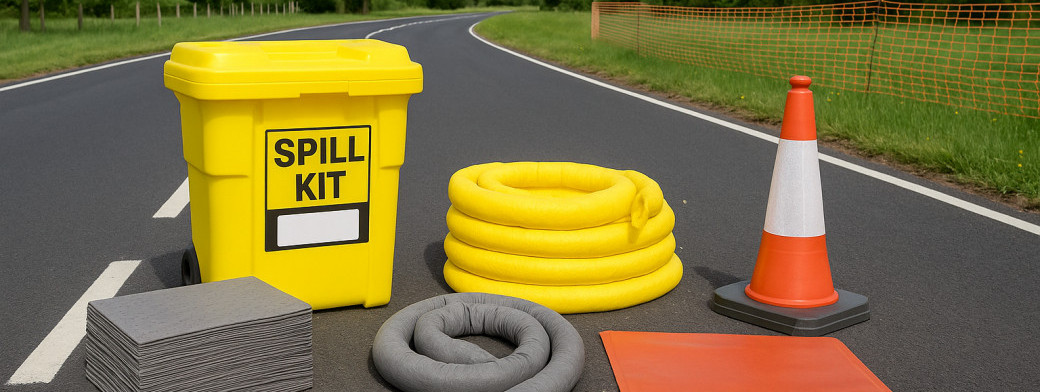
Known, small hydrocarbon leaks may be controlled by trained personnel with compatible oil-only absorbents and absorbent socks. Make access safe for road workers and traffic first. Prevent oil from reaching roadside gullies, drainage ditches, verge soil or surface-water systems.
A leak into porous road material can require excavation or specialist remediation. Do not wash contaminated residues along the carriageway. Keep any collected material and used absorbents in suitable labelled containers pending waste classification.
Plan for mobile operations
- Locate drainage and watercourses before the crew arrives.
- Check plant, hoses and bowsers during daily inspections.
- Place suitable response equipment with the vehicle or crew.
- Train staff to recognise when the spill is too large or too hot to approach.
- Report potentially polluting releases promptly.
Use Environment Agency pollution-prevention guidance for businesses in England and HSE slips and trips guidance alongside the contractor’s hot-work, traffic-management and emergency procedures.