
Last reviewed: 13 November 2026
Battery and electronic-waste recycling sites may receive damaged lithium-ion cells, lead-acid batteries, alkaline batteries and electrical products containing unknown materials. A leaking package should not be treated as an ordinary chemical spill until the battery type and condition have been assessed.
Separate leakage from fire and reaction hazards
Swollen, hot, smoking, hissing or visibly damaged lithium-ion batteries may present thermal-runaway hazards. Keep people clear, follow the site battery quarantine and emergency procedures, and notify trained responders. Do not advise staff to open a battery or apply generic chemical absorbents to an unidentified release.
Lead-acid batteries can present corrosive electrolyte hazards; other batteries contain different formulations. Safety procedures must reflect the chemistry, condition and quantity involved. Waste loads should be segregated in accordance with the site permit and fire prevention plan.
Use containment for identified, manageable liquids
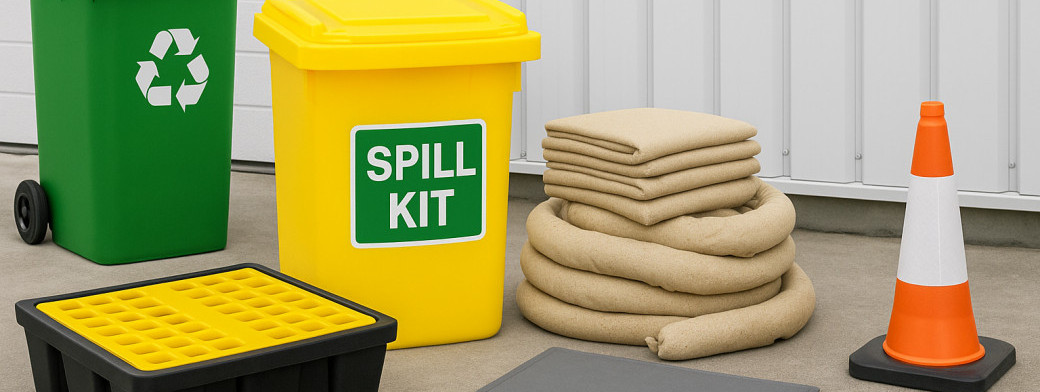
For a small confirmed chemical release that trained staff are authorised to handle, compatible chemical absorbents and spill kits may help limit spreading. The absorbent must be suitable for the exact electrolyte or processing chemical. drip trays or larger secondary containment can collect compatible drips from controlled processing points.
Work areas need correctly designed drainage controls. Portable drain covers may help for a specific gully if safe, but contaminated fire-fighting water and extensive process leakage call for planned retention and specialist disposal systems.
Make a practical segregation and inspection plan
- Identify battery chemistry and damaged items at goods-in where safe.
- Provide a quarantine route with defined controls and access restrictions.
- Keep incompatible battery and chemical wastes apart.
- Record near misses, heat events and damaged-container incidents.
- Arrange competent waste assessment, packaging and authorised collection.
- Inspect fire protection, storage areas and incident response procedures regularly.
England’s Environment Agency has published appropriate measures for waste battery facilities. Its requirements and the site permit take priority over any generic spill-kit advice.