
Published: 4 September 2026
Last updated: 24 August 2026
Why is Spill Kit Planning Essential for Temporary Festivals?
Spill kit planning is essential for temporary festivals because these sites bring together multiple short-term, high-risk liquid hazards in one place, often across uneven ground, temporary roads and busy public areas. In practice, spill kit planning means deciding in advance what spills are likely to happen, where they are most likely to occur, what containment and clean-up materials should be kept nearby, and who is responsible for responding. At festivals, common spills include diesel and petrol from generators and refuelling, engine oils and hydraulic fluids from site vehicles, cooking oils and greasy wash water from catering units, cleaning chemicals, and food waste liquids. Suitable controls may include absorbent pads, socks, rolls, disposal bags and drip trays, supported by clear procedures that align with UK health, safety and pollution prevention duties.
The reason this matters is simple: a small leak at a festival can quickly become a slip hazard, a fire risk, an environmental incident or an operational disruption. Temporary events often rely on generators, catering concessions and constant vehicle movement, so liquids are spread across the site rather than confined to one permanent workspace. The HSE’s event safety guidance on incidents and emergencies expects organisers to plan for foreseeable incidents, while the government’s pollution prevention guidance for businesses stresses the need to prevent oils, fuels and chemicals from reaching land, surface water and drains.
Key risks at festival sites
Festival spills are rarely limited to one source. Generator compounds may release diesel during delivery, connection or refuelling. Catering areas can produce spills from cooking oil, sauces, detergents and food waste liquor. Site vehicles, forklifts, buggies and plant can drip oil or fuel along access tracks, loading zones and backstage routes. Even minor leaks can spread quickly in wet weather, soak into unprotected ground, or be tracked into pedestrian areas.
Effective planning helps organisers match the right response to the likely hazard. Oil-only absorbents may suit fuel and lubricant leaks, while general purpose or chemical absorbents may be needed elsewhere. Drip trays under static equipment, protected storage areas, and clearly marked spill stations all help reduce response time and limit harm. Just as importantly, planning supports contractor handover, routine inspections and correct waste segregation after clean-up, which is vital for both safety and environmental management.
What Types of Liquids Are Commonly Encountered at Festivals?
Temporary festival sites commonly deal with several liquid types at once, and each presents different handling and spill-response needs. The most frequent are fuels such as diesel and petrol, lubricating oils and hydraulic fluids from generators and site vehicles, food-related liquids including cooking oil and liquid food waste, and cleaning products used in welfare, bar and catering areas. These liquids can create slip hazards, contaminate soil and surface water, and complicate waste segregation if they are not identified early and matched with suitable absorbents and containment.
In practice, the liquids present will vary by zone. Generator compounds may hold diesel, engine oil and coolant; catering concessions often use frying oil, sauces, wash water and cleaning chemicals; and site buggies, forklifts and delivery vehicles may leak fuel, brake fluid or hydraulic oil. The HSE notes that petrol and similar substances require careful handling because of fire and health risks, especially where storage, refuelling and vehicle activity are involved (HSE guidance INDG331).
Common festival liquids and where they are found
Fuel is one of the most obvious risks. Diesel is widely used for backup power, plant and refrigerated units, while petrol may be present in smaller plant or support vehicles. Spills often occur during refuelling, drum handling or hose disconnection. In these areas, oil-only absorbents are often appropriate because they are designed for hydrocarbons rather than water-based liquids.
Oils and other vehicle fluids include engine oil, hydraulic oil, transmission fluid and coolant from telehandlers, buggies, forklifts and contractor vans. These leaks are common in parking compounds, temporary roadways and maintenance points. Aside from pollution risk, they can make metal ramps, trackway and pedestrian routes slippery.
Food waste and catering liquids include used cooking oil, grease, dairy products, sugary drinks, wash-down water and liquid waste from food preparation. These are typically found behind concessions, near waste compounds and around temporary sinks. Although not all are classed as hazardous in the same way as fuel, they can still attract pests, block drains and create odour and slip problems.
Cleaning agents such as detergents, sanitisers, degreasers and bleach-based products are commonly stored in cleaning cupboards, welfare units, bars and catering tents. For mixed, non-oil spills in these settings, general purpose absorbents may be more suitable.
Why these spills matter
Even small spills can spread quickly across hardstanding, temporary flooring or compacted ground. If liquids enter drains, ditches or nearby watercourses, they may cause pollution incidents; if they soak into the ground, they can contaminate soil and make clean-up more difficult. On busy sites, the same spill may also create immediate safety risks through slips, trips, fumes or fire, which is why identifying likely liquids by area is a core part of spill kit planning.
Where Do Spills Typically Occur at Festival Sites?
Spills at temporary festival sites most often occur where fuel, oils, food liquids and waste are handled repeatedly under time pressure. In practice, the highest-risk locations are generator compounds, catering concessions, vehicle access points and waste areas, because these are the places where liquids are stored, transferred, moved or discarded. UK event planning should account for these hotspots in advance, with clearly placed spill kits, suitable absorbents and, where drains or gullies are nearby, rapid access to drain covers to help prevent pollution.
This matters for both safety and environmental protection. The HSE’s event safety guidance stresses the need for incident planning, while GOV.UK pollution prevention guidance highlights the importance of stopping oils, chemicals and contaminated liquids from reaching the ground or surface water drains. At festivals, even a small leak can spread quickly across trackway, hardstanding or grass, creating slip hazards and complicating clean-up.
Generator compounds
Generator compounds are one of the most common spill points because they concentrate diesel, lubricants and maintenance activity in a confined area. Spills often happen during refuelling, when hoses are disconnected, or when small leaks from tanks, pipework or drip points go unnoticed. Uneven ground, poor lighting and overnight servicing can make matters worse. These areas usually benefit from oil-focused absorbents, drip trays and perimeter absorbent socks, especially where rainwater could carry contamination beyond the compound.
Catering concessions
Catering concessions frequently produce spills of cooking oil, grease, sauces, cleaning chemicals and wastewater. Busy service periods, temporary flooring and cramped back-of-house layouts increase the chance of containers being knocked over or waste liquids being decanted poorly. Besides pollution risk, these spills can create immediate slip hazards, which aligns with HSE guidance on slips and trips. General purpose or chemical absorbents may be more suitable here than oil-only materials, depending on the liquid involved.
Vehicle access points and waste areas
Vehicle access points and waste areas are also frequent problem spots. Site vans, telehandlers, buggies and contractor vehicles may drip fuel, hydraulic oil or coolant while queuing, unloading or parking. Waste compounds add further risk through leaking bins, damaged containers and mixed liquid waste. Because these zones often sit near temporary roads or drainage routes, spills can spread quickly unless containment materials are close by and responsibilities between contractors are clearly agreed.
What Spill Response Equipment Should Be Readily Available?
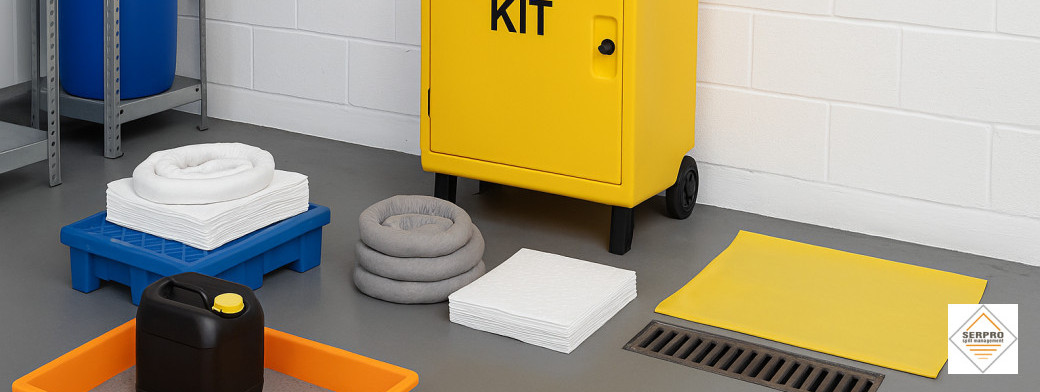
Festival sites should keep spill response equipment close to the places where liquids are actually used, transferred or parked. In practice, that means accessible spill kits, absorbent products, drip trays and waste bags at generator compounds, catering areas, fuel stores, waste points and vehicle routes. The aim is to contain small leaks quickly, prevent liquids reaching drains or ground, and support the wider incident arrangements expected for events under HSE guidance on planning for incidents and emergencies at events and the pollution prevention principles set out by GOV.UK.
As a minimum, organisers should match equipment to the likely spill type. Small kits are useful for routine leaks from site vehicles, small plant and back-of-house operations. Oil and fuel risks around generators, bowsers and buggies are better served by oil-only absorbents, while catering chemicals, cleaning agents and sanitisers may require chemical spill kits. Equipment should be clearly labelled, easy to reach and included in contractor handovers.
Essential equipment to position around the site
- Small spill kits for quick first response in vans, buggies, welfare units and control points.
- Chemical spill kits for detergents, cleaning products and other non-oil liquids used by caterers and cleaning teams.
- Oil-only kits for diesel, engine oil, hydraulic fluid and similar hydrocarbons near generators and plant.
- Absorbent socks to encircle leaks, protect thresholds and help stop spread across hardstanding; see absorbent socks.
- Absorbent pads and rolls for wiping up, covering drips and managing elongated spill paths in walkways or service corridors.
- Drip trays under generators, fuel connections, pumps and parked vehicles where slow leaks are foreseeable.
- Disposal bags and gloves so used absorbents can be segregated and handled safely after the incident.
Readiness also depends on placement. Spill stations should be visible, signed and checked during daily inspections, with stock replaced after use. This supports good housekeeping, helps reduce slip risks from contamination on walking surfaces, and makes response faster when contractors change over during build, live days and breakdown, in line with HSE slips and trips guidance.
Who Should Be Responsible for Spill Management?
Spill management at a temporary festival should never sit with one person alone. Responsibility should be shared across the event organiser, contractors and frontline staff, with named people assigned to prevent, report and respond to spills. In practice, that means the organiser sets the plan, contractors control risks in their own work areas, and designated responders deal with incidents quickly using suitable spill kits, containment tools and waste procedures. This aligns with HSE guidance that event organisers should plan emergency arrangements, define roles clearly and make sure staff know what to do if an incident occurs (HSE: Planning for incidents and emergencies at events).
At festivals, likely spill sources include generator fuel and oil, catering fats and cleaning chemicals, and leaks from vans, forklifts, buggies and other site vehicles. Because these risks are spread across the site, spill responsibility should be built into the site map, contractor briefings and daily inspections rather than treated as a last-minute housekeeping issue. GOV.UK pollution prevention guidance also makes clear that businesses must take practical steps to prevent oils and chemicals from reaching the ground, drains or watercourses (GOV.UK: Pollution prevention for businesses).
Designated spill response teams
A festival should appoint a designated spill response team, even where contractors bring their own equipment. This team may include site management, production, facilities, security and specialist contractors, depending on the event size. Their role is to assess the spill, isolate the area, stop the source where safe, protect drains, deploy absorbents and arrange waste collection. For higher-risk zones such as generator compounds, fuel stores and busy catering lines, local responders should be identified in advance and have immediate access to clearly labelled spill stations, including absorbent pads suited to the liquids present.
Training requirements
Training should be proportionate to the task. General staff need to know how to spot a spill, make the area safe, report it and avoid spreading contamination. Designated responders need practical instruction on the contents of site spill kits, use of absorbent socks or pads, drain protection, PPE, segregation of contaminated waste and escalation thresholds. Training should also reflect slip-risk control, as HSE notes that contamination on walking surfaces is a major cause of incidents (HSE: Slips and trips).
Communication protocols
Communication protocols should be simple, written and tested. Staff should know who to call, what channel to use and what information to give: location, substance if known, estimated size, whether a drain or watercourse is threatened, and whether access needs to be restricted. These arrangements should appear in induction briefings, radio call sheets and contractor handovers. Clear reporting lines help ensure that small leaks are handled quickly and that larger spills are escalated to event control without delay.
How Can Waste Be Properly Separated and Managed?
Waste at temporary festivals should be separated at the point it is produced so that liquids, solids and hazardous materials do not become mixed. In practice, this means keeping spill residues, used absorbents, catering waste, packaging and vehicle-related wastes in clearly labelled containers, then moving them through the correct disposal route. Good separation reduces clean-up time, helps prevent pollution, and supports compliance with UK waste rules and wider site controls set out in the government’s pollution prevention guidance for businesses.
The main categories to plan for are liquid waste, solid waste and hazardous waste. Liquid waste may include spilled diesel, petrol, hydraulic oil, cooking oil, contaminated wash water or chemical residues from cleaning products. Solid waste often includes food packaging, cardboard, damaged PPE, sweepings and general litter. Hazardous waste can include fuel-contaminated absorbents, oily rags, chemical containers, batteries and any material that has absorbed a harmful substance. Once a waste stream is contaminated, it may need to be handled as hazardous, so early segregation matters.
Best Practices for Disposal on Festival Sites
Use dedicated, labelled bins or drums in generator compounds, catering areas and vehicle zones, and brief contractors on what goes where during site induction. Keep disposal bags available at spill stations so used pads, socks, granules, gloves and other residues can be bagged promptly and kept separate from ordinary refuse. Liquids should never be washed into gullies or surface drains; where there is a risk of run-off, use temporary containment and deploy drain covers until the waste can be collected safely.
Storage areas for waste should be secure, weather-aware and easy to inspect. Containers should remain closed when not in use, be compatible with the waste stored, and sit where leaks can be spotted quickly. A simple log of what was collected, from where, and by whom helps with handovers between contractors and supports traceability if a problem is later identified.
Why Compliance Matters
Festival organisers and contractors should remember that waste handling is not just a housekeeping issue. UK waste management duties require waste to be stored, described, transported and disposed of properly, especially where oils, fuels or chemicals are involved. Following site procedures, using licensed waste carriers where required, and aligning spill response with pollution prevention guidance all help reduce legal risk as well as environmental harm.
What Routine Inspections Should Be Conducted?
Routine inspections should be carried out before the site opens each day, during live operations at set intervals, and again after breakdown or refuelling activity. At temporary festivals, conditions change quickly: generators are topped up, catering areas produce oils and wash-water, and site vehicles move across temporary roads. Regular checks help confirm that spill kits, containment points and housekeeping controls remain usable, visible and matched to the liquids actually present. This supports the wider incident planning expected for events by the HSE and good pollution prevention practice set out by GOV.UK.
As a practical minimum, inspect high-risk areas at the start of each shift, after severe weather, after contractor handovers, and immediately following any spill response. Generator compounds, fuel storage points, catering concessions, waste compounds and vehicle parking areas should all be included on a simple inspection route marked on the site plan.
Inspection checklist
- Spill kits are present, clearly labelled, unobstructed and close to the hazard.
- Contents are complete: pads, socks, disposal bags, gloves and drain protection where required.
- Absorbents are suitable for the risk, including absorbent rolls for walkways or larger drips near generators and catering units.
- Drip trays and temporary bunding are correctly positioned under generators, pumps and parked plant.
- Containers, hoses, couplings and fuel bowsers show no signs of leaks, staining or damage.
- Drain covers are available near surface water drains and access routes.
- Ground surfaces are free from contamination that could increase slip risk, in line with HSE slips and trips guidance.
- Waste from previous spill responses has been bagged, labelled and moved to the correct holding area.
Documentation and reporting
Each inspection should be recorded with the date, time, location, inspector name, findings and corrective actions. Use a simple log sheet or digital form so issues can be tracked across contractor teams. Missing stock, damaged trays, used absorbents or recurring leaks should be reported immediately to the relevant supervisor and closed out with a named action owner. For broader event planning, align reporting with the HSE’s guidance on incidents and emergencies at events and GOV.UK’s pollution prevention guidance for businesses.
Conclusion: Ensuring Spill Preparedness at Festivals
Temporary festivals bring together generators, catering units, site vehicles and waste areas across one fast-moving site, so spill preparedness should be treated as a core part of event safety rather than an afterthought. The most effective approach is practical and layered: identify likely liquids, map higher-risk locations, position clearly labelled spill stations, brief contractors on responsibilities, and check supplies during routine inspections. Keeping suitable spill kits, drain protection, disposal bags, gloves and the right absorbents close to likely spill points helps teams respond quickly before contamination spreads.
Across the site, the key strategies are consistent. Generator compounds benefit from drip trays, oil-only absorbents and defined refuelling controls. Catering areas need rapid access to general purpose absorbents and good housekeeping to reduce slip risks, in line with HSE guidance on slips and trips. Site vehicles and temporary roads should be covered by mobile response kits, while waste compounds and drainage routes should be included in pollution prevention planning, reflecting GOV.UK pollution prevention guidance. For many routine incidents, simple stock such as absorbent pads can make first response quicker and more controlled.
Proactive planning is what turns equipment into real preparedness. Site maps, handovers between contractors, clear reporting lines and regular checks all support the emergency arrangements expected in event planning, as outlined by the HSE for incidents and emergencies at events. In practice, compliance and safety depend on people, placement and process as much as products. Festivals that plan early, train clearly and review arrangements throughout build a safer site for workers, contractors, attendees and the surrounding environment.