
Published: 5 July 2026
Last updated: 21 June 2026
Why is Spill Management Crucial for Garden Machinery Dealers?
Spill management is crucial for garden machinery dealers because these businesses routinely handle and store liquids that can create fire, slip and pollution risks if they escape. In this setting, spill management means the planned prevention, containment, clean-up and safe disposal of leaked or spilled liquids such as petrol, two-stroke mix, lubricating oil and hydraulic fluid. Dealers need suitable controls near service benches, customer return areas and storage cages, including absorbents, drip trays, absorbent socks, labelled spill kits and drain protection, alongside procedures that support compliance with UK health, safety and environmental rules.
For garden machinery dealers, spills are not limited to major incidents. Small leaks from mowers, chainsaws, hedge cutters and compact hydraulic equipment can spread quickly across workshop floors, enter drains, contaminate stock areas and increase the chance of slips or ignition. Effective spill planning helps staff respond quickly, isolate the source, protect drainage points and keep waste handling organised, rather than relying on improvised clean-up.
Common spill risks in this sector
The main liquids of concern are petrol, two-stroke fuel mix, lubricating oil and hydraulic fluid. Petrol and two-stroke mix present obvious flammability concerns, especially in service departments and fuel storage areas. Lubricating oil and hydraulic fluid are often less volatile, but they can still create serious slip hazards and cause pollution if they reach surface water drains or unsealed ground. Customer machines awaiting inspection or repair can also arrive with hidden leaks, making front-of-house and intake areas part of the spill risk picture.
Why controls and compliance matter
Good spill management supports safer housekeeping and helps dealers meet their legal responsibilities. UK guidance from the Health and Safety Executive highlights safe handling of petrol and related workplace precautions, while GOV.UK pollution prevention guidance explains how businesses should prevent oils and chemicals from escaping into the environment. In practice, that means having the right materials close to likely spill points, training staff to use them, protecting drains, and separating contaminated waste for proper disposal. Spill products support compliance, but they work best as part of a clear site routine.
What Liquids Are Most Likely to Spill in Garden Machinery Settings?
In garden machinery dealerships and service workshops, the liquids most likely to spill are petrol, two-stroke fuel mix, lubricating oil and hydraulic fluid. These are commonly handled during refuelling, servicing, repairs, storage and customer handovers, so even small leaks can create slip risks, fire concerns and housekeeping problems. Keeping suitable oil absorbents and clearly marked spill kits close to work areas helps staff deal with drips and leaks quickly before they spread.
The highest-risk areas are usually service benches, machine intake points, fuel storage areas, parts counters and storage cages where mowers, chainsaws, hedgecutters and compact tractors are parked or worked on. Spills often start not from major failures, but from routine tasks such as topping up fluids, draining tanks, disconnecting hoses or moving returned equipment that still contains fuel or oil.
Common liquids that pose spill risks
- Petrol: used in mowers, chainsaws and handheld equipment; prone to splashes during refuelling or decanting.
- Two-stroke mix: common in smaller machinery; can spill when mixed, poured or stored in portable cans.
- Lubricating oil: includes engine oil and chain oil from servicing, draining and overfilling.
- Hydraulic fluid: found in larger ride-on or commercial machines; leaks may come from hoses, fittings, rams or damaged seals.
- Greasy residues and oily water: often collect beneath machines after cleaning, repair or storage.
Typical sources of spills
- Refuelling and fluid top-up points
- Service benches and parts-cleaning areas
- Customer returns with leaking tanks, caps or hoses
- Storage cages holding fuel cans, oils and additives
- Machines parked overnight with slow drips underneath
- Damaged containers, loose bungs or poorly sealed bottles during handling
Where Do Spills Typically Occur and How Can They Be Prevented?
Spills in garden machinery dealerships most often start where fuel, oil and hydraulic systems are handled repeatedly: on service benches, in storage cages and around customer returns. Petrol, two-stroke mix, lubricating oil and hydraulic fluid can all escape during inspection, refuelling, draining, transport or storage, so prevention usually comes down to keeping likely leak points contained, keeping absorbents close by and maintaining good housekeeping to reduce both pollution and slip risks.
In practice, the most effective approach is to match each area with simple control measures. Use drip trays beneath machines and parts that may weep, place clearly labelled spill stations where staff can reach them quickly, and keep floors clean and dry in line with HSE advice on slips and trips. This helps dealers deal with small leaks before they spread across walkways, into storage areas or towards drains.
Common spill locations
Service benches are a frequent source of drips because carburettors, fuel lines, filters, crankcases and hydraulic components are opened there. Fit benches with trays or lined work surfaces, keep absorbent pads or rolls within arm’s reach and avoid leaving drained parts uncontained.
Storage cages can become problem areas when mowers, chainsaws and trimmers are parked after use or awaiting collection. Slow leaks from tanks, caps or hoses may go unnoticed, so machines should be stored upright where possible, checked routinely and placed over secondary containment.
Customer returns are unpredictable because the condition of the machine is often unknown. Set up a designated intake area with a quick visual inspection, a drip tray under each return and immediate segregation of visibly leaking items before they are moved deeper into the workshop.
Preventive measures
Prevention is largely procedural: inspect incoming equipment, cap and secure fluids before moving machines, store absorbents and disposal bags at point of use, and train staff to deal with minor leaks straight away. Clear labelling, routine checks and prompt cleanup help stop a small drip becoming a larger safety or housekeeping issue.
What Spill Control Products Should Be Available on Site?
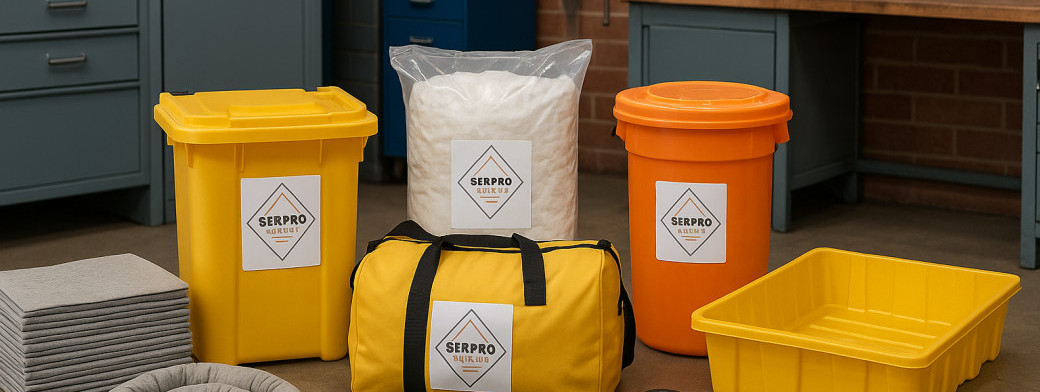
Garden machinery dealers should keep a small, practical range of spill control products close to the places where petrol, two-stroke mix, lubricating oil and hydraulic fluid are handled. At minimum, that means absorbent pads for quick wipe-up of drips and splashes, drip trays to catch leaks beneath machines and containers, and small spill kits for a fast first response. The key point is availability: products need to be easy to find and close to service benches, fuel storage points, goods-in areas and customer return zones.
Having these items readily available helps staff deal with minor leaks before they spread across walkways, soak into packaging, or reach drainage points. For garden machinery dealers, that supports better housekeeping, reduces slip risks, and makes it easier to separate oily waste for safe disposal as part of routine site management.
Essential spill control products to keep on hand
- Absorbent pads for wiping up fresh spills from floors, benches and machine decks, especially where small but frequent drips occur during servicing or inspection.
- Absorbent rolls for covering longer work surfaces or creating quick floor protection in busy workshop areas. See absorbent rolls.
- Drip trays for placing under mowers, chainsaws, hedgecutters and hydraulic equipment awaiting repair, cleaning or collection.
- Small spill kits containing absorbents, disposal bags and gloves, so staff can respond immediately to a minor fuel or oil release.
- Absorbent socks for surrounding a leak or protecting doorways and drain routes while clean-up is underway.
- Clearly labelled disposal bags and PPE to help keep contaminated absorbents contained and handled safely.
In practice, it is better to position several smaller spill response points around the site than rely on one central cupboard. When pads, trays and spill kits are visible and within easy reach, staff are more likely to use them straight away.
Who Should Be Responsible for Spill Response and Management?
Spill response should not sit with one person alone. In a garden machinery dealership or service workshop, responsibility is best shared between designated spill responders and the wider team. Named personnel should lead the response to petrol, two-stroke mix, lubricating oil and hydraulic fluid leaks, but all staff should know how to spot a spill, make the area safe, protect drains and report the incident quickly.
In practice, this means assigning clear roles for workshop supervisors, service technicians and front-of-house staff. A small fuel leak from a mower, chainsaw or customer return can begin in the workshop, loading area or storage cage, so the first person on the scene must know the immediate steps: stop work if needed, keep ignition sources away, use the correct absorbents or drip trays, and alert the trained responder. This supports safer housekeeping and helps reduce slip risks in line with HSE guidance on slips and trips.
Designate spill response personnel
Dealers should nominate specific spill response personnel for each shift or work area. These individuals should know where spill kits, absorbent pads, absorbent socks, drain covers, gloves and disposal bags are kept, and when to use oil-only or general purpose absorbents. They should also be responsible for checking that spill stations are clearly labelled, stocked and easy to reach near service benches and fuel handling points.
Train all staff, not just the specialists
Even with named responders, every employee needs basic spill awareness. Staff should understand the liquids commonly handled on site, the difference between a minor leak and a more serious release, and the reporting route for each. Regular toolbox talks and refresher sessions can help, supported by practical training resources. Simple, repeated training makes spill management faster, more consistent and less dependent on one experienced colleague being present.
How Should Waste from Spills Be Handled and Disposed Of?
Waste from spills should be separated by type, contained securely, and disposed of through the correct waste route. For garden machinery dealers, that usually means keeping petrol and two-stroke mix waste apart from lubricating oil, hydraulic fluid, contaminated absorbents, and general rubbish. Mixing waste streams can increase fire risk, make disposal harder, and create avoidable environmental problems.
After a spill is contained, used pads, socks, granules, rags, gloves and debris should be treated according to what they have absorbed. Petrol and two-stroke mix residues may be more volatile than engine oil or hydraulic fluid, so they should be bagged or placed in suitable lidded containers and kept in a designated area away from ignition sources. Oily absorbents and oil-contaminated items should also be segregated, clearly labelled, and protected from rainwater until collection.
Separate waste types clearly
A simple system helps staff respond consistently. Keep separate containers or labelled bags for:
- petrol and two-stroke fuel spill waste
- lubricating oil and hydraulic fluid spill waste
- mixed contaminated solids such as sweepings or damaged packaging
- non-contaminated general waste
Using purpose-made disposal bags can help keep contaminated absorbents contained and easier to identify before collection.
Use the correct disposal method
Do not place spill waste in general skips or pour recovered liquids down drains. Waste oils, fuel-contaminated materials and other hazardous residues should be removed by an authorised waste contractor in line with UK duty-of-care requirements. Storage areas should be inspected regularly for leaking bags, overfilled bins or unclear labels. For broader good practice on preventing pollution and handling waste responsibly, follow GOV.UK pollution prevention guidance for businesses.
How Can Routine Inspections Help Maintain Spill Preparedness?
Routine inspections help garden machinery dealers stay spill-ready by checking that controls are present, visible, usable and suited to the liquids handled on site. In workshops and retail service areas dealing with petrol, two-stroke mix, lubricating oil and hydraulic fluid, regular checks reduce the chance that a small leak from a mower, chainsaw or customer return turns into a slip hazard, fire risk or pollution incident. They also show whether staff can respond quickly with the right absorbents, drip trays and drain protection.
A good inspection routine is practical rather than paperwork-heavy. It should cover service benches, fuel decanting points, storage cages, waste areas, loading bays and any place where machines are parked awaiting repair or collection. The aim is to spot early signs of leakage, poor housekeeping or missing equipment before a spill occurs. This supports wider duties around safe petrol handling, pollution prevention and floor safety set out by HSE guidance on petrol, GOV.UK pollution prevention guidance and HSE slips and trips guidance.
Inspection routines
Set daily visual checks for active work areas, weekly checks for spill kit contents and monthly reviews of storage and waste arrangements. Look for stained floors, leaking hydraulic hoses, overfilled waste oil containers, uncapped two-stroke fuel cans and blocked access to spill stations. Confirm that absorbent pads, rolls or socks match the likely spill type, that drip trays are positioned under known leak points, and that disposal bags and gloves are available.
Checklist for spill preparedness
- Spill kits are clearly labelled and easy to reach.
- Absorbents suit petrol, oil and mixed workshop spills.
- Drip trays are clean, intact and placed under suspect machines.
- Drain covers are available near external work or washdown areas.
- Used absorbents and liquids are segregated for safe disposal.
- Staff know who responds and how to report a spill.
- Inspection findings are recorded using suitable inspection tools.