
Published: 1 September 2026
Last updated: 25 August 2026
Why is Spill Management Crucial in Drag Racing Paddocks?
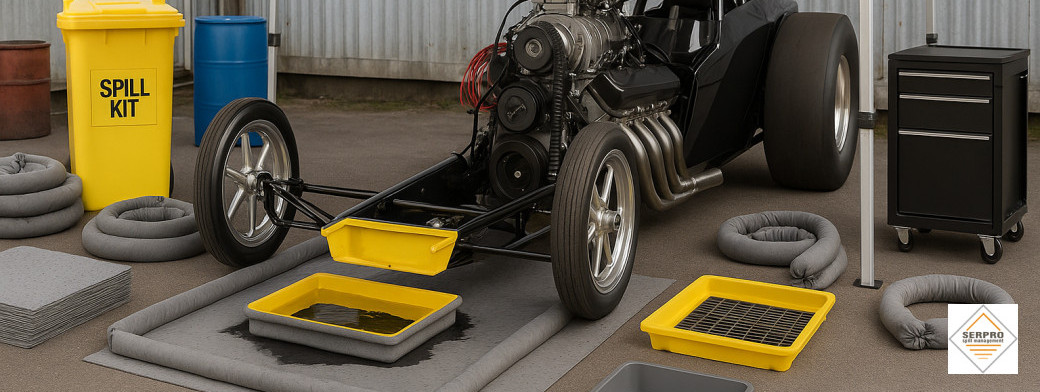
Spill management is crucial in drag racing paddocks because these areas act as the working base for race teams, support crews and vehicles, where fuelling, maintenance, inspections and rapid turnarounds happen in close succession. In this environment, the most common spills are fuel and oil, with smaller releases also arising from lubricants, coolants and cleaning fluids. Without prompt control, these liquids can create fire risk, slip hazards, environmental contamination and operational delays. Effective spill management therefore means having suitable controls close at hand, such as absorbent pads, drip trays and clearly positioned spill kits, supported by safe handling procedures and practical UK health and safety guidance.
In simple terms, a drag racing paddock is the temporary service and preparation area behind the track where vehicles are unloaded, tuned, refuelled and repaired between runs. Because teams often work quickly around high-output engines and fuel systems, even a minor leak can spread across hardstanding, trailer floors or access routes in moments. Good spill control helps contain liquids at source, protect people moving through the paddock, reduce the chance of an oil-down escalating into a wider incident, and support sensible site management in line with HSE advice on the safe use of petrol and incident planning at events.
What makes paddock spills a serious issue?
Drag racing paddocks combine flammable liquids, hot components, tight working spaces and fast-paced maintenance. Fuel spills can present an immediate ignition risk, while oil on walking or working surfaces can cause slips, contaminate equipment and be carried into other parts of the venue. A small drip from a breather, hose, filter or drain point may seem minor, but repeated leaks can build into a housekeeping problem that affects both safety and efficiency.
Which controls matter most?
The most effective approach is to prevent, contain and respond. Prevention includes routine checks on containers, hoses and fittings. Containment means using drip trays beneath likely leak points and placing absorbent materials where teams refuel or service vehicles. Response means ensuring the right products are nearby and easy to identify, including pads for quick wipe-up, socks or rolls to stop spread, and spill kits with disposal bags and gloves for safe clean-up. The exact absorbent chosen should match the liquid involved, but the principle is the same: act quickly, contain the spill, protect drains and remove waste safely.
What Types of Liquids Are Commonly Handled in Drag Racing?
Drag racing paddocks commonly handle a mix of fuels, lubricants and service fluids, and each presents its own spill risks. The main liquids include petrol, race fuel blends, methanol in some classes, engine oil, gearbox and transmission fluids, brake fluid, coolant and small amounts of cleaning chemicals. In a busy paddock, these liquids are often moved, topped up or drained quickly between runs, which increases the chance of drips, splashes and container leaks. Their hazards range from fire and harmful vapours to slip risks, skin contact and environmental contamination.
Fuels are usually the highest-priority concern because they are flammable and can spread rapidly across hardstanding. Teams may handle petrol or specialist racing fuels, while some vehicles use methanol-based fuel systems that require careful storage and transfer. According to HSE guidance on the safe use of petrol and the broader handling of flammable liquids, ignition control, ventilation and good housekeeping are essential wherever fuel is present.
Oils are equally common in paddock work areas. Engine oil, gear oil, transmission fluid and differential oil can escape during maintenance, from breathers, or after component failure. These are less volatile than fuel, but they create serious slip hazards and can quickly spread under vehicles or into walkways. For this reason, many teams keep oil absorbents close to refuelling and service points so leaks can be contained before they travel.
Other liquids also deserve attention. Brake fluid can be harmful to surfaces and skin, coolant can leave slick residues, and some degreasers or treatment products may need a more specific response using chemical absorbents. In practical terms, the hazard profile in a drag racing paddock is not limited to fire alone: it also includes slips, contact exposure, vapour release and the risk of pollutants reaching drains or surrounding ground.
Where Do Spills Typically Occur in the Paddock?
Spills in a drag racing paddock most often occur where liquids are handled quickly and repeatedly: around fuelling points, in temporary maintenance zones, beside parked race vehicles, and along access routes between pit spaces and the track. Fuel, engine oil, gearbox fluid and coolant can all be released during rapid turnarounds, refuelling, part changes or routine checks. The main risk is not only product loss, but also slip hazards, fire risk, drain contamination and disruption to neighbouring teams, so these areas should be treated as priority spill-control points.
In practice, the highest-risk locations are the places where people are working under time pressure. Teams may be topping up fuel, changing components, disconnecting hoses or moving containers several times across an event day. That combination of speed, heat, vibration and temporary working layouts makes small leaks and accidental overfills more likely unless absorbents, drip trays and clear response arrangements are kept close at hand.
Common spill locations
Fuelling areas are one of the most obvious spill hotspots. Even careful decanting can lead to splashes, drips from nozzles, or minor overfills when containers are handled in busy paddock conditions. Fuel can also be tracked underfoot or on tyres if it is not dealt with straight away. Nearby drains should be protected where necessary with suitable drain covers to help prevent liquids entering surface water systems.
Maintenance zones are another common source of spills. Oil releases often happen during filter changes, sump work, hose disconnection or when parts are removed from hot engines. Small but repeated drips beneath parked vehicles can build up over the day, especially where teams are carrying out inspections between runs. Access lanes and the edges of pit spaces also deserve attention, as fluids can spread beyond the original work area and create slip risks.
Why spills happen
Several factors contribute to spills in paddocks: rushed turnaround times, uneven ground, temporary benching or storage, poor container handling, and a lack of clearly defined liquid-handling areas. Heat, vibration and mechanical wear can also expose weak seals or fittings. In shared paddock spaces, limited room between teams may increase the chance of knocking containers, hoses or waste receptacles.
How to reduce the risk
Preventive measures should focus on keeping likely spill points controlled and easy to manage. Use drip trays beneath vehicles and under fluid transfer points, keep absorbent pads or socks close to maintenance and fuelling areas, and separate waste so used absorbents and contaminated materials can be handled properly. Clear housekeeping matters as much as equipment: containers should be closed when not in use, walkways kept free from clutter, and spill response points marked with visible spill station labels so anyone nearby can find the right materials quickly. This approach also supports broader good practice on flammable liquid handling and slip prevention set out by the HSE and its guidance on slips and trips.
What Should Be Kept Nearby for Spill Response?
In a drag racing paddock, spill response materials should be kept close to refuelling points, work bays, support vehicles and any area where oil, fuel or other fluids are handled. The aim is simple: a small leak should be dealt with immediately, before it spreads across the ground, creates a slip risk, reaches a drain or delays activity. Fast access matters because paddock spills often happen during quick turnarounds, when teams are focused on maintenance, fuelling and checks between runs.
The most effective approach is to place clearly marked spill supplies where people can reach them without leaving the work area. That usually means keeping a suitable spill kit nearby, backed up by loose absorbents and protective items for first response. Readily available materials help teams contain drips and splashes early, rather than waiting until a minor incident becomes a larger housekeeping and safety problem.
Essential spill response items for the paddock
- Small spill kits: for quick response to routine leaks, drips and accidental overfills around race cars and support equipment.
- Absorbent pads and absorbent rolls: useful for covering larger surface contamination, lining temporary work areas and wiping up fluid spread.
- Absorbent socks: to surround a spill, protect walkways and stop liquids travelling towards drains or neighbouring pit spaces.
- Oil-only absorbents: suitable where hydrocarbons are the main concern, particularly around engine oil and fuel-related contamination.
- General purpose or chemical absorbents: where mixed liquids may be present and the response needs to match the substance involved.
- Drip trays: to catch leaks beneath engines, fuel lines, generators and stored containers before they reach the ground.
- Drain covers: where there is a risk of spills entering surface water drainage.
- Gloves and disposal bags: for safer clean-up and segregation of used absorbents for disposal.
Keeping these materials nearby is not just convenient; it supports better housekeeping, faster containment and safer movement in busy paddock conditions. This aligns with wider UK guidance on controlling flammable liquids, event incident planning and slip prevention from the HSE, event safety guidance and slips and trips guidance.
Personnel also need basic spill response training. Everyone expected to act should know where materials are stored, which absorbent to use, when to protect drains, how to isolate the area and how to handle used absorbents as waste. Clear labelling, short briefings and routine checks help make sure the right response happens quickly when a spill occurs.
Who Should Respond to Spills and How?
Spill response in a drag racing paddock should be handled by trained team members who know their roles, have immediate access to the right equipment, and can communicate quickly with nearby crews and event officials. In most cases, the first response is not a large clean-up operation but a controlled sequence: stop the source if it is safe to do so, protect people from slips or fire risk, contain the liquid with suitable absorbents, and report the incident through the agreed paddock communication chain.
Because paddocks are busy, temporary work areas with fuel, oil and fast vehicle turnaround, everyone should know in advance who leads the response and who supports it. This aligns with HSE guidance on incidents and emergencies at events, which stresses clear responsibilities, rapid communication and practical emergency arrangements.
Roles during a spill incident
A simple team structure helps avoid confusion. One person should act as the spill lead, making quick decisions and assessing whether the incident is minor or needs escalation. A second team member can isolate the area, warn others and keep ignition sources away where fuel is involved. Another can fetch and deploy the appropriate kit, such as small spill kits, pads, socks or drip trays already kept in the pit space. If waste is generated, a nominated person should bag and separate used absorbents safely using suitable disposal bags.
Steps to follow
When a spill happens, stop work and assess the hazard first. If safe, shut off the leak or upright the container. Keep crew, visitors and vehicles clear of the contaminated area. Contain the spread with absorbent socks or pads, paying particular attention to walkways, neighbouring pit areas and any route towards drains. Once the spill is under control, collect used materials, place them in the correct waste bags, and check the surface for residue that could still cause slips.
Communication protocols
Communication should be immediate and consistent. Team members should know who to alert first, whether that is the crew chief, paddock manager or event marshal. Any spill involving significant fuel loss, fire risk, drainage threat or injury should be escalated without delay. A brief report should cover what was spilled, where, whether it is contained, and what extra support is needed. Clear reporting reduces delays, helps protect adjacent teams, and ensures the incident is recorded and reviewed afterwards.
How Should Waste Be Separated and Disposed Of?
Waste in a drag racing paddock should be separated at the point it is created, kept in clearly labelled containers, and disposed of according to the type of contamination involved. This matters because paddock waste is rarely all the same: used absorbents, oily rags, empty fluid containers, general rubbish and liquid residues can each require different handling. Good separation reduces fire risk, prevents cross-contamination, makes clean-up quicker, and helps teams manage waste responsibly in a busy, temporary working area.
In practice, the safest approach is to treat fuel-related, oil-related and general waste as distinct streams, with staff using suitable gloves when handling contaminated materials. Waste should not be left loose on the ground or mixed into ordinary bin bags, especially after a spill response. Instead, used absorbents, leaking parts, and contaminated packaging should be bagged or containerised promptly and moved to a designated waste point away from drains, ignition sources and pedestrian routes.
Types of Waste Generated in Drag Racing Paddocks
Typical paddock waste includes several categories. There is general waste such as food packaging, cardboard and non-contaminated wrapping. There is also maintenance waste, including empty oil bottles, used filters, oily cloths, worn components and drip tray residues. Spill response creates another category: used pads, granules, wipes and absorbent socks that may contain oil, fuel or mixed fluids. Some teams may also generate hazardous waste from solvents, brake cleaner, coolant, degreasers or chemical residues.
The key point is that once a material has absorbed or come into contact with oil, petrol or other hazardous liquids, it should not be treated as ordinary rubbish. Its disposal route may change depending on what it has absorbed, so identifying the contaminant is an important part of the response.
Best Practices for Waste Separation
Best practice is to separate waste using clearly marked containers for general waste, recyclables where appropriate, oily waste and hazardous spill-response waste. Teams should keep these containers close enough to the work area to encourage proper use, but not so close that they obstruct access or create extra ignition risk. Containers should be sealed or covered where possible, particularly for contaminated absorbents and liquid residues.
It also helps to separate waste by liquid type where practical. For example, absorbents used on engine oil should be kept apart from those used on petrol spills, as disposal requirements may differ. Staff should know which bin or bag to use before work starts, and paddock checks should confirm that waste streams have not been mixed during rapid turnarounds.
Disposal Methods
Disposal should follow the nature of the waste and the instructions of the site operator or licensed waste contractor. General, non-contaminated rubbish can go into standard waste collection, while recyclable clean packaging should be kept separate if facilities exist. Oily absorbents, fuel-contaminated materials, used filters and liquid residues should be placed in suitable sealed containers or disposal bags for collection as controlled or hazardous waste where required.
Nothing contaminated with oil or fuel should be washed into drains or left to evaporate in the paddock. Temporary event sites still need sensible controls, and UK guidance from the HSE on slips and contamination and the safe handling of flammable liquids supports prompt clean-up, containment and safe handling. In short, proper separation and disposal is not just tidiness; it is a practical part of spill control, fire prevention and safe paddock housekeeping.
How Can Spill Arrangements Be Checked During Routine Inspections?
Spill arrangements in a drag racing paddock can be checked effectively through short, regular inspections that confirm spill kits are complete, absorbents are suitable for the liquids on site, access to response equipment is unobstructed, and staff or team members understand what to do if fuel or oil is released. In practice, a good inspection routine looks at both equipment and behaviour: what is available, where it is stored, whether it is clearly identified, and whether the response plan still matches the way the paddock is being used that day.
Routine checks are important because paddock conditions change quickly. Vehicles move in and out, temporary work areas are set up, fuel containers are handled, and waste builds up during the day. A spill arrangement that looked adequate in the morning may be less effective later if absorbent pads have already been used, drip trays have been moved, or access to drain protection has been blocked. Inspection therefore needs to be practical, frequent and recorded.
What should be included in an inspection checklist?
A simple checklist helps keep inspections consistent. It should cover:
- whether small spill kits are present at team bays, refuelling points and service areas;
- whether the correct absorbents are available, such as oil-only absorbents for hydrocarbons and general purpose materials for mixed housekeeping tasks;
- whether absorbent socks, rolls, drip trays and disposal bags are clean, usable and easy to reach;
- whether drain covers are available where surface drains could be affected;
- whether containers, funnels and transfer points show signs of leakage;
- whether used absorbents and contaminated waste are being segregated and stored safely;
- whether spill points are clearly marked with spill station labels so responders can find equipment quickly;
- whether the area remains free from slip hazards caused by drips, overspray or residue.
How often should inspections take place?
Frequency should reflect activity levels. A pre-event check should confirm readiness before vehicles arrive. During live operations, visual checks each shift or at set intervals are sensible, with extra inspections after refuelling, engine work, weather changes or any reported spill. A final end-of-day inspection can confirm that used materials are replaced and waste is managed correctly. This approach aligns well with broader HSE advice on incident planning at events and controlling contamination that may lead to slips and trips.
Why does documentation matter?
Findings should be documented, even if checks are brief. Record the date, location, inspector, issues found, actions taken and any items needing replenishment or follow-up. Documentation shows that spill preparedness is being managed actively rather than assumed, and it helps organisers spot recurring weaknesses such as understocked kits, poor housekeeping or repeated leaks from the same area. Over time, these records support better planning, faster response and a more reliable paddock setup.
What Are the Legal Requirements for Spill Management in the UK?
In the UK, spill management in drag racing paddocks is not governed by one motorsport-specific law, but by a combination of health and safety, environmental and waste-duty requirements. In practice, teams and event organisers must assess the risks from fuels, oils and other hazardous liquids, put sensible controls in place, respond quickly to leaks or spills, and make sure contaminated waste is handled correctly. For paddock operations, that usually means clear procedures, suitable containment, trained staff, good housekeeping and ready access to absorbents and other spill-response equipment.
Relevant duties commonly arise under the Health and Safety at Work etc. Act 1974, the Management of Health and Safety at Work Regulations 1999, and environmental rules covering pollution prevention and waste handling. HSE guidance on the safe use and handling of flammable liquids is especially relevant where petrol, methanol, oils or solvents are stored or transferred, while HSE guidance on slips and trips applies because even a small oil or fuel spill can create an immediate pedestrian and vehicle hazard in a busy paddock.
Who is responsible?
Responsibility is shared. Event organisers are expected to plan for foreseeable incidents, set site rules, provide suitable welfare and emergency arrangements, and monitor standards across the venue. Teams, traders and contractors must then follow those rules, carry out their own risk assessments where required, store and use liquids safely, and keep their work area under control. If a team causes a spill, it is not enough to leave it for circuit staff; they should act promptly, use the correct spill materials, protect drains where necessary, and report the incident through the event’s procedures.
What happens if requirements are ignored?
Non-compliance can lead to injuries, fires, environmental contamination and enforcement action. Depending on the circumstances, that may include HSE intervention, action by environmental regulators or local authorities, clean-up costs, removal from the event, prosecution, fines and reputational damage. The key point is that absorbents, drip trays and spill kits are practical control measures, but compliance depends on the wider system: risk assessment, training, supervision, housekeeping and lawful disposal of contaminated materials.