
Published: 4 September 2026
Last updated: 31 August 2026
Why is Spill Control Essential for Cleaning Contractors?
Spill control is essential for cleaning contractors because it is the planned process of containing, absorbing, cleaning and disposing of accidental liquid releases safely while work is underway on a client site. In cleaning operations, this commonly means dealing with detergents, disinfectants, degreasers, stripping solutions, rinse water, oils tracked in from plant areas, and other mixed liquids that can create slip risks, damage surfaces, expose people to hazardous substances, or enter drains. For contractors in the UK, effective spill control depends on having the right materials ready to hand, such as absorbents, socks, pads, rolls, disposal bags and, where needed, drain protection and clearly labelled spill kits, alongside safe working practices informed by HSE guidance on slips and trips, COSHH and pollution prevention guidance.
For cleaning contractors, spill control is not only about tidiness; it is a core part of risk control, housekeeping and client care. A small release of floor cleaner can leave a surface dangerously slippery, while a stronger chemical such as a stripper or descaler may also present skin, eye or respiratory hazards. On shared client premises such as offices, schools, healthcare settings, retail units and industrial sites, contractors often work around staff, visitors and the public, so a spill can escalate quickly unless the area is restricted, the liquid is contained and the floor is dried properly.
What spill control covers in day-to-day cleaning work
In practical terms, spill control means identifying likely liquids before starting work, choosing suitable absorbent materials for the substances in use, and responding quickly if a container tips, a machine leaks or waste liquid escapes during handling. General purpose absorbents may suit many water-based cleaning products, while more aggressive chemicals may call for chemical absorbents and compatible PPE. If there is any chance of liquid reaching a drain or external surface, containment becomes especially important.
This matters because cleaning contractors regularly move liquids between cupboards, trolleys, buckets, scrubber dryers and waste containers. Each transfer point is a potential source of a spill. Having appropriate materials nearby helps prevent a minor release becoming a slip incident, a contamination issue or a reportable problem for the client. In short, spill control protects people, property, the environment and the contractor’s own standards of work.
What Types of Liquids Should Cleaning Contractors Prepare For?
Cleaning contractors should be ready for more than just water. On client sites, the most common spill risks include diluted and concentrated cleaning chemicals, detergents, disinfectants, degreasers, floor strippers and accidental liquid releases from machines or containers. These liquids can create slip hazards, cause skin or eye irritation, damage floor finishes or enter drains if not contained quickly. Spill planning should therefore match the products and equipment actually used on site, with suitable absorbents, PPE and disposal arrangements available nearby.
In practice, this means assessing both routine cleaning liquids and unexpected releases. Under COSHH guidance from HSE, contractors should understand the hazards of each substance they carry or use, while also considering how a spill could spread across occupied walkways, thresholds or drainage points. For liquids with stronger chemical properties, chemical absorbents are often the more appropriate option than relying on general-purpose materials alone.
Common liquids that need spill control
Everyday cleaning chemicals are a frequent source of minor spills. Detergents, sanitisers, bleach-based products, descalers and washroom cleaners may leak during decanting, transport or use. Even when not highly hazardous, they can leave floors dangerously slippery and may trigger adverse reactions if they contact skin or incompatible surfaces.
Stripping solutions deserve particular attention because they are often used in larger volumes and can be more aggressive than standard cleaners. During floor restoration work, splashes, over-application and recovery failures can leave wet, contaminated areas that need prompt containment and controlled clean-up.
Contractors should also prepare for accidental liquid releases from equipment. Scrubber dryers, rotary machines, extraction units and portable tanks can leak cleaning solution, recovered dirty water, hydraulic fluid or battery-related liquids. Hoses, seals, valves and waste tanks are common failure points, especially during movement between work areas. These incidents may start small but can spread quickly across hard floors, lifts or loading areas if not managed at once.
Where Do Spills Typically Occur on Client Sites?
Spills on client sites most often happen in busy, wet or frequently used areas where cleaning chemicals, water and foot traffic meet. For cleaning contractors, the highest-risk locations are usually kitchens, bathrooms and entryways, but leaks can also start around equipment, storage points and service areas. Staying alert in these zones helps contractors respond quickly, reduce slip risks and stop liquids spreading into drains, walkways or occupied spaces.
In practice, spill incidents are rarely limited to one cause. A detergent bottle may drip during use, a scrubber dryer may leave a trail behind it, or a member of staff may knock over a bucket while moving through a tight corridor. This is why routine observation matters as much as having the right controls in place, especially where floors are already vulnerable to contamination. The HSE’s guidance on slips and trips is a useful reminder that wet and contaminated floors are a common source of preventable incidents.
Kitchens and food preparation areas are a regular hotspot because they combine water, grease, detergents and constant activity. Bathrooms and washrooms present similar risks, with splashes, overfilled containers, toilet leaks and cleaning product residues all creating slippery patches. Entryways are another common trouble spot, particularly in wet weather, when rainwater is carried in on shoes, wheels and equipment.
Cleaning equipment and site machinery can also be a source of unexpected releases. Scrubber dryers, rotary machines, vacuum units, dosing systems and portable tanks may leak from hoses, seals, valves or overfilled recovery containers. Even a slow drip can create a hazard if it goes unnoticed during a shift.
Human error plays a major role too. Poor decanting, unsecured lids, overfilled buckets, rushed handling and leaving products in awkward positions can all lead to spills. Under COSHH guidance, contractors should think about where substances are used and how accidental releases might be controlled before they become a wider safety or pollution issue.
What Materials Should Cleaning Contractors Keep Nearby for Spill Control?
Cleaning contractors should keep a small, clearly labelled spill-control setup close to the work area so minor releases can be contained quickly before they spread, create slip risks or reach drains. For most client sites, that means having the right absorbents for detergents, stripping solutions and mixed accidental liquid releases, plus basic containment items and waste bags ready for immediate use.
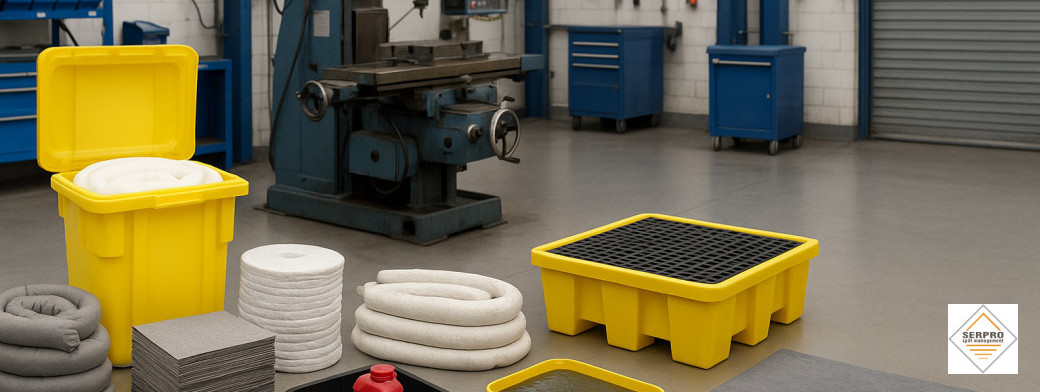
As a minimum, contractors should carry absorbent pads, rolls and socks, along with drip trays, small spill kits, drain covers and disposal bags. The exact mix should match the liquids being used: general purpose absorbents are often suitable for routine cleaning products, while chemical absorbents may be more appropriate where stronger solutions are handled under a site’s COSHH arrangements.
Core absorbents to keep on hand
Absorbent pads are useful for wiping up small puddles and catching drips during decanting or equipment cleaning. Absorbent rolls work well for larger floor areas or where a wide wet patch needs to be covered and dried promptly. Absorbent socks are especially helpful for surrounding a spill, stopping it from travelling under machines, along grout lines or towards doorways and thresholds.
Where contractors move between rooms or floors, compact small spill kits can be easier to carry than loose materials. A simple kit can help staff respond faster and keep gloves, absorbents and disposal items together in one place.
Containment and protection items
Drip trays should be placed under containers, pumps or machines that may leak while chemicals are being stored temporarily or transferred. If there is any chance of liquid entering surface water or foul drainage, contractors should also have access to drain covers so nearby drains can be protected quickly while the spill is being managed.
Disposal bags are essential for collecting used pads, socks and other contaminated waste without leaving it behind on the client’s site. Keeping waste separate, sealed and clearly identified supports safer handling and helps contractors follow site procedures, COSHH controls and wider pollution-prevention expectations.
Who Should Respond to Spills on Client Sites?
Spills on client sites should be handled by designated personnel who have been trained to assess the risk, contain the liquid safely and follow the agreed site procedure. For cleaning contractors, that usually means named operatives, supervisors or team leaders rather than whoever happens to be closest. The right person to respond depends on the liquid involved, the size of the spill and whether there is any risk to health, slips, drains or nearby work areas.
Cleaning contractors should not assume that every operative can deal with every spill. Detergents, stripping solutions and mixed waste liquids may require different controls under COSHH guidance from HSE, especially where splashing, fumes or skin contact are possible. Staff need to know when they can manage a minor release using the correct absorbents, gloves, disposal bags and warning signs, and when they must stop work, isolate the area and escalate the incident to the client or site management.
Why designated responders matter
Clear responsibility helps avoid delay and confusion. A designated responder should know where spill materials are kept, how to restrict access, how to protect drains if needed and how to leave floors dry enough to reduce slip risk. This aligns with HSE guidance on slips and trips, which stresses prompt action, contamination control and safe floor conditions.
Training, preparedness and client communication
Training should cover likely spill types, safe use of absorbent pads, rolls or socks, reporting lines, and waste segregation after clean-up. Preparedness also means checking kits before visits and understanding the client’s own incident rules. During a spill, contractors should communicate with the client quickly: explain what has been released, what immediate controls are in place, whether any area has been closed off and whether further action is needed. If there is any risk of pollution, responders should follow relevant UK pollution prevention guidance and the site’s escalation process.
How Can Access Be Restricted During a Spill?
Access should be restricted immediately by isolating the spill area with clear barriers and warning signs, then keeping unauthorised people well away until the floor is safe, dry and any contaminated materials have been removed. For cleaning contractors, this is a basic control measure that helps prevent slips, trips, skin contact and accidental spread of the liquid into adjacent work areas.
In practice, the aim is to create a visible exclusion zone around the spill, not simply place a single wet floor sign beside it. The size of that zone should reflect the type of liquid, the risk of splash or tracking, and how busy the client site is. This approach supports wider good practice on preventing slips set out by the HSE and should sit alongside any COSHH controls already identified for detergents, stripping solutions or other cleaning chemicals.
Use barriers and warning signs together
Warning signs are important, but signs alone may not stop people walking through a spill, especially in corridors, entrances, washrooms or shared back-of-house areas. Contractors should use physical barriers where possible, such as cones linked with tape, temporary barrier systems, or other site-approved means of blocking access. Signs should be positioned so they are visible from all likely approach routes, including corners and doorways.
If the spill is spreading, place barriers far enough back to allow safe working space for absorbents, mops or drying equipment. Where relevant, alternative pedestrian routes should be identified and agreed with the client representative.
Keep unauthorised personnel away
Only those involved in the clean-up, or those needed for site supervision, should enter the restricted area. Keeping unauthorised personnel away reduces the chance of injury and avoids contaminating footwear, nearby floors and other workspaces. This is especially important where a stripping solution, concentrated detergent or mixed waste could present a higher contact risk than plain water.
Record what was put in place
Access restrictions should also be documented. A brief record can note the time of the spill, location, liquid involved if known, what barriers and signs were used, who was informed, and when the area was reopened. This creates a clear handover trail for the client, supports incident reporting, and shows that the contractor took practical steps to control the area while the spill was being managed.
What Is the Best Way to Dry Floors After a Spill?
The best way to dry floors after a spill is to remove the liquid fully, isolate the area, and then use the right drying method for the floor type and the substance involved. Cleaning contractors should first absorb or collect the spill, then dry the surface with clean mop heads, cloths or absorbent materials, and finally speed up evaporation with air movers or good ventilation where suitable. The aim is not just to make the floor look dry, but to leave it safe to walk on and free from slip risk.
Drying should always be treated as part of spill control, not as a separate housekeeping task. Even a small amount of residual moisture, detergent or stripping solution can leave a floor slippery. As the HSE’s slips and trips guidance makes clear, contamination and poor cleaning methods are common causes of falls, so contractors need a clear process for drying floors thoroughly before reopening the area.
Safe methods for drying floors
Start by stopping foot traffic and putting out clear warning signs or barriers. Once access is restricted, remove pooled liquid with absorbent pads, absorbent rolls or a wet pickup method if appropriate. After that, use clean, dry mops or cloths to lift remaining moisture rather than spreading it across a wider area. For larger spills, work from the outside in so the contamination is contained while the floor is being dried.
Drying equipment can help where time matters, especially on smooth hard floors. Air movers, fans and increased ventilation can reduce drying time, but they should be positioned so they do not blow contamination into walkways or towards drains. On sensitive surfaces, use a controlled, low-residue approach and check that any cleaning chemical has been removed in line with COSHH essentials. Before leaving, inspect the area by sight and underfoot, confirm the floor is dry, and only then remove signs and barriers.
How Should Cleaning Contractors Report Spills to Clients?
Cleaning contractors should report spills to clients promptly, factually and in writing, even when the spill is contained quickly and no obvious damage remains. A clear reporting process helps maintain trust, shows that the contractor has taken reasonable control measures, and creates a record of what happened, what was used to make the area safe, and whether any further action is needed. On client sites, this is especially important where detergents, stripping solutions or other cleaning chemicals may affect flooring, drains, finishes or public access.
The best approach is to combine immediate verbal notification with formal documentation. That means telling the relevant client contact as soon as the spill has been made safe, then recording the incident with enough detail to support follow-up, review and prevention. Where substances could present health, slip or environmental risks, contractors should also align their reporting with site rules and broader duties under COSHH guidance from HSE.
What should be documented?
Each spill incident record should note the date, time and exact location, the liquid involved, the estimated quantity, the likely cause, and who responded. It should also record what control measures were used, such as isolating the area, placing warning signage, using absorbent materials, protecting nearby drains, drying the floor and bagging contaminated waste for removal. If there was any effect on access, flooring, fixtures or drainage, that should be included as well.
How should contractors communicate with clients?
Communication protocols should be agreed in advance wherever possible. Contractors should know who to contact on site, when escalation is required, and whether the client expects a call, email, portal entry or incident form. Urgent issues should be reported immediately to the site representative, while lower-risk incidents should still be logged before the end of the shift. The update should be concise, practical and transparent, avoiding guesswork while confirming what has been done to leave the area safe.
What follow-up actions should be included?
Good reporting does not stop at notification. Contractors should confirm any follow-up cleaning, inspection or waste removal needed, and note preventive measures such as changing dilution methods, improving container handling, repositioning supplies, or keeping spill materials closer to the work area. This supports continuous improvement and helps prevent repeat incidents on future visits.
What Is the Proper Disposal Method for Contaminated Waste?
The proper disposal method for contaminated waste after a spill is to separate it from general rubbish, handle it according to the type of substance involved, and dispose of it through the correct waste route in line with UK legal requirements. For cleaning contractors, that means used absorbents, disposable PPE, cloths, and any debris affected by detergents, stripping solutions, or other liquids should be bagged, identified, and removed from site safely rather than left in standard bins.
This matters because spill waste can continue to pose risks after the visible liquid has been cleared. Saturated pads, granules, socks, mop heads, or gloves may still contain hazardous residues, create slip risks, or cause pollution if they are mixed with ordinary waste. Using suitable disposal bags helps keep contaminated materials separate and supports a more controlled handover for storage, transport, and final disposal.
Separate contaminated waste from general waste
Waste from a spill incident should be segregated immediately. Keep contaminated absorbents, disposable cleaning materials, and PPE apart from normal packaging, dry paper waste, and non-contaminated refuse. If different substances are involved, avoid mixing them unless you are certain they are compatible. Separation makes it easier to assess whether the waste is hazardous, reduces the chance of secondary contamination, and helps the client or waste carrier manage it correctly.
Follow the relevant disposal regulations
Cleaning contractors should consider the requirements that apply under waste duty of care and, where relevant, hazardous waste controls. The classification of the spilled material will affect how the waste must be stored, described, and collected. Where chemicals are involved, the product safety data sheet and the site’s COSHH arrangements should inform disposal decisions. HSE guidance on COSHH is a useful starting point, and wider pollution prevention guidance is available from GOV.UK.
Use safe handling and disposal practices
Handle contaminated waste with appropriate gloves and other PPE, seal it in suitable containers or bags, and store it temporarily in a secure area away from drains, access routes, and incompatible materials. Label it clearly if needed, report the waste to the client in line with site procedures, and arrange disposal through the approved route. Contractors should never leave contaminated waste behind without agreement, and they should keep basic records of what was collected, how it was contained, and who took responsibility for final disposal.
How Can Routine Inspections Help in Spill Preparedness?
Routine inspections help cleaning contractors stay spill-ready by confirming that response materials are present, usable and suited to the liquids most likely to be encountered on site. Regular checks reduce the risk of finding an incomplete spill kit, damaged packaging or the wrong absorbent at the point of need. They also help contractors spot changing conditions in client premises, such as new storage areas, busier washrooms or plant rooms where detergents, stripping solutions or other liquids could be released.
Inspections are also a practical way to support safer housekeeping. By reviewing likely spill points and access routes, contractors can make sure materials such as absorbent pads, socks, rolls, gloves, disposal bags and drain protection are kept where they can be reached quickly, while controls for wet floors and restricted access remain workable. This fits with wider UK good practice on preventing slips and trips from contamination on floors, as outlined by the HSE.
Check Spill Response Materials Regularly
A simple inspection routine should confirm that spill response materials are complete, clearly labelled and appropriate for the substances in use. That means checking stock levels, replacing used items promptly and looking for signs of damage, moisture or contamination in stored absorbents. Contractors should also confirm that any small spill kits still contain the right mix of general purpose or chemical absorbents for cleaning chemicals likely to be handled on site.
Assess High-Risk Areas
Routine walk-rounds should focus on high-risk areas such as cleaner’s cupboards, chemical dilution points, washrooms, kitchens, loading areas and any location near drains. These checks can highlight where a minor leak could spread into pedestrian routes or enter surface water drainage. Reviewing these areas against pollution prevention guidance for businesses helps contractors decide whether containment, repositioning of materials or extra protection is needed.
Update Plans Based on Findings
Inspection findings should feed back into the spill response plan. If new products are introduced, storage changes or repeated near misses are identified, the plan should be updated to reflect revised risks, materials and reporting steps. This approach also supports COSHH-based control measures where hazardous substances are involved, in line with HSE COSHH essentials.