
Published: 5 September 2026
Last updated: 26 August 2026
Why is Spill Management Essential for Grassroots Motorsport Events?
Spill management is essential at grassroots motorsport events because temporary paddocks on fields, car parks and other short-term venues regularly handle petrol, diesel, engine oil, brake fluid, coolant, degreasers and other workshop chemicals in areas with limited built-in containment. In this context, spill management means planning for, containing, cleaning and disposing of accidental liquid releases safely so they do not create slip hazards, fire risks, vehicle downtime or pollution. Practical control measures usually include spill kits, absorbents, drip trays, absorbent socks, drain protection, gloves and labelled waste bags, supported by clear emergency arrangements in line with UK guidance from the HSE on incidents and emergencies at events.
At club-level meetings, spills are rarely dramatic, but they are common: a tipped fuel can, a weeping sump plug, an overfilled generator, a burst bottle of cleaner, or oil drips from race cars, tow vehicles and support vans. Even small releases matter. Fuel and oil can spread quickly across tarmac, soak into gravel or grass, and run towards drains or ditches, while contaminated surfaces increase the chance of slips for drivers, mechanics, marshals and visitors. The HSE’s guidance on slips and trips and GOV.UK pollution prevention guidance both reinforce the need to stop contamination at source and deal with it promptly.
Preparedness is what makes the difference. A suitable spill kit kept close to refuelling, maintenance and parking areas allows teams or organisers to respond immediately with the right materials, whether that means oil-only absorbents for hydrocarbons, general purpose absorbents for mixed workshop liquids, or chemical absorbents for more aggressive substances. Basic containment such as drip trays under vehicles and fuel containers helps prevent routine drips from becoming larger housekeeping problems, while absorbent socks can stop liquids spreading into walkways or drainage routes.
For grassroots motorsport, spill management is therefore not just about tidiness. It protects people, the venue surface, nearby watercourses and the event schedule, while supporting sensible fuel handling and storage practices described in HSE guidance on petrol safety. In a temporary paddock, where infrastructure is limited, having the right kit nearby and knowing who will use it is one of the simplest and most practical parts of event preparedness.
What Types of Liquids Are Commonly Spilled at Motorsport Events?
At grassroots motorsport events, the liquids most commonly spilled are fuels, engine and gearbox oils, brake and hydraulic fluids, coolants and, in some cases, cleaning chemicals. These spills matter because even small amounts can create slip hazards, contaminate soil, enter surface drains or run off into ditches and watercourses. In temporary paddocks on fields, hard standings or car parks, organisers and teams should treat these substances as potential pollutants and plan to contain them quickly with suitable absorbents, drip trays and waste segregation.
In practical terms, the highest-risk liquids are usually those handled most often: petrol and diesel during refuelling, lubricants during top-ups or repairs, and coolant released from overheating or damaged hoses. UK event planning should also take account of pollution prevention and safe handling duties, with reference to pollution prevention guidance for businesses and relevant HSE advice on petrol handling. Having the right oil absorbents nearby helps limit spread, but products should be matched to the liquid involved.
Common liquids found in temporary paddocks
- Fuels: petrol, diesel and occasionally mixed fuels used in race cars, generators or support vehicles.
- Oils: engine oil, gearbox oil, transmission fluid and differential oil from leaks, draining or component failure.
- Coolants: water-glycol mixes from radiators, hoses, expansion tanks or overheating incidents.
- Other fluids: brake fluid, power steering fluid, hydraulic oil and some cleaning or degreasing products.
Why these spills need careful handling
Fuel and oil spills can pollute ground and drainage systems, while coolant and brake fluid may also present environmental and housekeeping concerns. On hard surfaces, any of these liquids can increase the risk of slips, so prompt clean-up supports safer movement around vehicles and work areas, in line with HSE guidance on slips and trips. Because temporary venues often sit close to drains, verges or unsealed ground, even a minor release can spread further than expected if not contained early.
Regulatory expectations are straightforward: prevent pollution where possible, store and handle liquids sensibly, and separate contaminated waste for proper disposal. Organisers should make sure teams know who responds to a spill, what absorbents are available, and how used materials and recovered liquids will be bagged, labelled and removed from site.
Where Do Spills Typically Occur in Temporary Paddocks?
Spills in temporary paddocks usually occur where liquids are handled, transferred or left standing for long periods. The most common hotspots are around fuel cans and refuelling points, beneath cars during oil top-ups or changes, and under tow vehicles, vans and trailers that may drip diesel, engine oil, coolant or hydraulic fluid while parked. In a field, car park or other short-term venue, these areas matter because any leak can spread quickly across hardstanding or soak into soft ground, with runoff then reaching drains, ditches or watercourses.
In practice, the highest-risk locations are often the busiest ones: the rear of support vans, the edge of awnings, service bays, and the route between paddock spaces and access roads. Fuel cans set down on uneven ground can tip during filling or decanting. Oil changes carried out in a hurry can lead to splashes, overfilled drain pans or contaminated rags being left behind. Tow vehicles and recovery trucks can also create slow, unnoticed drips after a long journey, especially once they are stationary.
Environmental conditions make a big difference to where a small spill becomes a bigger problem. On sloping tarmac, liquids can travel further than expected towards gullies. On grass or compacted soil, oil and fuel can soak in and become harder to recover fully. If a paddock is close to surface water, ditches or site drainage, teams should treat those routes as priority protection points in line with general UK pollution prevention guidance.
Preventative measures are usually straightforward. Keep refuelling and fluid handling in one clearly chosen area, place drip trays under fuel cans, generators and vehicles likely to seep, and use pads or socks nearby so minor leaks can be dealt with before they spread. Good housekeeping also helps: store liquids upright, avoid overfilling, inspect parked vehicles for fresh drips, and keep waste bags and gloves close to the spill kit so used absorbents are removed promptly rather than left on the ground.
What Spill Management Equipment Should Be Nearby?
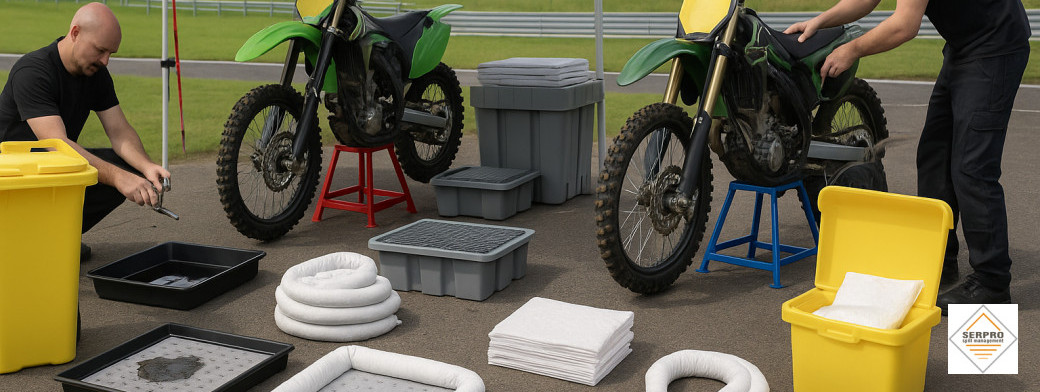
For grassroots motorsport events, the most useful spill management equipment is the kit that can be reached immediately at the point of risk. In a temporary paddock, that usually means keeping core items beside refuelling areas, service bays, tow vehicles and any place where oil, coolant or fuel containers are handled. A practical setup should include spill kits, absorbent pads, absorbent socks and drip trays, with clear responsibility for checking and restocking them before track activity begins.
The aim is simple: stop small leaks turning into slippery surfaces, stained ground or runoff into drains, verges and ditches. UK event planning and pollution prevention guidance both support having suitable emergency equipment ready to use, rather than stored out of the way where response is delayed. Readily accessible absorbents also help reduce slip risks in busy paddock walkways and work areas.
Essential spill kit checklist for a temporary paddock
- Absorbent pads for wiping up drips, catching small oil or fuel spills and placing under parts during maintenance.
- Absorbent socks to contain spreading liquid around vehicles, fuel cans, workbenches or drain edges.
- Drip trays under race cars, bikes, generators, fuel containers and tow vehicles when parked or serviced.
- Small spill kits positioned at key points so marshals, volunteers or team members can respond quickly.
- Absorbent rolls for larger working areas or repeated drips in service spaces.
- Gloves and disposal bags for safer clean-up and segregation of used absorbents.
- Drain protection where surface water drains are nearby and there is a risk of runoff.
Keep these items visible, labelled and close to the hazard. A spill station hidden in a van is far less useful than one placed beside refuelling, scrutineering or paddock access routes. This approach aligns with HSE guidance on planning for incidents and emergencies at events and wider pollution prevention guidance for businesses.
How to maintain and inspect spill kits
Check kits before each event day and again after any incident. Confirm that pads are dry, socks are sealed and usable, drip trays are clean and undamaged, and gloves and waste bags are present. Replace used items straight away, remove contaminated waste for proper disposal, and make sure everyone knows where the nearest kit is kept. A short inspection routine helps keep paddock areas safer and more organised throughout the event.
Who Should Be Responsible for Spill Response?
Spill response at a grassroots motorsport event should never be left to chance. Responsibility should be shared in a clear chain: the organiser sets the plan, nominated marshals or paddock staff coordinate the response, and individual teams deal with small spills from their own vehicles and equipment where it is safe to do so. The key point is that everyone should know who takes charge, who fetches the kit, who protects drains or runoff routes, and who decides when an incident needs to be escalated.
For temporary paddocks on fields, hard standings or mixed-use venues, the most practical approach is to name specific people before the event starts. That usually includes an event safety lead, a paddock or environmental marshal, and a deputy in case the first contact is unavailable. Teams and traders should also be told that they are responsible for good housekeeping around fuel cans, drip trays, oil containers and service areas, while larger or spreading spills should be reported immediately for a coordinated spill response.
Key roles to assign
Roles should be simple and visible. The organiser should define the procedure and make sure spill kits, absorbent pads, socks, drain protection, disposal bags and gloves are in the right places. Marshals or paddock staff should assess the area, control access, and direct cleanup. Team members should stop the source if safe, use the nearest kit correctly, and report what has been spilled. If there is any risk to drains, ditches or watercourses, escalation should be immediate in line with pollution prevention guidance for businesses.
Training for staff and volunteers
Staff and volunteers do not need complex technical training, but they do need practical instruction. They should know the likely liquids on site, where kits are stored, how to choose suitable absorbents, how to protect surface water drains, and how contaminated waste is separated and bagged. Briefings should also cover slip hazards, cordoning off affected areas, and when not to attempt cleanup alone, reflecting basic HSE slips and trips guidance. A short pre-event briefing and a simple written procedure are usually more effective than assuming people will work it out on the day.
Communication matters as much as equipment
Even a well-stocked spill station is less useful if nobody knows who to call. Clear radio channels, paddock maps, signage and incident reporting points help avoid delay. Responsibilities should be repeated in driver packs, volunteer briefings and marshal notes so that the response is quick, consistent and proportionate.
How Should Waste from Spills Be Handled and Separated?
Waste from motorsport spills should be separated by what was spilled and what was used to clean it up. In temporary paddocks, that usually means keeping oil-contaminated absorbents, fuel-contaminated materials, coolant residues and general non-hazardous rubbish apart. This matters because mixed waste is harder to classify, can increase disposal costs and may turn otherwise manageable waste into hazardous waste. Clear segregation also helps reduce the risk of leaks, fumes and secondary contamination while waste is waiting to leave site.
As a practical rule, used pads, socks, granules, gloves and wipes should go into labelled containers or disposal bags based on the liquid involved. Oil and fuel residues will often need handling as hazardous waste, while clean packaging or uncontaminated litter can be kept separate as general waste. If there is any doubt, treat the material cautiously, isolate it and confirm the correct route before disposal. This approach supports the wider UK expectation to prevent pollution and manage waste responsibly, as outlined in pollution prevention guidance for businesses.
Separate waste by spill type
Different spills need different disposal routes. Used oil absorbents, oily rags and contaminated drip tray contents should be kept together and removed by a suitable waste contractor. Fuel-soaked materials should also be isolated because of flammability and vapour risks. Coolant, brake fluid or mixed chemical spills may require a separate hazardous waste stream, especially where the absorbent contains more than one substance. Avoid putting liquid waste into skips, drains or ordinary bins.
Store, label and document what leaves site
Bagged or containerised waste should be sealed, labelled and stored upright in a secure area away from drains and traffic routes until collection. Event organisers or teams should record what was spilled, roughly how much waste was generated, where it was stored and who removed it. Keeping simple incident and transfer records helps show that the spill was managed properly and supports compliance with site rules, insurer requirements and relevant UK health, safety and environmental duties. For broader planning, HSE’s guidance on incidents and emergencies at events is a useful reference.
How Can Spill Management Arrangements Be Checked During Routine Inspections?
Spill management arrangements should be checked through short, regular inspections that confirm equipment is present, accessible, clearly labelled and suitable for the liquids used in the paddock. At grassroots motorsport events, this means looking beyond the spill kit itself and checking likely spill points such as refuelling areas, service bays, tow vehicles, fuel can storage and nearby drains or ditches. A routine inspection helps organisers spot gaps before a leak becomes a slippery surface, a fire risk or a pollution incident.
Good inspections are practical rather than paperwork-only. They should verify that teams can reach the right absorbents quickly, that used items are replaced promptly, and that responders know what to do. Where clubs keep spill kits, drip trays, absorbent pads, socks or drain protection on site, these should be checked against the event layout and the types of oil, fuel, coolant or cleaning fluids actually present.
Routine inspection checklist
- Confirm spill kits are in the correct locations and not blocked by tyres, toolboxes or vehicles.
- Check contents are complete: absorbent pads, socks, disposal bags, gloves and any drain covers or protective items required.
- Make sure absorbents match the likely liquids, including oil-only or general purpose materials where appropriate.
- Inspect drip trays under parked race cars, generators, fuel containers and service points.
- Look for damaged, saturated or missing items and replace them immediately.
- Identify nearby drains, gullies, soft ground or runoff routes that may need extra protection.
- Check spill station signs and simple response instructions are visible and legible.
- Review housekeeping: clean floors, no leaking containers, lids secured, and waste kept separate.
Training, drills and records
Regular training matters because even a well-stocked kit is of limited value if volunteers and team members do not know how to use it. Brief pre-event refreshers and simple drills help people practise who reports a spill, who isolates the area and who deploys absorbents or drain protection. This aligns with HSE guidance on planning for incidents and emergencies at events and supports better day-to-day housekeeping in line with HSE advice on slips and trips.
Each inspection should be documented with the date, location, findings, actions taken and the name of the person responsible. Near misses, small leaks and used materials should also be logged so recurring issues can be addressed. Clear reporting creates a practical record for organisers and helps demonstrate that spill risks are being monitored and improved over time.