
Published: 12 October 2026
Last updated: 25 August 2026
Why is Spill Management Crucial in Public Works Depots?
Spill management is crucial in public works depots because these sites routinely store and handle liquids and loose materials that can pollute land, drains and watercourses, create slip hazards, and interrupt essential services. Public works depots are operational yards used by councils, highways teams and contractors to store vehicles, equipment and maintenance supplies, including road salt or brine, diesel and other fuels, paints for line marking, oils, and grounds maintenance liquids. Effective control usually combines good housekeeping, bunded storage, drip trays, drain protection, and fast access to spill kits and absorbents. In the UK, this also supports duties under environmental and workplace safety guidance, including pollution prevention for businesses and COSHH controls where hazardous substances are involved.
In practical terms, even a small leak at a depot can spread quickly from a fuel bowser, paint store, workshop bench or loading area into surface water drains or pedestrian routes. That means spill planning is not only about emergency response; it is also about preventing routine drips, overfilling and poor storage from becoming environmental incidents, reportable events or everyday safety problems.
Why these depots need tighter spill control
Public works depots often hold a mixed inventory, which makes spill risks more varied than in a single-purpose facility. Salt and brine can contaminate surrounding ground and drainage systems. Fuels and oils can cause visible pollution and fire risk, while paints, solvents and some grounds maintenance liquids may require more specific handling and waste segregation. Delivery points, decanting areas, workshops and vehicle parking bays are common starting points for spills.
A clear spill management approach helps teams respond quickly with the right materials, such as oil-only absorbents for hydrocarbons, general purpose pads and rolls for mixed maintenance areas, absorbent socks to contain spread, and covered waste bags for used materials. Just as importantly, it demonstrates that the depot is managing foreseeable risks in line with UK expectations on storage, handling, staff training and inspection routines rather than relying on clean-up after the event.
What Types of Liquids are Commonly Found in Public Works Depots?
Public works depots commonly store several liquid and free-flowing materials that can create pollution, fire, slip and handling risks if they are not managed carefully. The main categories are salt and brine used for winter maintenance, fuels and oils for vehicles and plant, and paints and maintenance chemicals used for highways, buildings and grounds work. Each behaves differently during a spill, so storage, housekeeping and response measures should be matched to the material and the area where it is used.
In practice, depots often need to plan for both routine drips and larger accidental releases around fuel bowsers, workshops, loading bays, paint stores and gritting operations. The UK government’s pollution prevention guidance for businesses is a useful starting point for understanding how spills can affect drains, soil and watercourses.
Salt and winter maintenance liquids
Although salt is often stored in bulk as a solid, depots may also handle brine or salt-contaminated runoff during winter operations. These materials can increase corrosion on vehicles, plant and storage infrastructure, and runoff entering surface water drainage can harm the local environment. Salt residues can also make surfaces wet and slippery, especially around wash-down and loading areas.
Fuel and oils for vehicles and machinery
Diesel, petrol, hydraulic oil, engine oil, gear oil and lubricants are among the most common depot liquids. These are typically stored for gritters, vans, mowers, excavators and other machinery. The main hazards include fire risk, slippery floors, contaminated drainage and environmental damage from leaks or overfilling. Oil can spread quickly across hardstanding and into gullies, which is why many sites keep drip trays, drain protection and oil-focused absorbents close to refuelling and maintenance points.
Paints and maintenance chemicals
Line-marking paints, coatings, thinners, cleaning agents, herbicides and other treatment chemicals may also be present. These products can present health risks, strong odours, flammability concerns or harmful reactions depending on their formulation. For these substances, suitable segregation, clear labelling and dedicated chemical absorbents are often more appropriate than general-purpose spill materials.
Where Do Spills Typically Occur in Public Works Depots?
Spills in public works depots most often occur where liquids are moved, stored or used day to day. In practice, that usually means loading and unloading areas, storage facilities, and maintenance and repair zones. These locations commonly handle diesel, oils, line-marking paints, herbicides and other grounds maintenance liquids, so even small leaks can spread quickly across hardstanding, create slip risks and reach drains if housekeeping is weak.
Awareness of these hotspots helps teams place the right controls nearby, such as clearly labelled spill stations, absorbent pads, socks, drain protection and drip trays. UK guidance from GOV.UK on pollution prevention and HSE COSHH essentials supports a practical approach: identify where releases are most likely, keep suitable containment close at hand, and make response part of routine depot checks.
Loading and unloading areas
These are among the highest-risk points because fuels, paints and treatment liquids are being transferred between tanks, bowsers, drums or vehicles. Spills often happen during hose disconnection, overfilling, damaged containers or poor positioning on uneven ground. Fast access to absorbents and drain covers is especially important here.
Storage facilities
Bulk tanks, IBCs, drums and smaller containers can leak slowly from taps, seams or lids, turning a minor defect into a larger housekeeping issue. Bunded storage, regular stock checks and visible signs of staining around container bases all help spot problems early before liquids migrate across the depot.
Maintenance and repair zones
Workshops and plant servicing bays frequently see drips from engines, hydraulics and fuel systems, along with spills from paints, lubricants and cleaning fluids. Temporary containment under parked equipment, prompt clean-up and safe waste segregation are important to reduce slips and prevent contamination spreading on tyres, boots or tools. HSE guidance on slips and trips is also relevant in these areas.
What Spill Response Equipment Should Be Available?
Public works depots should keep spill response equipment close to the places where liquids are received, stored, decanted and used. In practice, that means having the right spill kits, absorbents and containment items available at fuel points, workshops, paint stores, salt handling areas, loading bays and near drains. The aim is to stop small leaks becoming slips, contamination incidents or pollution reaching surface water drains.
As a minimum, depots should stock both small and large spill kits so staff can respond proportionately. Small kits are useful in vans, cabs, workshops and plant areas for minor drips or container leaks. Larger kits should be positioned at higher-risk points such as fuel tanks, delivery areas and maintenance bays, where a more substantial release could occur. Equipment selection should reflect the liquids on site, with suitable oil-only, general purpose or chemical absorbents where needed, in line with COSHH guidance from HSE.
Core absorbents and containment items
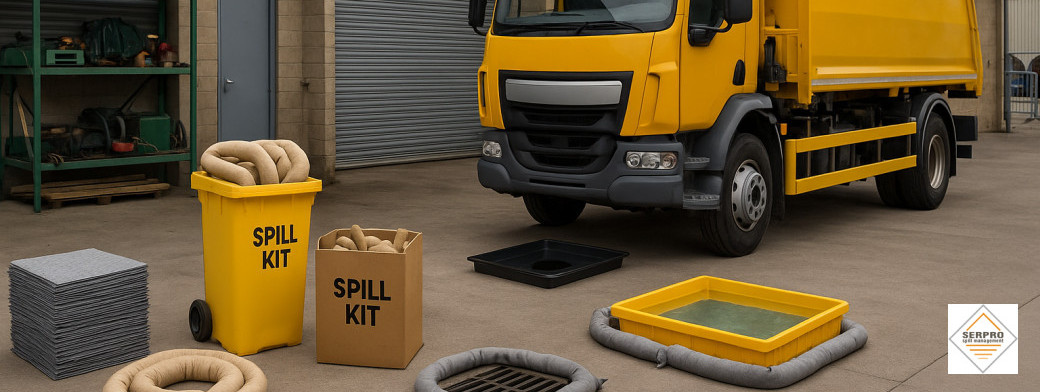
Every depot spill station should include absorbent pads, rolls and socks. Pads are useful for quick pick-up of drips, splashes and pooled liquid. Rolls help cover larger floor areas or protect walkways during clean-up. Socks are especially important because they can be placed around leaking containers, along door thresholds or around gullies to contain spread. For routine housekeeping and reducing slip risks, these items support the good practice outlined in HSE guidance on slips and trips.
Drip trays and drain covers should also be readily available. Drip trays belong under parked plant, drums, pumps and transfer points to catch minor leaks before they reach the floor. Drain covers provide immediate protection if a spill threatens surface water drainage, helping staff isolate the route while absorbents are deployed. This supports wider UK pollution prevention advice set out by GOV.UK. To make response practical, keep disposal bags, gloves and clear spill station labels with each kit, and check stocks during routine depot inspections.
Who Should Be Responsible for Spill Management?
Spill management should be a shared responsibility, but it needs clear ownership. In a public works depot, every employee should know how to spot a leak, protect drains, report hazards and take immediate safe action, while a designated spill response team should lead containment, escalation and clean-up. This structure helps depots deal with common liquids such as fuel, oils, paints and grounds maintenance fluids quickly and consistently.
Responsibility works best when roles are defined in advance. Supervisors or depot managers should decide who checks spill kits, drip trays, absorbent pads, absorbent socks, drain covers and disposal bags, and who has authority to stop work or isolate an area. The designated team should also understand when to use oil-only, general purpose or chemical absorbents, and when an incident needs external support or further environmental reporting.
Define roles before a spill happens
A practical plan usually includes first responders on each shift, a supervisor to coordinate the response, and a manager responsible for reviewing incidents and replenishing stock. Drivers, yard operatives and maintenance staff should all know the nearest spill station locations, especially around loading bays, fuel stores and paint handling areas. Clear labelling and simple instructions reduce hesitation during the first few minutes of a spill.
Train staff and keep reporting simple
Training should not be limited to one team. All staff need basic spill awareness, while nominated responders need more detailed instruction on safe containment, waste segregation, PPE and incident escalation. Regular refresher sessions and scenario drills can support wider competence, and formal spill response training can help teams build confidence. Communication matters just as much: near misses, damaged containers, used spill kit items and blocked drainage points should be reported promptly so problems are corrected before they become larger incidents.
How Should Waste from Spills be Handled and Disposed Of?
Waste from spills in public works depots should be collected promptly, kept contained, and separated according to whether it is hazardous or non-hazardous. In practice, this means identifying what has been spilled, what absorbents or cleaning materials have been used, and whether the resulting waste contains substances such as fuel, oil, paint, solvents or chemicals. Once contaminated, pads, socks, granules, PPE and sweepings may need to be treated as hazardous waste rather than general rubbish.
The safest approach is to stop the spread, recover the liquid with suitable absorbents, and place used materials into clearly labelled disposal bags or sealed containers straight away. Using purpose-made disposal bags and containers helps prevent leaks during handling and makes temporary storage more organised until collection. Waste should then be stored in a designated area away from drains, traffic routes and ignition sources where relevant.
Separate hazardous and non-hazardous waste
Hazardous and non-hazardous spill waste should never be mixed. For example, clean packaging or uncontaminated sweepings may be non-hazardous, while absorbents used on diesel, hydraulic oil, line-marking paint, herbicides or other chemicals are likely to require hazardous disposal controls. Mixing waste streams can increase disposal costs, create avoidable handling risks and make it harder to classify waste correctly.
Use suitable bags, bins and containers
Used absorbents, gloves and debris should be placed into robust bags or lidded containers that suit the waste type. Liquids recovered separately may need compatible drums or other sealed containers. Labels should record the contents clearly so staff and waste contractors know how to manage them safely. If there is any doubt about classification, check the product’s safety data sheet and your COSHH arrangements.
Follow local waste disposal rules
Disposal must comply with local waste disposal regulations and any site-specific duty of care requirements. UK operators should follow relevant environmental guidance on pollution prevention from GOV.UK and ensure waste is transferred only through authorised routes. Keeping records of spill incidents, waste type, storage and collection also supports inspections and helps show that depot spill waste is being managed responsibly.
What Routine Inspections Should Be Conducted?
Public works depots should carry out routine inspections that check spill risks before they become incidents. In practice, that means regularly reviewing liquid storage areas, spill kit contents, drainage protection, housekeeping standards and staff readiness. These inspections help depots stay prepared for leaks from salt brine systems, fuel tanks, oils, paints and other maintenance liquids, while also supporting compliance with UK pollution prevention and workplace safety duties.
A good inspection routine is simple, repeatable and recorded. It should confirm that bunded storage is intact, containers are labelled and sealed, drip trays are in place, absorbents are suitable for the liquids on site, and access to drains is protected. Inspection findings should then be documented, corrective actions assigned and follow-up checks completed.
Inspection checklist
- Check tanks, drums and IBCs for leaks, corrosion, damage or overfilling.
- Inspect bunds, hardstanding and loading areas for cracks, standing liquid or staining.
- Confirm spill kits are clearly signed, accessible and fully stocked with suitable absorbents, gloves and disposal bags.
- Check drip trays under taps, pumps, parked plant and transfer points.
- Verify drain covers or other drain protection are available near higher-risk areas.
- Review labels, segregation and storage of fuels, oils, paints and chemicals.
- Assess housekeeping to reduce slips and contamination, in line with HSE guidance on slips and trips.
How often should inspections take place?
High-risk areas such as fuel dispensing points, paint stores and delivery zones should usually be checked daily or weekly, depending on use. A more detailed formal inspection is often suitable monthly, with additional checks after deliveries, bad weather, maintenance work or any spill event. Inspection frequency should reflect site activity, stored volumes and environmental risk, following UK pollution prevention guidance.
Documentation and reporting procedures
Use a standard form or digital log so inspections are consistent; this inspection checklist resource can help structure reviews. Record the date, area inspected, defects found, immediate controls applied, responsible person and deadline for action. Near misses, leaks and repeat issues should be escalated to site management, with records retained to support audits, training reviews and continuous improvement.
Conclusion: Best Practices for Spill Management in Public Works Depots
Effective spill management is a core part of running a safe, organised and environmentally responsible public works depot. Sites storing salt, fuel, oils, paints, herbicides and other grounds maintenance liquids face everyday risks from deliveries, decanting, vehicle maintenance, loading areas and damaged containers. A practical approach combines good housekeeping, bunded storage, clear labelling, routine inspections and fast access to the right response equipment, such as spill kits, absorbent pads, socks, drip trays and drain protection.
In practice, the strongest spill control strategies are the simplest to maintain: store liquids correctly, separate incompatible materials, keep response items close to likely spill points, train staff to act quickly, and dispose of used absorbents and contaminated waste safely. These steps help reduce slip risks, limit pollution and support wider duties under UK guidance on pollution prevention, oil storage and workplace safety, including pollution prevention for businesses, COSHH essentials and HSE advice on slips and trips.
Now is a good time to review your current spill management arrangements across storage zones, workshops, washdown points and loading bays. Check whether kits are clearly marked, whether absorbents match the liquids on site, whether drains can be protected quickly, and whether inspection routines are being recorded consistently. Small improvements made before an incident can make response faster and more effective when a spill does happen.
If your depot has expanded, changed suppliers or introduced new liquids, update your spill control plan and refresh staff awareness. Implementing best practice is not a one-off task but an ongoing part of depot management that protects people, surfaces, equipment and the surrounding environment.