
Published: 20 October 2026
Last updated: 25 August 2026
Why is Spill Planning Essential in Lift Maintenance?
Spill planning is essential in lift maintenance because hydraulic oil leaks in occupied buildings can quickly create slip hazards, damage floor finishes, spread through corridors and entrances, and increase the risk of pollution if oil reaches drains. In this context, a hydraulic oil leak means the escape of oil from lift cylinders, hoses, valves, tanks or fittings during inspection, servicing, repair or component failure. Common spill types include slow seepage, drips during disconnection, pooled oil in machine areas, and accidental releases while parts are being changed. A practical spill plan should therefore cover immediate containment using drip trays, absorbent pads, absorbent rolls, absorbent socks, drain protection, gloves and labelled spill kits, while also supporting UK good practice on safe floors and pollution prevention, including guidance from the HSE on slips and trips and GOV.UK pollution prevention guidance.
For lift contractors working in hospitals, offices, flats, schools or retail premises, the issue is not only the leak itself but the fact that maintenance takes place around residents, staff, visitors and cleaning teams. Even a minor release can be walked into public areas on footwear or trolley wheels, turning a localised maintenance issue into a building-wide housekeeping problem. Spill planning reduces disruption by making sure the right containment materials are close to the lift area, the response steps are clear, and contaminated absorbents can be bagged and removed without delay.
During lift maintenance, spills are not always dramatic. More often, they are small but frequent: oil drips from loosened fittings, residue released when hoses are handled, fluid escaping during topping up, or historic leakage discovered in pits and plant spaces. These smaller incidents still matter because smooth lobby floors, vinyl walkways and polished stone can become hazardous very quickly. Keeping suitable absorbents on hand helps contractors control leaks at source before oil spreads further.
A spill management plan also improves decision-making. It should identify who responds, what type of absorbent or containment method is suitable, how drains and thresholds will be protected, and where used materials will be placed for safe disposal. In many cases, a compact, clearly labelled spill kit near the work area is the simplest way to support a fast first response. In short, spill planning is essential because it protects people, preserves the building environment, and helps lift contractors manage hydraulic oil leaks in a controlled, professional and responsible way.
What Are the Common Types of Hydraulic Fluids and Their Risks?
Lift contractors most commonly encounter mineral-based hydraulic oils, but some systems may also use fire-resistant or biodegradable hydraulic fluids. Each fluid type presents different spill-control, health and environmental considerations, so it is important to identify the product in use before maintenance starts. In occupied buildings, even a minor leak can create slip hazards, contaminate floor finishes, spread through corridors on footwear or wheels, and generate waste that must be handled correctly.
The main risks are not limited to visible staining. Hydraulic fluids can irritate skin after repeated contact, create inhalation concerns in poorly ventilated plant areas where mist is generated, and cause pollution if they enter drains or the ground. Under the UK’s COSHH framework, contractors should assess the substance, review the safety data sheet, and put suitable controls in place for storage, containment, clean-up and disposal.
Common hydraulic fluids used in lifts
- Mineral oil-based hydraulic fluids – the most common type in hydraulic lift systems.
- Synthetic or fire-resistant fluids – used where reduced flammability is required.
- Biodegradable hydraulic fluids – sometimes selected for environmental reasons, though they still require controlled clean-up.
- Water-glycol or specialist blends – less common, but potentially relevant in specific installations.
Key risks linked to leaks
For most lift maintenance work, oil-only absorbents are suitable for containing and lifting hydrocarbon-based leaks, while general purpose absorbents may be useful where mixed maintenance fluids or water contamination are involved. However, absorbent choice should match the actual fluid. Fire-resistant or specialist fluids may need different handling, and contaminated absorbents, gloves and debris should be segregated as waste.
- Health risks: skin defatting, irritation, and exposure to additives or mists.
- Safety risks: slips on smooth lobby, corridor or plant-room floors.
- Environmental risks: pollution if leaks reach drains, service voids or external ground.
- Compliance risks: poor identification, storage or disposal can undermine COSHH controls and site procedures.
In practice, contractors should confirm the fluid type, keep the relevant absorbents and containment items close to the work area, and ensure disposal follows both the site’s requirements and waste regulations rather than assuming all hydraulic fluids can be treated in the same way.
Where Do Hydraulic Oil Leaks Typically Occur?
Hydraulic oil leaks during lift maintenance typically start at connection points, moving components and service areas where pressure, vibration or wear affect seals and fittings. In practical terms, lift contractors should first check cylinders, hose connections, valve blocks, pumps, reservoirs and any joints disturbed during servicing. Even a minor seep can spread quickly across smooth floors, into thresholds or towards drainage routes, creating slip risks and operational disruption in occupied buildings.
In occupied premises, leaks are not only a plant-room issue. Oil can appear in lift motor rooms, lift pits, landing thresholds, service corridors and loading areas where tools, parts or contaminated footwear carry residue beyond the original source. This matters because a small leak can affect building safety, housekeeping standards and access for residents, staff, visitors or patients long before it becomes a major mechanical fault.
Identifying likely leak points in the hydraulic system
Common leak origins include ageing ram seals, loose unions, damaged hoses, worn gaskets, overfilled reservoirs and pump or valve assemblies opened during maintenance. Contractors should also watch for drips from bleed points, fittings re-tightened after inspection and oil released when components are disconnected. Placing drip trays beneath suspect areas and keeping absorbent pads or socks ready can help contain small releases before they spread.
Common building locations where leaks can spread
Within occupied buildings, the highest-risk areas are usually the lift motor room, the lift pit and the route between the work area and the nearest exit or service store. Oil may also reach lobby floors, basement corridors or delivery bays if it is walked out on boots or trolley wheels. Where there is a chance of oil reaching gullies or drainage points, temporary drain covers should be close at hand, supported by clearly stocked spill stations in maintenance areas.
Why these leaks affect safety and operations
The immediate concern is usually slips and contamination of floor finishes, in line with HSE guidance on slips and trips. However, leaks can also force lift shutdowns, restrict access routes and increase cleaning demands in public or residential settings. If oil enters drainage systems or external surfaces, contractors may also need to consider wider pollution prevention measures as outlined by GOV.UK guidance.
What Spill Response Equipment Should Be Available?
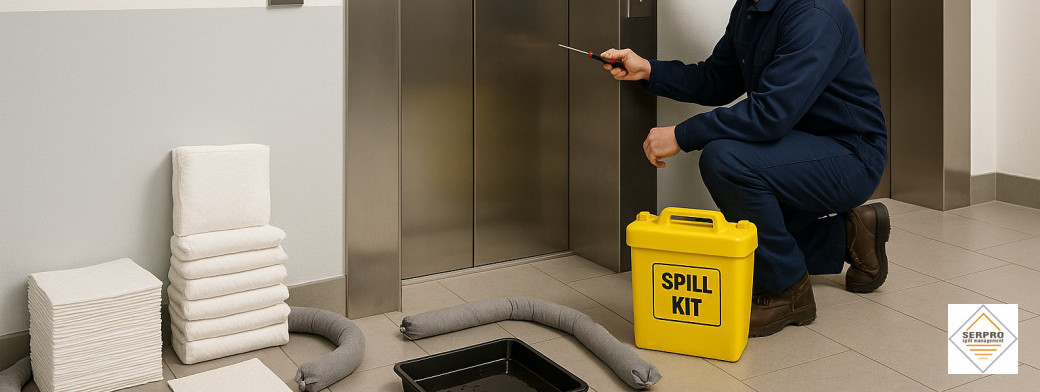
Lift maintenance contractors working on hydraulic systems in occupied buildings should have a compact, clearly organised spill response kit available at the point of work. The right equipment helps contain small oil leaks quickly, protects floors and circulation areas from slip risks, and reduces the chance of oil being tracked into corridors, entrance lobbies or service areas. In practical terms, that means keeping suitable absorbents, containment items, PPE and waste bags close to lift motor rooms, plant spaces or maintenance trolleys rather than relying on a general site store.
Having the correct equipment on hand matters because even a minor hydraulic oil release can spread further than expected in a busy building. Fast access to absorbents and containment tools supports better housekeeping, helps contractors keep work areas safe in line with HSE guidance on slips and trips, and makes it easier to prevent oil entering drains or sensitive areas, consistent with UK pollution prevention guidance.
Recommended spill response items for lift maintenance
- A small, portable spill kit suited to routine maintenance visits
- Oil-only absorbent pads for wiping, catching drips and dealing with small pooling
- Absorbent rolls to protect floor areas, walkways and access routes during work
- Absorbent socks to contain spreading oil around machinery bases or along thresholds
- Drip trays for placing beneath hose connections, valves or known leak points
- Drain covers where there is a realistic risk of oil reaching nearby drainage points
- Disposable gloves and other task-appropriate PPE
- Disposal bags for used absorbents and contaminated debris
- Clear labels so kits are easy to identify and restock
Storage and maintenance of spill kits
Spill response equipment should be stored where contractors can reach it immediately, not locked away in a remote cupboard. For occupied buildings, that often means a labelled spill station in the plant room, plus a smaller portable kit carried with tools. Kits should be kept dry, visible and protected from damage, with contents matched to the likely liquid type and scale of spill.
Inspect kits during routine maintenance checks. Replace used pads, socks, gloves and bags promptly, check that drip trays and drain covers are clean and serviceable, and make sure staff know what each item is for. Used absorbents should be segregated and handled as contaminated waste where required, with controls considered under COSHH essentials. A spill kit is only useful if it is complete, accessible and ready to deploy without delay.
Who Should Be Responsible for Spill Management?
Responsibility for hydraulic oil spill management in an occupied building should be shared, but it must be clearly defined. In practice, the lift contractor should take the lead for spills arising from maintenance activity, because they understand the lift equipment, the likely leak points and the safest clean-up method. The building’s responsible person or facilities team should support that response by controlling access, protecting occupants, reporting the incident internally and making sure site procedures are followed. Clear ownership prevents delay, confusion and avoidable spread of oil into corridors, entrances or drainage routes.
The most effective approach is to agree roles before work starts. A simple plan should identify who responds first, who isolates the area, who fetches spill materials, who communicates with building management and who arranges waste handling. This is especially important in hospitals, offices, residential blocks and other live environments where slips, tracking and disruption can escalate quickly.
Identify the Key People Before Maintenance Begins
At minimum, spill response arrangements should name the attending lift engineer, the contractor’s supervisor or call-out manager, and the client-side contact such as the facilities manager, caretaker or duty manager. If security or reception staff are likely to be first on the scene, they should also know how to raise the alarm and secure the area without attempting technical work beyond their competence. Where relevant, cleaning teams should be told when they must wait for contractor instruction rather than using standard mops that may spread contamination.
Train Staff to Do the Right Things
Staff training does not need to turn building personnel into spill specialists, but it should cover basic recognition, immediate reporting, safe cordoning-off and the location of spill materials. Contractors should ensure their own teams are trained in spill control, use of absorbents, PPE, containment and waste segregation. Refresher learning through practical spill management training helps keep responses consistent and proportionate.
Communication and Coordination Matter
During an incident, communication should be prompt and simple: confirm the source, the location, the risk to occupants and the actions underway. Good coordination reduces duplicated effort and helps prevent oil being walked through the building. It also supports wider duties around safe floors and contamination control, in line with HSE guidance on slips and trips. Everyone involved should know when the area is safe to reopen and who signs off the clean-up.
How Should Contaminated Waste Be Handled and Disposed Of?
Contaminated waste from a hydraulic oil leak should be separated promptly, contained securely, and disposed of through the correct hazardous waste route. For lift contractors working in occupied buildings, that usually means isolating oil-soaked absorbents, disposable PPE, wipes and other affected materials from general rubbish, placing them in suitable bags or containers, and following site and legal requirements for storage, transfer and disposal.
In practice, the safest approach is to treat waste handling as part of the spill response, not as an afterthought. Once the leak has been stopped and the area made safe, all used absorbent pads, socks, rolls, granules, gloves and cleaning cloths should be collected without spreading contamination into corridors, bin stores or service routes. Using clearly identified disposal bags and compatible sealed containers helps prevent drips, odours and secondary contact while waste is awaiting collection.
Separate contaminated materials properly
Best practice is to keep different waste streams apart. Oil-contaminated absorbents and PPE should not be mixed with ordinary site waste, recyclables or clean packaging. If other substances are involved, such as cleaning chemicals used during maintenance, contractors should also avoid mixing oil waste with chemical-contaminated materials unless the waste classification has been checked. Segregation makes storage safer, supports correct consignment, and reduces the risk of turning non-hazardous waste into hazardous waste unnecessarily.
Use suitable bags and containers
Containment matters after the clean-up as much as during it. Waste should be placed in robust, appropriate bags and, where needed, lidded containers that can resist tearing and leaking. Bags should be sealed before being moved through occupied areas, and containers should be labelled so building staff and waste carriers can identify the contents. This is especially important in schools, hospitals, offices and residential blocks, where poor housekeeping can expose occupants and cleaners to residual oil.
Follow UK hazardous waste requirements
Hydraulic oil and materials contaminated with it may fall under hazardous waste controls, so disposal should be checked against the site’s duty of care procedures and the relevant waste classification. Contractors should ensure waste is described accurately, stored securely, and transferred only to authorised carriers and facilities. UK guidance on pollution prevention from GOV.UK is a useful reference, and any exposure risks from contaminated materials should be considered under COSHH. Keeping transfer notes or consignment documentation in order is an important part of demonstrating that the clean-up was completed responsibly.
How Can Regular Inspections Help Prevent Spills?
Regular inspections help prevent hydraulic oil spills by finding wear, damage and poor housekeeping before a minor seepage becomes a visible leak. For lift contractors working in occupied buildings, routine checks reduce the risk of oil reaching floors, lift pits, corridors or drainage points, while also helping teams plan repairs at a safer and less disruptive time.
In practice, inspections are one of the simplest ways to limit spill incidents. A structured routine makes it easier to spot early warning signs, confirm that containment measures are in place and show that maintenance work supports health and safety duties. Using consistent records and suitable inspection tools also helps contractors demonstrate a sensible approach to risk control.
Routine inspection checklist for hydraulic systems
- Check cylinders, rams, seals and gaskets for dampness, staining or oil residue.
- Inspect hoses, unions, valves and fittings for cracking, looseness or abrasion.
- Look at the power unit, tank and pump area for drips, pooling or overfilled reservoirs.
- Examine lift pits, machine rooms and landing areas for contaminated dust, slick patches or tracking.
- Confirm drip trays or local containment are correctly positioned and not already full.
- Check that absorbents, disposal bags and gloves are available, labelled and easy to access.
- Review whether any oil could reach drains, and verify protection measures where needed.
How to identify early signs of leaks
Early signs often appear before a clear spill develops. Contractors should look for dark patches on concrete, oily odours, recurring dust build-up that clings to wet surfaces, slow drips beneath fittings and fresh marks near hose connections. Unexplained slip risks, oil carried on footwear or repeated wiping around the same component can also indicate a developing problem.
Why inspections matter for compliance
Inspection routines support compliance by showing that leak risks are being identified, controlled and reviewed. This aligns with wider duties around safe floors and contamination control under HSE guidance on slips and trips, as well as good practice on preventing oil pollution set out by GOV.UK pollution prevention guidance. Where hydraulic oil exposure or clean-up materials need assessment, inspection findings can also feed into a suitable COSHH approach.
What Are the Key Takeaways for Lift Contractors?
The key takeaway for lift contractors is simple: hydraulic oil leaks in occupied buildings should be planned for before maintenance starts, not improvised after a spill appears. Good spill preparedness helps protect floors, prevent slips, reduce oil being tracked through corridors and communal areas, and support a safer experience for building users, staff and contractors. Keeping the right materials close at hand—such as absorbent pads, absorbent socks, drip trays, gloves, disposal bags and clearly labelled small spill kits—makes a practical difference when dealing with minor leaks quickly and cleanly.
Across the article, the main message is that safe lift maintenance depends on combining housekeeping, containment and routine checks. Contractors should identify likely leak points, protect surrounding surfaces, stop oil reaching drains, separate contaminated waste for proper handling, and make spill response part of normal maintenance planning. This supports safer floors in line with HSE guidance on slips and trips, while also helping sites follow sensible pollution prevention measures set out by GOV.UK.
In practice, best results come from consistency. Review van stocks, check spill kit contents, brief engineers, and make sure containment items are easy to access before work begins. A calm, prepared response to small hydraulic oil leaks helps maintain a safe environment during lift maintenance and shows clients that spill management is being treated as an essential part of the job, not an afterthought.