
Published: 19 September 2026
Last updated: 21 June 2026
Why is Spill Management Crucial in Tool Hire Depots?
Spill management is crucial in tool hire depots because these sites regularly handle returned plant, fuel containers, lubricants and cleaning products that can leak during storage, inspection or handover. In this setting, spill management means the planned process of preventing, containing, cleaning and disposing of liquid spills safely. The most common spill types are fuel, oil and chemicals, and effective control usually involves practical measures such as drip trays, absorbent pads, designated inspection areas and clear waste handling procedures. In the UK, spill management also matters because depots must protect workers, customers, drains and the wider environment while meeting legal duties under health, safety and pollution prevention guidance.
Tool hire depots are different from many other workplaces because equipment moves in and out constantly, often with unknown residues left from previous use. A generator may arrive with diesel on its frame, a breaker may be returned with hydraulic oil on the casing, or cleaning chemicals may drip from stored containers. Without a spill plan, even a small leak can create slip risks, fire concerns, contamination of stock, and pollution if liquids reach surface water drains. That is why spill management should be treated as part of everyday depot housekeeping rather than as an occasional emergency task.
What counts as a spill in a tool hire depot?
In practice, a spill can include petrol, diesel, engine oil, hydraulic oil, coolant, degreasers, detergents and other maintenance or cleaning chemicals. Some are mainly a slip or housekeeping issue, while others may be flammable, harmful to skin, or hazardous to the environment. The right response depends on the substance, which is why staff need to know the difference between oil-only, general purpose and chemical absorbents, and when extra containment is needed around drains or washdown areas.
Why does UK compliance matter?
UK businesses are expected to control fuel and chemical risks sensibly and prevent pollution. Relevant guidance includes the HSE’s advice on petrol and workplace controls in INDG331 and the government’s guidance on pollution prevention for businesses. For tool hire depots, this means spill preparedness is not just good practice: it supports safer floors, better stock handling, cleaner inspection zones and a more defensible approach to environmental compliance.
What Are the Common Spill Risks in Tool Hire Depots?
Tool hire depots commonly face spill risks from fuels, oils and cleaning chemicals. The main problem liquids are petrol and diesel from small plant and fuel cans, engine and hydraulic oils from returned equipment, and detergents or degreasers used during cleaning and preparation. These substances can leak during unloading, inspection, storage or maintenance, creating slip hazards, fire risks, contamination and potential exposure concerns that should be assessed under COSHH guidance from HSE.
In practice, the highest-risk moments are often routine ones: a generator returned with a damp base, a pressure washer tipped in transit, a hedge cutter with residual chain oil, or a fuel can set down without checking the cap. Even small drips can spread across smooth depot floors, soak into packaging, or run towards doorways and drains if they are not spotted quickly.
Liquids Most Likely to Cause Problems
Fuels are an obvious concern because they are flammable and can give off vapours, but lubricants can be just as disruptive. Engine oil, hydraulic fluid, gearbox oil and mixed residues from plant and access equipment often appear as slow leaks rather than dramatic spills. Cleaning chemicals also matter, especially when depots use concentrated degreasers, traffic film removers or disinfectants in washdown areas. Different liquids may need different response materials, such as oil-only absorbents for hydrocarbons rather than water-based products.
Where Spills Usually Start
Common sources include returned equipment awaiting checks, refuelling points, storage racks, workshop benches and loose or poorly stored fuel cans. Drips may also start from hoses, filler caps, drain plugs, bundless containers or items left standing after transport between branches or customer sites.
Why These Spills Matter
The consequences go beyond mess. Spills can cause slips and falls, damage stock, increase fire risk, create unpleasant odours, and pollute external ground or surface water if liquids reach drains. They can also interrupt turnaround times between hires, making good inspection and containment routines essential.
Where Do Spills Typically Occur in Tool Hire Depots?
Spills in tool hire depots most often occur at the points where equipment, liquids and people meet: return and inspection zones, loading bays, storage areas, refuelling points and cleaning stations. These areas see repeated movement of plant, fuel cans, oils and maintenance chemicals, so even small leaks can quickly create slip hazards, contaminate stock or reach drains if not contained early. Routine housekeeping and the right control measures, including clearly placed spill kits, drip trays and absorbents, help staff deal with leaks before they spread.
In practice, the highest-risk locations are usually the busiest ones. Returned equipment may arrive with residual fuel, hydraulic oil or chain lubricant still present, while loading activity can dislodge caps, tip containers or spread contamination across traffic routes. As the HSE notes in its guidance on slips and trips, contamination on floors is a common cause of workplace incidents, which makes early detection and fast clean-up especially important in depot environments.
Inspection zones and returned equipment areas
Inspection zones are a frequent starting point for spills because machines are checked, handled and prepared for the next hire cycle there. Residual oil beneath engines, drips from hoses, and cleaning chemical overspray can all appear during handover checks. Preventative measures include using drip trays under suspect equipment, keeping absorbent pads or socks within reach, and building spill checks into every return inspection.
High-risk areas: loading bays and storage areas
Loading bays are high-risk because equipment is lifted, wheeled and secured under time pressure. Movement can turn a minor leak into a wider floor contamination issue. Storage areas also need attention, especially where fuel cans, lubricants or chemical products are kept together. Poor stacking, damaged containers or uncapped products can lead to slow leaks that go unnoticed between shifts.
Preventative measures across the depot
Good spill prevention relies on regular inspections of traffic routes, shelving, container condition and nearby drains. Keep spill stations clearly labelled, place absorbents close to known risk points, and separate oil-only, general purpose and chemical response materials where appropriate. Staff should know who responds, how waste is bagged and isolated, and when a small leak becomes an escalation issue.
What Spill Response Equipment Should Be Readily Available?
Tool hire depots should keep spill response equipment close to fuel storage, cleaning areas, loading bays, maintenance benches and return inspection points. At a minimum, that means suitable absorbents, drip trays, spill kits, PPE, waste bags and clear instructions, so staff can deal with small leaks quickly and stop liquids spreading into walkways or drains. The right mix depends on whether the depot handles fuel, lubricants, hydraulic oil, detergents or other cleaning chemicals, and should support wider site controls set out in UK pollution prevention guidance.
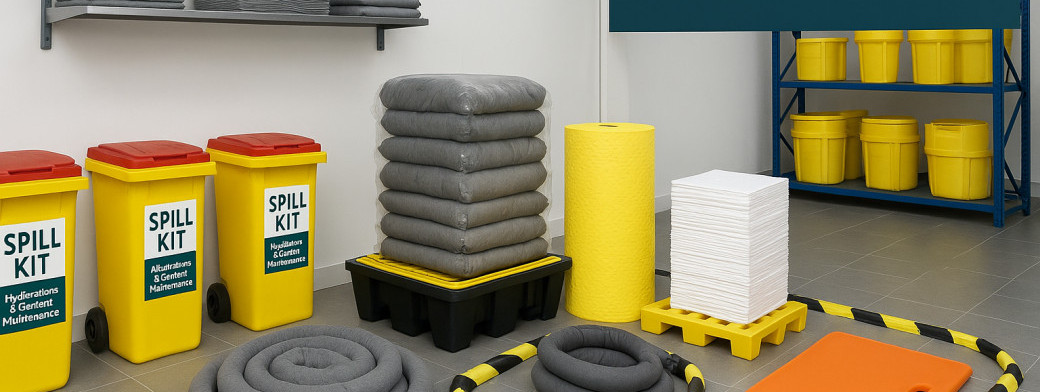
Absorbents are the core of most first-response arrangements. Pads are useful for wiping up drips, catching small leaks under returned tools and cleaning around caps, hoses and filler points. Rolls work well along worktops, wash-down areas or inspection benches where repeated drips are likely. Socks are designed to contain and guide spills before they spread, making them especially useful around doorways, drain edges, palletised liquids and parked plant; for example, absorbent socks can be positioned around a leak or used to form a quick barrier.
Containment and kit essentials
Drip trays should sit under stored engines, fuel cans, pumps and equipment awaiting cleaning or repair. They help catch slow leaks before they become floor contamination. Spill kits should be easy to access and sized for the risks in each area, typically including absorbent pads, socks, disposal bags and gloves. Where different liquids are present, it also helps to separate oil-only, general purpose and chemical absorbents so staff can choose the correct material for the spill.
Why labelling matters
Clear labelling is important because response time matters. Spill stations should be marked so staff can find them immediately, and kit contents should be labelled by use, such as oil, fuel or chemical spills. Waste bags and temporary storage containers should also be labelled to reduce mixing and support safer disposal. In practice, good labelling makes training easier, improves consistency between shifts and reduces the chance of the wrong absorbent being used in a busy depot.
Who Should Be Trained to Handle Spills in Tool Hire Depots?
Everyone who works around fuel, oil, cleaning fluids or returned equipment in a tool hire depot should receive spill awareness training, and selected staff should have extra practical training to lead the response. In practice, that means counter staff, yard teams, delivery drivers, workshop technicians, cleaners, supervisors and managers all need to know how to spot a leak, make the area safe, use the right absorbents and report the incident. The level of training should match the risk of the role, but spill response should never sit with one person alone.
Tool hire depots are busy, changeable environments, so spills often happen during unloading, inspection, refuelling, cleaning or storage between rentals. Staff should understand basic control measures under COSHH guidance from HSE, including how to identify hazardous substances, prevent exposure, stop liquids reaching drains and separate waste for safe disposal. Clear access to safety equipment such as gloves, drip trays, absorbent pads, socks and labelled spill kits helps staff act quickly and consistently.
Which staff roles should be included?
Front-line teams are usually first to find a spill, so they need simple, repeatable instructions. Counter and returns staff should know how to isolate leaking items during check-in. Workshop and maintenance staff may need more detailed training on oils, fuels and cleaning chemicals, including product selection such as oil-only or general purpose absorbents. Yard operatives and drivers should know what to do if a container tips or a machine leaks in transit or while unloading. Supervisors should be trained to assess escalation points, record incidents and confirm waste handling arrangements.
What should training and handover checks cover?
Training should cover spill identification, first response, PPE, use of spill kits, drain protection, reporting lines and waste segregation. It should also include handover checks and responsibilities between shifts or between depot and driver: has returned equipment been inspected for leaks, are drip trays in place, are spill stations stocked, and has any previous incident been logged and passed on? These checks help prevent small leaks being missed and make sure responsibility is clear at every stage of the rental cycle.
How Should Waste from Spills Be Managed?
Waste from spills in tool hire depots should be managed by separating it by type, bagging it securely, and disposing of it in line with UK waste rules. Absorbents, contaminated PPE, damaged packaging and recovered liquids should not all be treated the same. The right approach depends on what was spilled, whether the waste is hazardous, and how likely it is to leak, react or cause pollution during storage and transport.
In practice, this means keeping oil-contaminated waste apart from chemical spill waste and apart from general rubbish. Used pads, socks, rolls, granules, gloves and wipes should be collected promptly after the clean-up, placed in suitable containers or disposal bags, and clearly labelled where needed. This helps staff avoid cross-contamination and supports safer handling if waste is later collected by a licensed contractor.
Separate waste types clearly
Separation of waste types is one of the most important parts of spill management. Oil-only absorbents used on diesel, hydraulic oil or lubricants should be kept separate from absorbents used on cleaning chemicals, solvents or mixed liquids. Free liquid recovered from a spill may also need its own sealed container rather than being left in saturated absorbents. If different substances are mixed together, disposal can become more complex and more expensive, and the risks to handlers may increase.
Use disposal bags and secure temporary storage
Disposal bags should be kept with spill kits so waste can be contained immediately after use. Bags must be strong enough for contaminated absorbents and tied or sealed before being moved to a designated holding area. Temporary storage should be away from drains, protected from weather, and checked for leaks. If waste includes hazardous substances, staff should follow site COSHH information and any carrier instructions.
Follow legal compliance requirements
Legal compliance in waste handling means identifying whether spill waste is hazardous, storing it safely, and ensuring it is transferred lawfully. UK businesses should follow relevant duty-of-care requirements and pollution prevention measures set out in GOV.UK pollution prevention guidance. Keep transfer notes or consignment paperwork where required, use authorised waste contractors, and never wash spill residues into surface water drains or yard gullies.
What Routine Inspections Should Be Conducted?
Tool hire depots should carry out routine spill-prevention inspections daily, weekly and after key events such as equipment returns, refuelling, cleaning or stock deliveries. A simple inspection routine helps staff spot leaks, damaged containers, missing absorbents and contaminated walkways before a small issue becomes a slip risk, pollution incident or wasted hire time. Regular checks also support safer housekeeping in line with HSE guidance on slips and trips.
In practice, the most effective approach is to combine quick visual checks with a more detailed recorded inspection. Daily walk-rounds can focus on obvious leaks, stained floors, overfilled waste bags, blocked access to spill kits and the condition of drip trays. Weekly inspections should go further, confirming that absorbents, drain protection, PPE and disposal materials are in the right place and ready for use. Using standard inspection tools makes these checks easier to repeat consistently across the depot.
Recommended inspection frequency
- Daily: yard, workshop, wash-down, fuel and returns areas.
- Per shift or handover: check high-use zones and spill stations.
- Weekly: full site inspection with recorded findings.
- After incidents: inspect and restock immediately following any spill or near miss.
- After deliveries or returns: check containers, plant and storage points for fresh leaks.
Checklist for inspection zones
- Equipment returns area: oil drips, fuel residue, damaged caps, leaking hydraulic lines.
- Fuel and oil storage: container condition, labels, bunds or trays, signs of overfilling.
- Chemical storage and cleaning areas: sealed containers, segregation, compatible absorbents, clear instructions.
- Workshop floors and walkways: staining, pooled liquids, trip hazards, cleaning response.
- Drain points and external yards: drain covers available, no contaminated run-off, good housekeeping.
- Spill response stations: stocked kits, gloves, disposal bags, clear labelling and easy access.
Documenting findings
Record what was checked, what was found, who carried out the inspection and what action was taken. Notes should include the location, type of liquid, likely cause, corrective action, restocking needs and whether follow-up is required. Keeping dated records helps managers identify repeat problem areas, plan maintenance and show that spill risks are being monitored routinely rather than only after an incident.
Conclusion: Best Practices for Spill Management in Tool Hire Depots
Effective spill management in tool hire depots comes down to preparation, routine checks and a clear response process. Across the article, the key themes are consistent: identify where fuel, oil and cleaning chemical spills are most likely to occur, keep the right absorbents and containment products close to those risk points, train staff to respond quickly, and separate waste for safe handling after clean-up. In a busy depot, these simple controls help reduce slip hazards, limit pollution risks and support safer day-to-day operations.
Best practice is not about relying on one product alone. It means combining good housekeeping with practical equipment such as absorbent pads, rolls, socks, drip trays, drain covers, gloves, disposal bags and clearly labelled spill stations. It also means building spill checks into equipment returns, cleaning areas, storage zones and handover routines. Using guidance such as COSHH essentials, HSE slips and trips advice and GOV.UK pollution prevention guidance can help depots shape procedures that are practical and proportionate.
If your depot already has spill supplies on site, now is the time to review whether they are positioned well, matched to the liquids handled and supported by regular inspections. If not, putting these measures in place can make spill response faster and more consistent. Small improvements, repeated every day, often make the biggest difference.
For more practical advice on spill control, absorbents, containment and depot housekeeping, explore the SERPRO resources hub for further guidance and product support.