
Published: 7 September 2026
Last updated: 2 September 2026
Why is Spill Preparedness Essential in Indoor Climbing Centres?
Indoor climbing centres are purpose-built venues for bouldering, roped climbing and training, combining public activity areas with back-of-house spaces such as plant rooms, cleaning stores, cafés and maintenance zones. Spill preparedness matters because these sites can experience several types of liquid contamination at once, including cleaning chemicals, oils and hydraulic fluids, and food and drink spills, as well as rainwater tracked in on entrance mats. In practice, effective control means preventing slips, isolating staff-only hazards, and keeping suitable products nearby, such as absorbent pads, absorbent rolls, socks and drip trays. In the UK, this sits within wider duties to manage slip risks and hazardous substances under HSE slips and trips guidance and COSHH, with pollution controls also relevant where leaks could reach drains under GOV.UK pollution prevention guidance.
Although chalk dust is often seen as the most obvious housekeeping issue in climbing facilities, liquids usually create the more immediate safety risk. A small coffee spill near seating, a leaking detergent container in a cleaning cupboard, oil from hydraulic maintenance equipment, or water pooling around wet entrance mats can all create fast-developing slip hazards. In busy centres, where visitors move between climbing walls, cafés and reception areas in specialist footwear, even minor spills can spread quickly unless they are contained and cleaned without delay.
Typical spill risks in climbing centres
Common spill sources include diluted cleaning chemicals, sanitising products, cooking oils or drinks from café areas, condensate or leaks in plant rooms, and maintenance fluids used on lifting or access equipment. Staff should also consider secondary risks, such as liquid travelling under doors, reaching walkways, or escaping into drainage systems. This is why compact spill kits are especially useful in staff-only areas: they support rapid first response while helping restrict access until the area is safe.
Why planning matters
A simple spill plan helps teams decide who responds, which absorbents are suitable, when drip trays or temporary containment are needed, and how waste should be separated for disposal. The aim is not only to clean up faster, but to reduce slips, maintain safe access routes and support consistent day-to-day compliance.
What Types of Liquids Are Commonly Spilled in Climbing Centres?
Indoor climbing centres commonly deal with several distinct spill types, and each creates a different risk profile. The most frequent are diluted or concentrated cleaning chemicals, food and drink spills from café and seating areas, rainwater tracked in at entrances, and oils or hydraulic fluids linked to maintenance equipment. In practice, these liquids matter because they increase slip risk, can spread into public walkways, and may require different absorbents, PPE and disposal methods.
A useful way to assess spill risk is to group liquids by source and response needs. Water and soft drinks usually call for fast housekeeping and general absorbents, while stronger detergents, sanitisers and descalers may need dedicated chemical absorbents and tighter staff-only access control. Oily leaks from access equipment or hydraulic tools should be treated differently again, typically with oil-only absorbents that target hydrocarbons without soaking up unnecessary water.
Typical spill categories in climbing centres
Cleaning chemicals are common in washrooms, changing areas, cafés and general cleaning cupboards. These may include floor cleaners, degreasers, disinfectants, sanitisers, bleach-based products and descalers. Because some are covered by COSHH controls, staff should know which products need segregation, prompt containment and restricted access.
Food and drink spills often come from café counters, spectator seating and party areas. Coffee, tea, milk, juice, smoothies and syrups can leave floors unexpectedly slippery, especially on smooth surfaces or near transitions into climbing zones.
Hydraulic fluids and lubricants may appear during maintenance of lifting equipment, auto belay servicing support gear, trolleys or other plant. Even small leaks in plant rooms or back-of-house areas can spread underfoot, so compact spill kits are useful in staff-only spaces where a fast first response is needed.
Where Do Spills Typically Occur in Indoor Climbing Centres?
Spills in indoor climbing centres usually occur in a small number of predictable places: back-of-house plant rooms, cleaning stores, café and seating areas, maintenance zones, and entrances where rainwater is tracked in. These areas matter because even minor leaks or drips can create slip risks for climbers, spectators and staff. In practice, the highest-risk locations are often the ones customers barely notice, which is why clear access control, routine checks and well-placed spill kits are so important.
Plant rooms are a key example. They support the building’s day-to-day operation and may contain pumps, pipework, water systems, oils or other maintenance-related fluids. A slow leak in a staff-only room can spread into walkways or service corridors if it is not spotted early. Compact kits with suitable absorbents, gloves and disposal bags are useful here, especially where a full spill station would be impractical.
Common high-risk spill points
Café areas create a different kind of risk because they combine food and drink service with steady customer movement. Coffee, soft drinks, milk, washing-up liquids and cleaning products can all end up on hard floors, often during busy periods when queues form and visibility is reduced. Fast clean-up matters, but so does making sure staff can separate everyday housekeeping from spills that may need extra controls.
Entrances are another frequent hotspot. Wet shoes, umbrellas and saturated entrance mats can leave water on surrounding floors, especially in poor weather. If mats become overloaded or bunch up, they can stop trapping moisture effectively and may add to the trip hazard rather than reduce it. Regular inspection and replacement of wet mats should therefore sit alongside mopping and signage.
Maintenance equipment also deserves attention. Hydraulic tools or lifting equipment used for inspections and repairs may drip oil or fluid in workshops or service areas. Where there is any chance of a spill reaching external drains, keeping drain covers nearby can help contain the problem while trained staff deal with it safely.
What Should Be Kept Nearby for Spill Response?
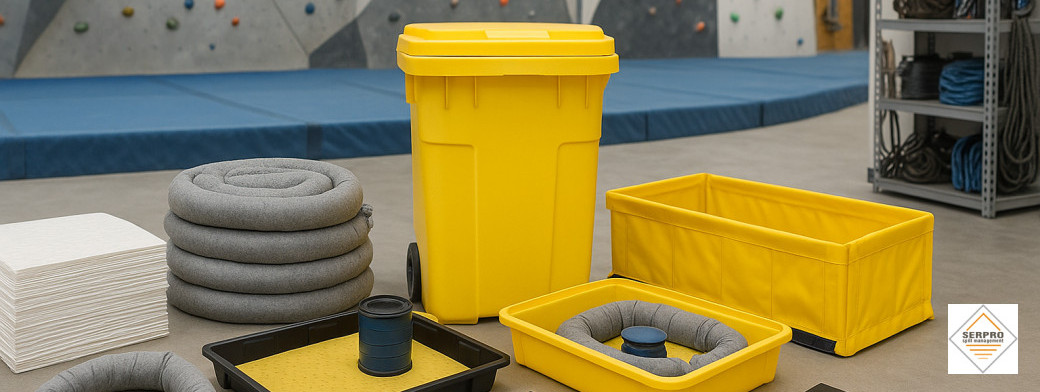
Indoor climbing centres should keep spill response equipment close to the point of risk, not stored in a distant cupboard. In practice, that means compact spill kits for staff-only areas such as plant rooms, cleaning stores, maintenance spaces, back-of-house café areas and reception zones where wet mats or tracked-in rain can create slip hazards. The aim is simple: staff can isolate, contain and clean a spill quickly before it spreads into public walkways or climbing circulation routes.
A well-chosen kit usually includes absorbent materials such as socks, pads and rolls, plus gloves and disposal bags. Socks are useful for surrounding leaks from cleaning chemical containers, hydraulic equipment or small plant, while pads help lift pooled liquid from floors and worktops. Absorbent rolls are especially practical near entrances, café counters and service corridors because they can cover longer wet areas quickly and help reduce slip risk while cleaning is underway.
Place equipment where spills are most likely to start
Drip trays are also important. They help catch routine drips beneath pumps, hydraulic maintenance equipment, chemical containers and waste oil points before those liquids reach the floor. This supports better housekeeping, reduces repeat clean-ups and makes early leaks easier to spot during inspections.
To improve response times, centres should keep supplies clearly identified with spill station labelling and restrict more specialised items to trained staff where needed. Placement should support both slip prevention and access control: visible enough for staff to reach immediately, but positioned in staff-only areas so products are not tampered with or removed from critical locations.
Who Should Respond to Spills and How?
Spills in indoor climbing centres should be handled by trained staff, not by whoever happens to be nearest. The right response depends on the liquid, the location and the level of risk. Small, routine spills in low-risk areas may be dealt with by staff who have been briefed and equipped, while larger spills, chemical leaks or anything affecting public access should be escalated immediately to a designated spill response team or duty manager.
Clear roles help prevent slips, confusion and unsafe clean-up attempts. In practice, this means front-of-house staff should know how to make an area safe, maintenance staff should understand the risks from oils or hydraulic fluids, and supervisors should decide when an incident needs isolation, specialist materials or waste segregation. This approach supports sensible housekeeping and aligns with wider UK expectations around floor safety and substance control under HSE guidance on slips and trips and COSHH essentials.
Staff training and awareness
All staff should receive basic spill awareness training as part of induction and refresher sessions. They need to recognise common spill sources in climbing centres, including café drinks, cleaning chemicals, wet entrance areas, and leaks from plant or maintenance equipment. Training should cover how to assess the spill, protect themselves with suitable gloves, choose the nearest spill kit, and report the incident correctly.
Designated spill response teams
For staff-only areas such as plant rooms, stores and maintenance zones, it is good practice to nominate specific responders on each shift. These people should know where compact spill kits are kept, how to use absorbents safely, and when to restrict access. Clearly labelled spill stations, especially in back-of-house areas, make response faster and reduce the chance of using the wrong materials.
Emergency procedures and communication
Every centre should have a simple spill procedure: stop or contain the source if safe, block access, clean up with the correct materials, and separate used waste for disposal. Contaminated absorbents and PPE should be bagged securely using suitable disposal bags. Staff should also know who to call, when to escalate, and how to record the incident so recurring problems can be picked up during inspections.
How Should Waste from Spills Be Separated and Disposed Of?
Waste from spills in indoor climbing centres should be separated by what was spilled and what the absorbent material has come into contact with. In practice, this means distinguishing between non-hazardous waste, such as water from entrance areas or drink spills from café spaces, and potentially hazardous waste, such as cleaning chemicals, oils from hydraulic maintenance equipment, or contaminated wash-down residues from plant rooms. The aim is to reduce risk to staff, prevent cross-contamination and make sure disposal follows UK legal duties.
After a spill is contained using suitable absorbents, the used pads, socks, granules, cloths, gloves and any disposable PPE should be assessed before they are bagged. A general purpose absorbent used on a harmless drink spill may be handled differently from a chemical absorbent used on a detergent or maintenance fluid leak. Keeping clearly marked disposal bags close to staff-only response points helps teams segregate waste immediately rather than mixing it later.
Types of waste generated from spills
Common spill-related waste in climbing centres includes soaked absorbent pads and rolls, used absorbent socks, disposable gloves, contaminated packaging, broken containers, and debris lifted during clean-up. Waste may also include waterlogged entrance mat material, café paper products, or residues from drain protection measures. The waste classification depends on the source liquid, not just the appearance of the absorbent.
Why segregation matters
Segregation is important because hazardous and non-hazardous wastes are subject to different handling and disposal controls. Under COSHH guidance, substances such as cleaning chemicals may require specific precautions, while oil or chemical residues must also be managed to avoid pollution. Mixing harmless waste with hazardous waste can increase disposal costs and complicate compliance.
Safe disposal and compliance
Staff should place spill waste into suitable, sealed containers or bags, label it where necessary, and store it securely away from public areas until collection. Compact spill kits for plant rooms, maintenance stores and other restricted spaces should include the right absorbents and disposal materials for the liquids likely to be encountered. Disposal routes should reflect the site’s waste procedures, duty of care obligations, and relevant UK guidance on workplace safety and pollution prevention, including pollution prevention for businesses. If there is any doubt about classification, treat the waste cautiously and confirm the correct route with the waste contractor or competent adviser.
How Can Routine Inspections Help in Spill Prevention?
Routine inspections help indoor climbing centres prevent spills from becoming slip hazards, equipment faults or pollution incidents. By checking high-risk areas on a set schedule, staff can spot leaking containers, saturated entrance mats, poorly stored cleaning chemicals, drips from hydraulic maintenance equipment and missing spill supplies before they cause disruption. Regular inspections also confirm that response materials are easy to find, clearly identified and suitable for the liquids most likely to be encountered on site.
In practice, inspections support spill readiness by turning housekeeping into a repeatable system. They help managers verify that plant rooms remain controlled, café areas are cleaned promptly, staff-only cupboards contain compact spill kits, and any routes to drains are protected where needed with measures such as drain covers. This approach also supports wider duties around slip prevention and safe substance handling under UK guidance such as HSE advice on slips and trips and COSHH essentials.
Inspection routines for high-risk areas
Daily walk-rounds should focus on plant rooms, chemical storage points, café service areas, maintenance zones and entrances during wet weather. Look for small drips under pumps or hydraulic equipment, unsecured chemical bottles, damaged drip trays, worn absorbent socks, and mats that are no longer containing tracked-in water. Access control matters too: staff-only areas should stay orderly, locked where appropriate, and free from obstacles that could delay a spill response.
Checklist for spill response equipment
A simple checklist can confirm that spill stations contain the right absorbent pads or rolls, suitable PPE such as gloves, disposal bags, and any specialist absorbents needed for oils or chemicals. It is also worth checking that stations have clear, consistent spill station labelling, so staff can identify the correct kit quickly.
Monitoring compliance with safety protocols
Inspection records should show whether staff are following reporting, isolation and clean-up procedures, separating waste correctly, and replacing used items promptly. Reviewing these findings over time helps centres correct weak points before a minor spill becomes a recurring risk.