
Published: 24 June 2026
Last updated: 21 June 2026
Why is Spill Management Crucial in Loading Bays?
Spill management is crucial in loading bays because these areas are high-traffic transfer points where delivery vehicles are loaded and unloaded, making them especially vulnerable to leaks and contamination. Common spill types include hydraulic fluid from tail lifts, fuel drips from vehicles, and water from rain, washdown or damaged goods. Without prompt control, these liquids can create slip hazards, damage surfaces, and flow into yard drains. In practice, this means loading bays should be equipped with suitable spill-control measures such as absorbents, absorbent socks, pads, rolls, drip trays and drain protection, supported by clear procedures that help sites meet UK health, safety and environmental duties.
Preparedness matters because spills in loading bays often happen quickly and close to doorways, unloading points and external drainage. A small hydraulic leak or fuel drip can spread across smooth concrete, increasing the risk of slips and trips, which the HSE highlights as a major workplace safety issue. If liquids reach surface water drains, the problem can also become an environmental incident, which is why UK businesses are expected to follow practical pollution prevention measures set out in GOV.UK guidance.
What makes loading bay spills a priority?
Loading bays combine vehicle movement, changing weather, repeated handling and tight turnaround times. That mix increases the chance of pallet damage, split containers, oil spotting and standing water. Even non-hazardous liquids can become dangerous when they spread across pedestrian routes or mask other residues already on the floor.
What should be kept nearby?
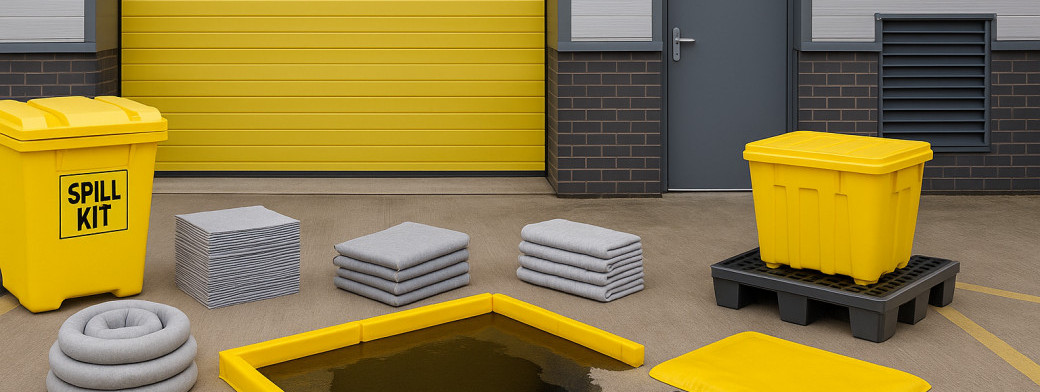
A practical setup usually includes absorbent pads and rolls for fast clean-up, absorbent socks to contain spreading liquid, drip trays under known leak points, small spill kits near bay doors, gloves, disposal bags and clearly marked spill stations. Oil-only or general purpose absorbents may be appropriate depending on the liquids handled. These products support a quick response, but they should be backed by reporting routines, inspections and safe waste segregation rather than treated as a compliance solution on their own.
What Liquids Are Most Likely to Spill in Loading Bays?
The liquids most likely to spill in loading bays are hydraulic oil from tail-lift systems, small fuel drips from delivery vehicles, and water that builds up during wet weather. These are common because loading bays combine frequent vehicle movements, repeated lifting activity, exposed thresholds and busy pedestrian routes. Even minor leaks matter: they can create slip risks, contaminate stock areas and, if they travel unchecked, reach nearby drains.
In practice, the exact spill profile depends on the vehicles using the bay and the goods being handled, but oil, fuel and rainwater are usually the first liquids to plan for. A sensible response is to keep the right absorbents close to doors, unloading points and drain lines, so staff can contain spills quickly before they spread.
Hydraulic fluids from tail-lift systems
Tail-lifts are a frequent source of drips and sudden leaks. Hydraulic hoses, seals and fittings can wear over time, allowing oil to escape during loading and unloading. Because these fluids are oil-based, oil-only absorbents are often a practical choice for capturing drips and preventing tracking across the bay floor.
Fuel drips from delivery vehicles
Fuel can drip from parked or manoeuvring vehicles, especially where vans and HGVs stop repeatedly in the same position. These spills may be small, but they can spread quickly on smooth concrete and present both housekeeping and pollution concerns. Placing absorbent materials at likely stopping points helps staff deal with drips before they migrate towards the yard drain.
Water accumulation during wet weather
Rainwater blown into open bays, runoff from vehicle bodies and pooled water from wet tyres are also common. Although water may seem less serious than oil or fuel, it still increases slip risk and can carry contamination across the floor. For mixed-use clean-up, general purpose absorbents can be useful where water and light grime collect together.
Where Do Spills Typically Occur in Loading Bays?
Spills in loading bays most often occur at the points where vehicles stop, goods are transferred and liquids can drip unnoticed. In practice, that usually means the areas around tail-lifts and unloading points, near fuel storage or dispensing areas, and across exposed floor surfaces during wet weather. These locations matter because even a small leak can spread quickly towards gullies or yard drains, especially if staff are moving pallets and vehicles in and out throughout the day.
The highest-risk spots are usually the busiest ones. Tail-lifts can release small amounts of hydraulic oil, damaged pallets may leak product during unloading, and parked vehicles can leave behind fuel or engine fluid drips. Keeping drip trays beneath known leak points and placing clearly marked spill kits close to bay doors and unloading areas can help staff respond before liquids travel further across the floor.
Another common problem area is around loading bay thresholds and dock edges, where repeated traffic and uneven surfaces allow liquids to collect. Forklift routes can then spread contamination well beyond the original source, turning a small incident into a wider housekeeping and slip hazard. This is particularly important where packaging is pierced, drums are handled, or returns are offloaded without being checked first.
Near fuel storage or dispensing areas, drips and overfills can build up gradually if they are not spotted during routine inspections. On wet surfaces during rainy conditions, the risk increases again, as rainwater can carry oil, residues or broken-product contents towards drains. UK pollution prevention guidance stresses the importance of keeping contaminants away from surface water drains and intercepting leaks early, especially in yards and external work areas.
What Spill Response Materials Should Be Nearby?
Loading bays should have spill response materials close to doors, unloading points and vehicle standing areas so staff can act before liquids spread across the floor or reach a yard drain. At a minimum, keep absorbent pads and rolls for fast pick-up, absorbent socks for containment, and compact spill kits with disposal bags for safe clean-up. The aim is simple: stop the spill at source, contain it quickly and remove waste without creating a second hazard.
The best materials depend on the likely liquids in the bay. Hydraulic oil from tail-lifts, diesel drips, coolant, screenwash and broken pallet loads may all need attention, especially in wet weather when contamination can travel further. Position supplies where they can be reached in seconds, not locked away in a distant store, and label spill stations clearly so agency staff and drivers can find them without delay.
Core materials to keep at hand
Absorbent pads and rolls are the everyday essentials for drips, splashes and tracking from vehicle movements. Pads are useful for targeted clean-up under couplings, tail-lifts or leaking containers, while rolls help cover wider walkways and unloading edges. Choose oil-only, general purpose or chemical absorbents according to the substances handled on site.
Absorbent socks for containment should be placed around the edge of a spill, across door thresholds or in front of drains to slow movement and guide liquids away from vulnerable areas. They are particularly useful where uneven bay floors or rainwater can carry contamination towards the yard.
Small spill kits and disposal bags make the response practical. A compact kit should include absorbents, gloves and bags so used materials can be separated and removed promptly. Waste should then be handled in line with site procedures and wider UK pollution prevention guidance, especially where oils or chemicals are involved. Keeping these basics nearby also supports good housekeeping and helps reduce slip risks during loading operations.
Who Should Be Responsible for Spill Management?
Spill management in a loading bay should be a shared responsibility, but with clear ownership. Every member of staff working around deliveries should know how to spot, report and make safe a minor spill, while supervisors should ensure the right controls, equipment and reporting procedures are in place. For larger or higher-risk incidents, a designated spill response team should take the lead so that action is quick, consistent and focused on protecting people, floors and nearby drains.
In practice, this means no one should assume that “someone else” will deal with leaking hydraulics, fuel drips, damaged goods or contaminated rainwater. Staff need to understand where spills are most likely to start, how to use absorbents or drain protection safely, and when to escalate. This is especially important in busy bays where liquids can spread quickly towards yard drainage, creating both slip risks and pollution concerns under UK good practice such as pollution prevention guidance for businesses.
Training is the foundation. Teams should be trained on spill response so they can identify the liquid involved, choose suitable materials and act without delay. That may include using absorbent pads or rolls for widespread drips, absorbent socks to stop movement towards thresholds, and drain covers where there is a risk of runoff entering surface water systems. Formal spill training helps turn written procedures into practical action.
It also helps to nominate a spill response team for each shift or operating area. These individuals do not replace general staff awareness; instead, they provide a clear point of responsibility for assessment, containment, waste segregation and incident follow-up. They should also check that spill kits, gloves, disposal bags and drain protection are stored near loading doors and unloading points, not locked away in a distant store.
Regular communication and drills keep responsibilities clear. Short toolbox talks, refresher briefings and simple practice exercises can reveal whether staff know who to call, where equipment is kept and how to stop a spill reaching the drain. That routine is often what makes the difference between a controlled incident and a preventable yard contamination event.
How Should Waste Be Separated and Managed?
Waste from loading bay spill response should be separated immediately into hazardous and non-hazardous streams, bagged correctly, and disposed of in line with local rules. In practice, that means identifying what was spilled, what absorbent was used, and whether the clean-up materials have been contaminated by oil, fuel, chemicals or other regulated substances. This helps reduce disposal errors, protects drains and supports safer handling for staff and waste contractors.
As a simple rule, absorbents used on rainwater, minor dirt or other non-hazardous residues may be managed differently from materials contaminated with diesel, hydraulic oil, solvents or chemicals. Mixed waste should never be treated as general rubbish without checking its contents first. If there is any doubt, treat the waste as potentially hazardous until it has been assessed by a competent person or disposal provider.
Separate waste by contamination type
Keep used pads, rolls, socks, gloves and sweepings from hazardous spills apart from general waste and recyclables. Do not combine oil-contaminated absorbents with packaging waste, pallet wrap or cardboard from the bay. Clear labelling on bins and spill stations makes this easier during a fast clean-up and helps avoid cross-contamination.
Use the right disposal bags
Used spill materials should be placed in suitable, durable disposal bags or other approved containers that match the waste type and handling risk. Bags should be sealed, labelled where needed, and stored in a designated area away from drains, traffic routes and unloading points until collection. This is especially important where leaking absorbents could create a second contamination risk.
Follow local waste disposal requirements
Businesses should follow site procedures, waste transfer requirements and local regulations for storage, collection and disposal. The UK government’s pollution prevention guidance for businesses is a useful reference for preventing contaminated materials from reaching drains or the wider environment. If your loading bay handles oils, fuels or chemicals regularly, confirm disposal arrangements with a licensed waste contractor and keep records up to date.
How Can Spill Management Arrangements Be Inspected?
Spill management arrangements in loading bays should be inspected through simple, routine checks that confirm materials are present, drain protection works as intended, and any faults are recorded and corrected promptly. In practice, this means checking spill stations near doors and unloading points, reviewing whether absorbents and containment items are suitable for the liquids handled, and making sure drains can be protected quickly if a leak occurs.
A good inspection routine also looks at whether the arrangement still matches real site conditions. Loading bays change with traffic levels, weather, delivery patterns and the types of goods being moved, so inspections should test both availability and usability rather than just ticking off stock. This helps reduce slip risks and supports pollution prevention before liquids reach the yard drain.
Check Spill Response Materials Regularly
Inspectors should confirm that spill response materials are easy to find, clearly labelled and close to likely spill points. Check that absorbent pads, rolls, socks, gloves, disposal bags, drip trays and small spill kits are fully stocked, dry, undamaged and suitable for the substances on site, whether that means oil-only, general purpose or chemical absorbents. It is also worth checking that access is not blocked by pallets, cages or parked vehicles.
Assess Whether Drain Protection Is Effective
Drain protection should be part of every loading bay inspection. Review whether drain covers or other drain protection measures are stored nearby, fit the drain properly and can be deployed without delay. Inspectors should also look at the condition and placement of absorbent socks around thresholds or drain lines, and check whether housekeeping keeps liquids, waste and damaged goods away from gullies.
Record Findings and Follow Up Actions
Every inspection should be documented, including what was checked, any missing or damaged items, signs of previous leaks, and the actions taken to put problems right. Recording trends such as repeated stock shortages or frequent drips from the same unloading area makes it easier to improve controls, schedule replenishment and brief staff on any recurring issues.