
Published: 16 September 2026
Last updated: 21 June 2026
Why is Spill Management Critical in Battery Storage Rooms?
Spill management is critical in battery storage and charging rooms because these areas are enclosed spaces used to store, charge, inspect or maintain batteries and associated equipment, where liquid releases can quickly create safety, housekeeping and pollution risks. The main spill hazards typically include battery electrolytes, such as acidic or alkaline liquids, and coolants from battery systems or nearby equipment. A suitable response usually combines compatible absorbents, drip trays, absorbent socks, drain protection, disposal bags, gloves and clearly labelled spill stations, supported by procedures that align with UK duties under COSHH guidance from HSE and wider environmental expectations in GOV.UK pollution prevention guidance.
In practical terms, good spill planning reduces the chance that a minor leak becomes a larger incident. Electrolytes may damage surfaces, harm staff through skin or eye contact, and react badly if the wrong clean-up materials are used, while coolant leaks can spread across smooth floors and increase slip risks. In battery charging rooms, even small drips around charging points, racking, transfer routes or maintenance benches can affect housekeeping standards and contaminate drains if not contained promptly.
Why the risk is higher in battery storage and charging areas
Battery rooms often combine concentrated energy systems, routine handling, confined layouts and multiple liquid types in one place. That means spill response cannot rely on a one-size-fits-all kit. Teams need to know whether they are dealing with corrosive electrolyte, a general coolant leak or mixed contamination, and whether the release could travel under shelving, into walkways or towards drainage points. This is why many sites keep containment measures such as drip trays, absorbent pads, socks and drain covers close to likely leak sources, alongside clear signage and escalation instructions.
Spill management is also important for demonstrating that the room is being operated responsibly. Under UK health, safety and environmental requirements, employers should assess substances, provide suitable controls and prevent avoidable pollution. A documented approach to inspections, containment and waste segregation helps support that duty. For a broader overview of practical controls, see spill management guidance.
What Types of Liquids are Commonly Found in Battery Storage?
Battery storage and charging rooms can contain several different liquids, and each presents its own spill and exposure risks. The most important are battery electrolytes, cooling fluids and smaller volumes of maintenance or cleaning chemicals. In practice, this means spill planning should not assume every leak can be treated the same way: compatibility, corrosivity, conductivity, slip risk and pollution potential all vary depending on the liquid involved.
These rooms often hold a mix of technologies, from lead-acid systems to lithium-ion units, so the liquid hazard profile can differ from one installation to another. A sensible starting point is to identify what is stored, where it is used, and whether it could reach walkways, cable routes or drains. This supports safer handling under COSHH guidance and helps prevent pollution if a spill escapes the room.
Electrolytes and compatibility issues
Electrolytes are usually the highest-priority spill concern. Lead-acid batteries may involve sulphuric acid, while other battery chemistries can contain alkaline or solvent-based electrolyte systems. The key issue is compatibility: the wrong absorbent or container may react badly, spread contamination or make waste segregation harder. Any spill response plan should therefore match the battery chemistry on site and separate chemical waste streams clearly.
Coolants and their risks
Battery energy storage systems and charging equipment may also use coolants, including water-glycol mixtures or dielectric fluids. These leaks may appear less severe than electrolyte spills, but they can still create slip hazards, damage equipment, and enter drainage systems if not contained quickly. Some coolant residues can also make floors persistently slippery, linking directly to workplace slip risks.
Other hazardous liquids
Other liquids may include transformer oils, lubricants, cleaning agents and condensate contaminated with dirt or residues. Even small volumes matter if they collect beneath racks, cabinets or chargers. Where drains are nearby, containment and pollution prevention should follow UK pollution prevention guidance.
Where Do Spills Typically Occur in Battery Storage Rooms?
Spills in battery storage rooms most often start at handling and charging points, not in the middle of clear floor space. The highest-risk locations are usually charging stations, battery changeover areas, maintenance benches, coolant connection points, storage racking, and any route used to move batteries between rooms. These areas see the most contact, lifting, connecting and disconnecting, so they are where electrolyte drips, coolant leaks and contaminated wash-down residues are most likely to appear.
In practice, common spill sources include damaged casings, overfilled units, loose caps or fittings, split hoses, leaking coolant circuits, impact from handling equipment, and poor housekeeping around tools and containers. Floors near thresholds, corners of storage bays and areas close to drains also deserve attention, because small releases can spread quickly and create slip hazards. A simple spill map based on known spill sources can help teams identify where controls should be placed first.
Typical spill points to check
- Charging stations and cable connection areas
- Battery inspection, testing and maintenance benches
- Coolant filling or disconnection points
- Storage shelves, pallet positions and drip-prone racking levels
- Transport routes used by trolleys or forklifts
- Doorways, low spots in floors and nearby drains
Preventative measures should focus on keeping likely release points contained and visible. That usually means using drip trays beneath charging or maintenance positions, placing compatible absorbents and disposal bags nearby, protecting drains, and labelling spill stations clearly. Routine inspections should also check for cracked containers, residue build-up, trip risks and blocked access to spill equipment. In UK workplaces, these checks should sit alongside COSHH-based controls and general housekeeping expectations set out by the HSE and its guidance on slips and trips.
What Containment Measures Should Be Implemented?
Effective containment in battery storage and charging rooms should focus on stopping small leaks from spreading, keeping incompatible liquids apart, and preventing any escape to drains or external ground. In practice, that means placing drip trays beneath likely leak points, keeping suitable absorbent materials close to the work area, segregating different liquid types such as electrolyte and coolant, and protecting drains before a spill can migrate. The aim is to limit contamination, reduce slip risks and support a controlled clean-up process.
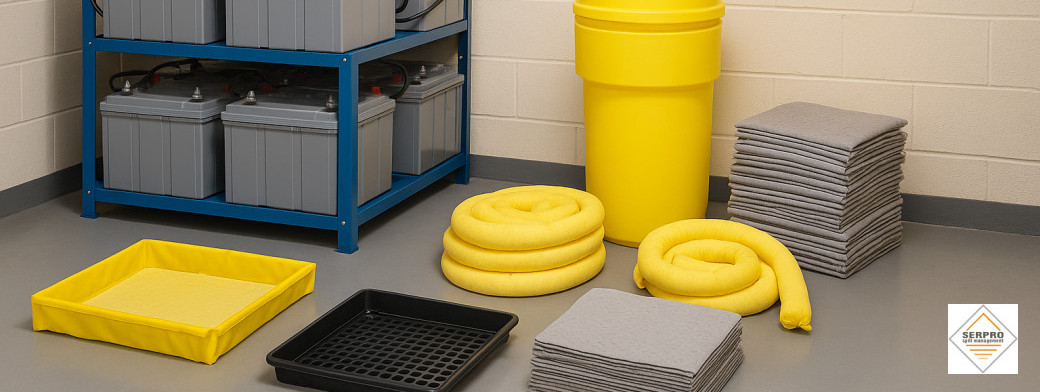
A sensible set-up usually combines fixed containment with quick-response items. Drip trays can be positioned under charging equipment, stored batteries, maintenance benches or coolant connection points to catch routine drips and minor releases at source. Nearby spill stations should then hold clearly labelled absorbents matched to the likely liquids, such as general purpose, oil-only or chemical grades, alongside gloves and disposal bags. For practical options, see absorbent materials.
Use layered containment around likely leak points
Primary containment should sit directly under equipment or containers, while secondary measures help control spread across the floor. Absorbent pads and rolls are useful for small drips and walkways, and absorbent socks can be laid around assets or across thresholds to contain movement. This layered approach also supports good housekeeping and helps reduce contamination-related slip hazards, in line with HSE guidance on slips and trips.
Segregate different types of liquids
Different liquids should not be allowed to mix during storage, response or waste collection. Electrolytes, coolants, oils and contaminated washings may require separate absorbents, containers and disposal routes. Clear physical separation, dedicated trays and simple signage help avoid cross-contamination and make escalation easier if a release exceeds local response arrangements. This approach aligns with the wider control principles set out in COSHH guidance.
Protect drains and low points
Floor drains, channels, doorways and other low points should be identified in advance and protected with drain covers or similar barriers where appropriate. Containment should be planned so spilled liquid is intercepted before it reaches surface water or foul drainage systems. UK pollution prevention guidance from GOV.UK is a useful reference when reviewing drain protection measures and spill layouts.
How Should Signage Be Used for Spill Management?
Signage should be used to make spill procedures immediate, consistent and easy to follow in battery storage and charging rooms. Clear signs help staff identify likely hazards, find the right spill-control equipment quickly, protect drains and know when to escalate an incident. In practice, good signage supports spill protocols by reducing hesitation, especially where electrolyte leaks, coolant drips or mixed liquid contamination may require different response steps.
It is most effective when it does three jobs at once: warns about the substances present, directs people to the correct equipment and explains the first actions to take. This is particularly important in rooms where different liquids may need different absorbents, containment methods or waste segregation. Well-planned spill management signage also reinforces routine housekeeping and inspection standards rather than acting as a stand-alone control.
Types of signage needed
Use a combination of hazard signs, spill station labels, drain protection notices and simple step-by-step response instructions. Signs should identify the location of spill kits, absorbent pads, socks, drip trays, disposal bags and gloves, while also indicating whether chemical, oil-only or general purpose absorbents are intended for that area. Where waste streams must be kept separate, add clear disposal signage to prevent incompatible materials being mixed.
Where signage should be placed
Position signs at room entrances, beside charging bays, above spill stations, near drainage points and anywhere leaks are most likely to start, such as under equipment, pipework or coolant handling areas. Keep them visible at eye level and unobstructed by stored items.
Training staff to interpret signage
Staff should be trained not just to notice signs, but to act on them correctly. Include signage meaning in inductions, refresher sessions and spill drills, supported by wider UK guidance on hazardous substances from HSE COSHH essentials. Everyone should understand what each sign means, which kit to use and when to report or escalate a spill.
Who Should Respond to Spills and What Are the Escalation Procedures?
Spills in battery storage and charging rooms should be handled first by a designated spill response team, not by whoever happens to be nearest. In practice, small, understood spills can often be managed by trained site personnel using the correct spill kit, while larger, mixed or uncertain releases should be isolated and escalated immediately. The key principle is simple: only people trained for the specific liquids, hazards and containment methods in that room should attempt a clean-up.
The response plan should clearly separate routine housekeeping from incident response. Staff working in or near the room need to know how to recognise electrolyte or coolant leaks, protect drains, prevent slips and trips, and report the incident without delay. A smaller trained team should then take over practical spill control using the site’s documented procedure and equipment, supported by clear signage and access to the relevant risk information under COSHH guidance from HSE.
Who should be in the spill response team?
The designated team will usually include supervisors, maintenance personnel and other nominated employees who understand the battery systems on site, the likely liquids involved and the limits of the available absorbents and containment tools. They should know where spill stations are located, when to use chemical-compatible materials rather than general purpose absorbents, and when an area must be cordoned off rather than cleaned immediately. It is also good practice to make responsibilities visible on room signage and in local procedures.
What training is required?
Training should cover spill identification, safe isolation of the area, use of PPE, drain protection, segregation of waste, incident reporting and when to stop and escalate. Refresher training and drills matter as much as initial instruction. If your site needs support with procedures or practical response planning, see spill response guidance.
How should escalation work for larger spills?
Escalation steps should be written down and easy to follow: raise the alarm, stop access to the area, protect nearby drains if safe to do so, notify the designated response lead, and assess whether the spill exceeds the team’s training or available materials. Larger spills, unknown liquids, active leaks, or any release threatening drainage systems should be escalated to site management and, where relevant, handled in line with UK pollution prevention guidance. The aim is controlled containment, competent decision-making and prompt reporting, not improvised clean-up.
How Can Routine Inspections Enhance Spill Preparedness?
Routine inspections improve spill preparedness by identifying small problems before they become larger incidents. In battery storage and charging rooms, regular checks help confirm that spill kits, containment measures, signage and drainage protection are in the right place, in good condition and suitable for the liquids present, including electrolytes and coolants. They also support safer housekeeping, quicker response and clearer escalation if a leak is found.
A structured inspection routine is especially useful because spill risks can change over time as batteries, chargers, pipework, containers and traffic routes change. Regular reviews help ensure absorbents remain compatible with likely liquids, drip trays are not overfilled or damaged, and drain covers are accessible if needed. This practical approach aligns with wider UK expectations around hazardous substances control and pollution prevention, including COSHH guidance from HSE.
What should an inspection checklist include?
A battery room spill-preparedness checklist should typically cover:
- Condition and location of spill kits, pads, socks, rolls, gloves and disposal bags
- Correct labelling of spill stations and clear signage for drains, hazards and escalation contacts
- Integrity of drip trays, bunds and other containment measures
- Evidence of coolant drips, electrolyte residues, stained flooring or slippery surfaces
- Access routes kept clear around chargers, battery racks and exits
- Drain covers present, reachable and not obstructed
- Segregation of used absorbents and waste pending disposal
How often should inspections take place?
Visual checks may be appropriate daily or per shift in active charging areas, with more detailed weekly or monthly inspections depending on usage, spill history and site risk. Formal inspection routines should also be reviewed after maintenance work, layout changes or any spill event.
Why does documentation matter?
Documenting findings helps show that issues were identified, reported and corrected. Records should note the date, area checked, defects found, actions taken and any follow-up required. This creates a clear trail for training, maintenance planning and escalation where repeated leaks or containment failures point to a wider problem.
What Are the Best Practices for Waste Handling in Battery Storage?
Best practice for waste handling in battery storage rooms is to separate spill waste by type, package it in suitable disposal bags or containers, and dispose of it in line with UK waste rules. In practical terms, that means keeping electrolyte-contaminated absorbents apart from oil, coolant, general cleaning waste and damaged packaging, then labelling each stream clearly so it can be assessed and removed safely.
Spill waste from battery storage or charging areas should never be treated as one mixed waste stream. Absorbent pads, socks, rolls, PPE and debris may all need different handling depending on what they have contacted. This reduces cross-contamination, supports safer storage before collection, and helps sites meet their duty to manage hazardous and potentially polluting waste properly.
Segregate Waste by Liquid and Material Type
Set up a simple system for the segregation of waste types at the point of clean-up. For example, keep chemical-contaminated absorbents used on electrolyte leaks separate from oil-only absorbents used on lubricants, and separate both from general housekeeping waste. If damaged battery components, contaminated packaging or disposable gloves are involved, isolate these as their own waste stream until they can be classified.
Use Suitable Disposal Bags and Clear Labelling
Use appropriate disposal bags or compatible containers that are robust enough for wet, contaminated absorbents and can be sealed for temporary storage. Each bag or container should be labelled with the contents, source area and date, so waste contractors and internal teams can identify it quickly. This approach also supports more consistent waste handling procedures across battery rooms and charging areas.
Follow UK Waste Regulations
Waste from spills must be assessed and managed in compliance with waste regulations, permit conditions and site procedures. In the UK, that includes understanding whether the waste is hazardous, preventing releases during storage, and ensuring onward disposal is properly documented. The GOV.UK guidance on chemical waste appropriate measures is a useful reference for controlling emissions and preventing pollution from stored waste.