
Published: 22 September 2026
Last updated: 25 August 2026
Why is Spill Management Crucial in Commercial Kitchens?
Spill management in commercial kitchens is the planned process of preventing, containing, cleaning and disposing of liquid spills safely so that staff, food areas and drains are protected. In this setting, the most common spills are cleaning chemicals such as degreasers and sanitisers, grease from cooking and extraction areas, and waste oils from fryers or storage containers. Effective control usually means having the right absorbents, containment methods and drain protection close to the risk, such as absorbent pads, rolls and socks, drip trays and clearly labelled spill stations, alongside measures to stop liquids reaching gullies with drain protection. In the UK, this matters not only for housekeeping but also for compliance with health, safety and environmental duties.
Spill management is crucial because after-hours cleaning and shutdown routines often bring water, detergents, grease and waste oil into the same busy workspace, increasing the risk of slips, chemical exposure and pollution. The Health and Safety Executive highlights contamination from wet or greasy floors as a major cause of workplace accidents in its guidance on slips and trips. Where cleaning products are involved, employers also need suitable controls under COSHH, especially if substances can irritate skin, affect breathing or react with other materials.
For commercial kitchens, the issue goes beyond immediate clean-up. Grease and waste oils can spread quickly across smooth flooring, create hidden slip hazards near service routes and contaminate external drains if they are washed away incorrectly. UK businesses are expected to prevent pollution and manage oils and chemicals responsibly, as set out in the government’s guidance on pollution prevention for businesses. In practice, that means treating spill control as a routine part of kitchen safety: identifying likely spill points, keeping suitable materials nearby and making sure staff know how to respond promptly and separate waste for safe disposal.
What Types of Liquids Are Commonly Spilled in Commercial Kitchens?
Commercial kitchens commonly see two broad spill categories: cleaning chemicals and food-related oils, fats and greasy liquids. The most frequent examples include floor cleaners, degreasers, sanitising solutions, washing-up liquids, dishwasher chemicals, cooking oils, fryer oil, animal fats and greasy wastewater. Each behaves differently on the floor, so the hazard is not just mess: some create very slippery surfaces, some may irritate skin or eyes, and some need different absorbents and disposal methods.
In practice, identifying the liquid quickly helps staff choose the right response. Water-based cleaners and mixed housekeeping liquids are often best managed with general purpose absorbents, while cooking oils and oily residues are usually better suited to oil-only absorbents. Where chemicals are involved, employers should also consider storage, handling and exposure controls under COSHH guidance, alongside routine slip prevention measures highlighted by the HSE.
Cleaning chemicals
Commonly used cleaning chemicals in kitchens include degreasers, hard-surface sanitisers, floor cleaners, bleach-based products, dishwasher detergents and rinse aids. These liquids are often spilled during decanting, mopping, refilling spray bottles or moving open containers after hours. Hazards can include slippery floors, skin and eye irritation, strong fumes, and harmful reactions if incompatible products are mixed.
Grease, oils and fatty liquids
Grease spills usually come from vegetable oils, rapeseed or sunflower oil, used fryer oil, butterfat, lard, meat drippings and oily residues from extraction or cooking equipment. These liquids can spread quickly, leave a persistent film underfoot and soak into grout lines or textured flooring if not dealt with promptly. The main risks are slips and falls, contamination of walkways, and pollution problems if waste oil reaches drains, which is why separation and containment matter.
Mixed and contaminated liquids
Some of the hardest spills to manage are mixed liquids, such as mop water containing degreaser, diluted chemical washings, or wastewater carrying grease and food debris. These can look harmless but still create a slick surface and may require careful waste handling. In busy back-of-house areas, even small repeated leaks from bins, dishwashers or oil containers can build into a larger housekeeping risk over the course of a shift.
Where Do Spills Typically Occur in Commercial Kitchens?
Spills in commercial kitchens most often occur at cooking stations, in dishwashing areas and around storage zones, because these are the points where oils, cleaning chemicals, water and food waste are handled most frequently. Heat, fast-paced working, repeated movement between tasks and the use of containers, bottles and waste receptacles all increase the chance of drips, splashes and leaks. Monitoring these areas closely helps teams spot hazards early, respond quickly and keep floors, drains and walkways safer after hours.
In practice, the highest-risk locations are usually the ones where liquids change hands: oil moving from fryer to waste container, detergent being diluted, or stock being unpacked and stored. A sensible spill plan should focus on these hotspots first, with clearly positioned spill kits and, where containers may weep or drip, suitable drip trays nearby so small releases can be contained before they spread.
Cooking stations
Cooking lines are a common source of grease spills because fryers, grills and prep counters generate hot oil, fatty residues and condensation throughout service. Spills often happen during oil top-ups, filtering, transfer to waste drums or routine cleaning at the end of a shift. Tight spaces, slippery footwear contamination and staff carrying hot pans or containers can make even a small leak more serious if it reaches a main walkway.
Dishwashing and cleaning areas
Dishwash zones regularly combine water, detergent, rinse aid and food residues on hard floors. Overspray, overflowing sinks, leaking hoses and chemical dosing errors can all create slick surfaces quickly. Where cleaning chemicals are handled, employers should also consider control measures in line with COSHH guidance from HSE, especially if products are decanted, diluted or stored near drains.
Storage and waste handling points
Dry stores, chemical cupboards, cold rooms and waste oil collection points are also worth close attention. Spills here may come from damaged packaging, poorly sealed containers, overfilled shelves or containers being moved in a hurry. Regular checks matter because leaks in storage areas can go unnoticed for longer, increasing the risk of floor contamination, product loss and pollution if liquids escape toward drainage routes.
What Should Be Kept Nearby for Effective Spill Management?
Commercial kitchens should keep a small, clearly marked spill response setup close to the areas where leaks and splashes are most likely, such as wash-up zones, chemical cupboards, fryers, bin stores and back-door delivery points. For effective spill management, that means having the right absorbents ready for both cleaning chemicals and greasy liquids, along with basic protective items and disposal materials. Quick access matters: if staff have to search for supplies, spills are more likely to spread, create slip risks and reach drains.
A practical starting point is to stock a mix of absorbent formats. Absorbent pads are useful for wiping up smaller patches of liquid and placing under dripping containers. Rolls work well for covering wider floor areas or creating a temporary safe walking route during clean-up. Socks are especially helpful for containing movement, as they can be placed around the edge of a spill, along kickboards or in front of doorways and drains to stop liquid travelling further.
What a small spill kit should include
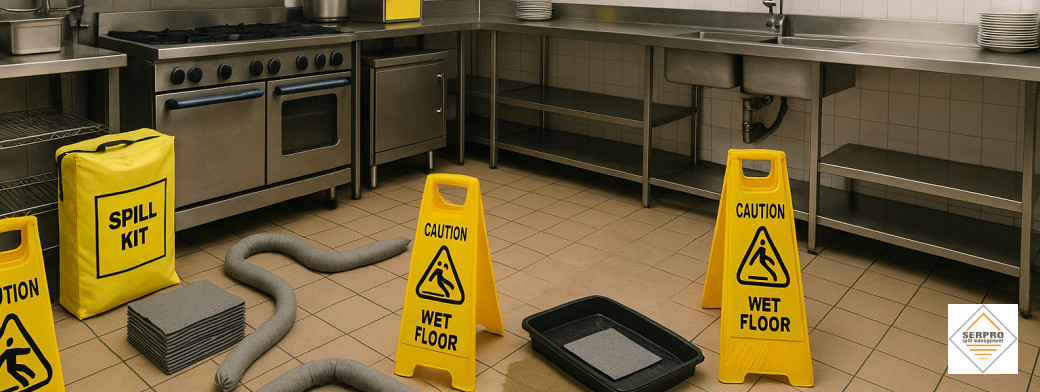
Small spill kits are often the most practical option for commercial kitchens because they can be positioned near the point of use without taking up too much space. A sensible kit may include:
- General purpose, oil-only or chemical absorbents selected for the liquids used on site
- Absorbent pads, rolls and socks
- Gloves for safer handling during clean-up
- Disposal bags for used absorbents and contaminated waste
- Simple instructions so staff know what to use first
It is also important that every kit and storage point is easy to identify. Clear spill station labelling helps staff find the right equipment quickly, especially during a busy close-down. Labels should make it obvious what the station is for, what it contains and who should use it. Keep equipment accessible rather than locked away or hidden behind stock, and check routinely that items are complete, dry and ready for use.
Who Should Respond to Spills in Commercial Kitchens?
Spills in commercial kitchens should be handled by staff who have been trained for the type of spill involved, with a clearly identified spill response lead or team for larger, hazardous or fast-spreading incidents. In practice, that means all kitchen staff should know how to make an area safe, report the problem and use basic spill materials where appropriate, while only designated, trained responders should deal with cleaning chemical spills, significant grease releases or any incident that could affect drains, food preparation areas or safe access routes.
Roles should be simple and agreed before an incident happens. A supervisor, duty manager or nominated spill response team should take control, assess the risk, decide whether the area needs to be isolated and direct the clean-up. Other staff should not improvise. Their job is usually to stop people walking through the spill, fetch the correct kit, protect nearby drains if needed and follow the site procedure. This approach supports safer housekeeping and fits with the wider control principles set out in HSE COSHH guidance.
Training requirements for staff
Every team member should receive basic spill awareness training as part of induction and refresher sessions. That should cover how to recognise different spill types, when to use general purpose, oil-only or chemical absorbents, where spill stations are located, what PPE is required and when to escalate rather than clean up personally. Keeping procedures visible and supporting them with practical drills or toolbox talks can make response faster and more consistent; useful materials can be gathered in one place through staff training resources.
Why clear communication matters
Clear communication is essential during a spill incident because kitchens are busy, noisy environments with multiple overlapping tasks. Staff should know who to inform immediately, what wording to use when reporting the spill location and substance, and who has authority to close a walkway or workstation. A short, well-understood chain of communication helps prevent slips, cross-contamination and duplicated effort, especially after hours when fewer people may be on site. If responsibilities are defined in advance, response is quicker, safer and easier to document.
How Should Waste Be Separated and Managed After Spills?
Waste from a commercial kitchen spill should be separated by what it contains, how hazardous it is, and whether it has been contaminated by chemicals, grease or food residues. In practice, that means keeping used absorbents, PPE, broken packaging, food waste and any recovered liquid apart, then disposing of each stream through the correct route. This reduces the risk of cross-contamination, protects staff and drains, and supports compliance with UK waste and environmental duties.
After any spill, the first step is to identify the waste created during clean-up. A degreaser spill may leave chemical-contaminated pads, gloves and empty containers; a waste oil leak may produce oil-soaked absorbents and recovered liquid; and a mixed floor spill may also include food debris, damaged cardboard or disposable cloths. Using clearly labelled disposal bags helps teams keep these materials separate from the outset rather than mixing everything into general waste.
Types of waste generated from spills
Typical spill-response waste in kitchens includes used absorbent pads, rolls or socks, contaminated gloves and aprons, empty or leaking chemical containers, oil residues, wash-down materials, and solids such as packaging or food scraps. Some of this may be non-hazardous, but anything contaminated with cleaning chemicals or significant amounts of oil should be treated with extra care and assessed against your site procedures and waste contractor guidance.
Guidelines for safe disposal
Bag waste securely, label it clearly, and store it temporarily in a designated area away from food preparation, drains and heat sources. Do not pour recovered oils, chemicals or contaminated wash water into surface drains or sinks unless you are certain this is permitted within your controls. The GOV.UK pollution prevention guidance is clear that businesses should prevent oils and chemicals from entering the environment. Staff should also follow the substance-specific precautions set out under COSHH, including the safe handling of contaminated materials and containers.
Why compliance matters
Correct segregation and disposal are not just housekeeping tasks; they form part of legal and operational risk control. Following waste management rules helps demonstrate due diligence, supports safe working practices, and reduces the chance of environmental harm or enforcement action. Keep disposal procedures written into your spill response plan, train staff on them, and confirm that your waste carrier accepts the specific contaminated materials your kitchen may generate.
How Can Routine Inspections Enhance Spill Management?
Routine inspections strengthen spill management by helping commercial kitchens spot problems before they become slip, contamination or pollution incidents. In practice, regular checks make it easier to identify leaking chemical containers, poorly stored degreasers, overflowing waste oil, damaged drip trays, missing absorbents and wet floor hotspots at the end of a shift. They also show whether spill stations remain stocked, labelled and easy to access, which supports faster response when grease or cleaning chemicals are spilled.
For commercial kitchens, inspections should be simple, repeatable and tied to real spill risks rather than treated as paperwork alone. A short daily walk-through, backed by weekly and monthly checks, can improve housekeeping standards, reinforce safe storage and support wider duties around slips, trips and hazardous substances, including floor safety and COSHH controls. Using standardised inspection tools also helps managers record issues consistently and track recurring problem areas.
Checklist for routine inspections
- Check floors for grease build-up, pooled water and residues near fryers, sinks, dishwashers and cleaning stations.
- Inspect chemical storage for loose lids, damaged containers, unclear labels and signs of leakage.
- Review waste oil handling points, including transfer areas, drums and containers, for drips and overfilling.
- Confirm that absorbent pads, rolls, socks, gloves, disposal bags and drain protection are present and usable.
- Make sure drip trays are correctly positioned under likely leak points and emptied when needed.
- Check that spill kits are clearly labelled and not blocked by stock, bins or equipment.
- Record defects, assign actions and confirm that previous inspection findings have been closed out.
Identifying potential spill hazards
Inspections are especially useful for identifying patterns. Repeated splashes near chemical dosing points, greasy walkways behind cooking lines or small oil drips during waste transfer often point to a process issue, not a one-off event. Looking at when and where spills start can help kitchens reposition absorbents, improve storage, add containment or adjust cleaning routines. This is also important for preventing spills from reaching drains, in line with pollution prevention guidance for businesses.
Importance of regular training updates
Inspection findings should feed directly into refresher training. If staff repeatedly miss early warning signs, use the wrong absorbent for a chemical spill or leave response equipment incomplete, training needs updating. Short, regular refreshers help teams remember who responds, how to isolate the area, how to separate contaminated waste and when to escalate a larger incident. Over time, this keeps spill management practical, visible and consistent across every shift.
Conclusion: Preparing for Spills in Commercial Kitchens
Commercial kitchen spill management works best when it is planned before the end-of-shift rush begins. Across this article, the key message has been simple: cleaning chemicals, degreasers, waste oils and wet floor residues can quickly create slip risks, contamination issues and unnecessary disruption if staff are not ready to respond. Good spill control depends on clear housekeeping routines, fast action, suitable absorbents, sensible containment and regular checks of the areas where leaks and drips are most likely to start.
That means keeping the right materials close to hand, training staff to use them properly, and matching the response to the liquid involved. General purpose absorbents, chemical absorbents, oil-only products, absorbent socks, rolls, drip trays, drain covers, gloves and disposal bags all have a practical role when used as part of a wider spill plan. Just as importantly, routine inspections, COSHH-based controls and attention to slip prevention help reduce the chance of a small spill becoming a larger safety or pollution problem. For wider UK guidance, the HSE advice on slips and trips and COSHH essentials are useful starting points.
If your kitchen team is reviewing after-hours cleaning, now is the time to put a more proactive spill management strategy in place. Check where liquids are stored, identify likely spill points, label spill stations clearly and make sure responders know what to do. Investing in the right spill management products can make day-to-day housekeeping faster, safer and more consistent, while supporting better protection for staff, surfaces and drains.