
Published: 29 August 2026
Last updated: 21 June 2026
Why is Spill Control Essential in Hotel Plant Rooms?
Spill control is essential in hotel plant rooms because these restricted-access service areas house the equipment that keeps a hotel running, including boilers, pumps, heating circuits, hot water systems and chemical dosing units. In practical terms, a hotel plant room is the operational space where building services are managed, maintained and monitored. Common leaks here include water from heating systems, water treatment chemicals used to control scale and bacteria, oils from mechanical equipment, and drips from worn pump seals or joints. Without prompt containment, even small releases can create slip risks, damage assets, interrupt guest services and increase the chance of pollution. That is why sensible precautions such as drip trays, correctly selected absorbent pads, routine inspections and clear housekeeping procedures are a basic part of safe plant room management in the UK.
From a compliance perspective, spill control also supports duties under UK health, safety and environmental law. Employers must assess hazardous substances and suitable controls under COSHH guidance from HSE, while good containment and storage practices help reduce the risk of contaminated run-off or drains pollution in line with GOV.UK pollution prevention guidance. Spill measures do not make a site compliant on their own, but they are an important part of showing that foreseeable leaks have been considered and managed.
What makes hotel plant rooms especially vulnerable?
Hotel plant rooms often combine heat, pressure, vibration, pipework, dosing systems and maintenance activity in one compact area. That means minor seepage can quickly spread across hard floors, collect under equipment or go unnoticed behind plant. Heating water may seem low risk, but it can still cause slips and conceal corrosion issues. Chemical dosing points may release concentrated treatment fluids that need more careful handling, while oils and lubricants can persist on surfaces and are harder to clean safely. Pump seals are another common weak point, as gradual wear can turn a drip into a recurring housekeeping problem if it is not identified early.
For that reason, spill control in plant rooms should focus on both prevention and fast response: placing trays beneath predictable leak points, keeping suitable absorbents nearby, restricting access to trained staff and recording checks so that recurring issues are acted on before they become larger failures.
What Types of Liquids Are Commonly Found in Hotel Plant Rooms?
Hotel plant rooms commonly contain several liquid types that can leak, drip or spill during normal operation, servicing or equipment failure. The main ones are heating system fluids, water treatment chemicals and machinery oils. Each presents different risks: some create slip hazards, some can irritate skin or eyes, and some may contaminate drains or surrounding areas if not contained quickly.
In practice, the most likely spill sources are boilers, pumps, dosing equipment, valves, pipework, expansion vessels and seal points. Knowing which liquids are present helps staff choose the right response materials, such as oil absorbents for hydrocarbons or chemical absorbents for more aggressive substances, while keeping housekeeping and storage arrangements proportionate to the actual risks in the room.
Heating system fluids
Closed-loop heating systems may contain water mixed with inhibitors, corrosion protectants or glycol-based antifreeze. Even when these fluids are not highly hazardous, leaks can leave smooth floors dangerously slippery and may indicate wider issues such as corrosion, pressure loss or failing seals. Warm escaped liquid can also spread quickly beneath equipment and into hard-to-see corners.
Water treatment chemicals
Plant rooms often use chemicals for dosing boilers, heating circuits or stored water systems. These may include corrosion inhibitors, biocides, descalers, pH adjusters and cleaning agents. Such products can be more hazardous than general system water, with potential risks including skin burns, eye irritation, harmful vapours or reactions with incompatible materials. Spills around dosing pumps and containers need prompt isolation and suitable absorbents.
Oils used in machinery
Some pumps, motors, compressors, generators or ancillary equipment may contain lubricating oils or hydraulic fluids. These are a major slip risk and can spread into walkways or drainage routes if left unchecked. Oil leaks may also signal worn pump seals, overfilled reservoirs or maintenance problems, so cleanup should be paired with inspection and repair rather than treated as a housekeeping issue alone.
Where Do Spills Typically Occur in Hotel Plant Rooms?
Spills in hotel plant rooms most often occur around pumps, boilers, pipework joints and service points where liquids are handled, transferred or contained under pressure. In practice, the highest-risk spots are usually near pumps and boilers, in chemical dosing areas, and within storage spaces for oils and chemicals. These locations are more exposed to drips, overfills and small but persistent leaks from equipment, which can create slip risks and make housekeeping harder if they are not identified early.
In hotel settings, many leaks begin as minor seepage rather than dramatic failures. A worn pump seal, a loose valve connection, corrosion around a boiler fitting, or a dosing line that has not been secured properly can all allow liquid to escape onto floors or into hard-to-see corners. That is why routine observation matters just as much as emergency response, particularly in plant rooms where access may be restricted and issues can go unnoticed between inspections.
Near pumps and boilers, common spill points include flanges, seals, drain-off valves, pressure relief outlets and areas beneath circulation equipment. Even a slow drip can spread across smooth floors and contribute to the kind of contamination that increases the risk of slips, as highlighted in HSE guidance on slips and trips. Keeping suitable absorbents and containment measures close to these assets helps staff deal with small releases before they travel.
Chemical dosing areas are another frequent source of spills because treatment chemicals are handled, connected and topped up there. Splashes during decanting, leaks from dosing pumps and drips from containers are all realistic scenarios, so it makes sense to position appropriate spill kits nearby and protect any vulnerable drainage points with drain covers where relevant.
Storage spaces for oils and chemicals also deserve attention. Containers can be knocked, lids may not be replaced correctly, and older packaging can degrade over time. In short, the potential for leaks from equipment is not limited to active plant; it also extends to the places where maintenance fluids and treatment products are stored between use.
What Spill Control Measures Should Be Implemented?
Hotel plant rooms should have practical, clearly located spill control measures that match the liquids present and the way leaks typically start. In most cases, that means fitting drip trays beneath pumps, valves, dosing points and boilers where minor seepage may occur; keeping absorbents close to likely leak sources; providing well-stocked spill kits for a fast first response; and backing all of this up with routine inspections and maintenance. This approach helps contain heating system water, treatment chemicals, oils and seal leaks before they spread across walkways, damage equipment or create a slip risk.
Spill control works best when it is planned around the room layout and access restrictions. Staff should be able to reach the right materials quickly without searching through cupboards or crossing contaminated floors. Clearly marked spill stations near entrances or key risk points can help, especially in larger plant rooms where pumps, boilers and chemical dosing equipment are separated.
Contain leaks at source
Drip trays are one of the simplest and most effective controls for persistent drips and small leaks. They should be positioned under pump seals, flanges, sample points, chemical containers and any area where maintenance history suggests recurring seepage. Trays do not replace repair work, but they do stop liquids spreading and make defects easier to spot during checks.
Keep absorbents close to likely spill points
Absorbent pads and absorbent rolls should be placed where staff can respond immediately to minor releases, such as around circulation pumps, expansion vessels, dosing units and oil storage points. Pads are useful for wiping up small pools and drips, while rolls can be laid along plant edges or walkways to protect a wider area. Where different liquids are present, it is sensible to separate general purpose, oil-only and chemical absorbents so the response matches the hazard.
Provide suitable spill kits
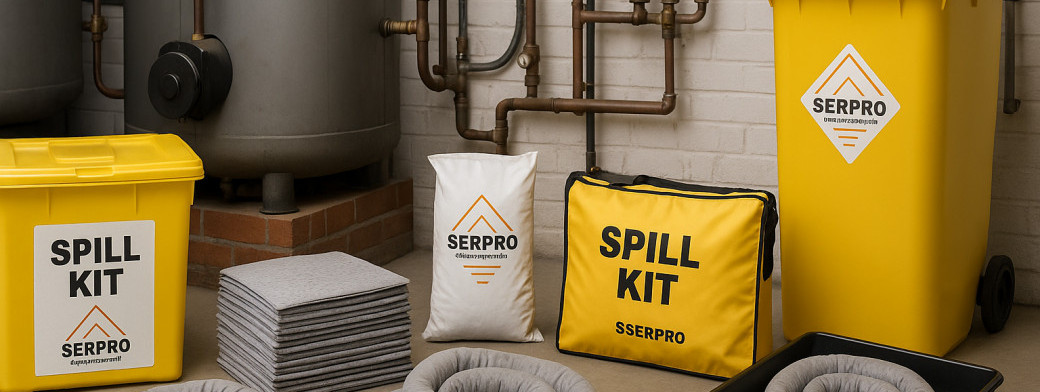
Each plant room should also have an appropriate spill kit containing absorbent pads, socks, disposal bags and gloves, with contents suited to the materials on site. In some locations, drain protection may also be appropriate if there is a risk of contaminated liquid reaching surface water or foul drainage. Kits should be clearly labelled, easy to access and checked after use so they are always ready for the next incident.
Inspect, maintain and document
Regular inspections are essential. Routine checks should look for full drip trays, saturated absorbents, damaged containers, worn seals and poor housekeeping around boilers and pumps. Maintenance teams should record findings, replace used materials promptly and document cleaning and waste handling procedures. A simple, written housekeeping routine helps show that spill risks are being managed consistently, not just after an incident.
Who Should Be Responsible for Spill Response?
Responsibility for spill response in a hotel plant room should be clearly assigned rather than left to whoever happens to be nearby. In practice, this usually means duty managers, maintenance engineers, facilities teams and any designated health and safety lead each having defined roles. Small, low-risk leaks such as drips from pump seals or minor boiler water escape may be handled by trained in-house staff, while larger spills, chemical releases or incidents affecting drains should be escalated immediately under site procedures.
A good arrangement separates first response from technical repair and management oversight. Plant room staff or maintenance personnel may isolate equipment, use suitable absorbents or drip trays, and protect nearby drains if safe to do so. Supervisors or managers should then confirm reporting, arrange clean-up waste segregation, review whether access needs to be restricted, and ensure the cause of the leak is investigated. This aligns with wider UK expectations around controlling hazardous substances under COSHH and keeping contaminated floors from creating slip risks under HSE slips and trips guidance.
Roles, training and communication
Everyone who may enter the plant room should know the basic reporting route, but only trained personnel should attempt spill response beyond simple containment. Training should cover the liquids present on site, use of absorbent pads, socks or chemical absorbents, safe isolation procedures, PPE, waste handling, and when to stop and call for additional help. Hotels that want a more structured approach can support staff with formal spill response training.
Clear communication is equally important. Signage should identify restricted areas, emergency contacts, spill kit locations and any chemical hazards. Housekeeping and inspection records should show who checks spill stations, who replenishes used materials, and who signs off corrective actions, so responsibility remains visible and consistent across shifts.
How Should Waste from Spills Be Handled?
Waste from spills in hotel plant rooms should be handled by separating hazardous materials from non-hazardous waste, placing each into suitable disposal bags or containers, and arranging disposal in line with local legal requirements. In practice, that means identifying what was spilled, what absorbents or cleaning materials were used, and whether the resulting waste is contaminated by oils, water treatment chemicals, or other substances that may require controlled handling.
As a rule, absorbents, wipes, pads, granules, PPE and debris used on oil leaks, chemical dosing spills or contaminated boiler and pump-room residues should not be mixed with ordinary housekeeping waste. Keeping waste streams separate reduces the risk of incorrect disposal and makes it easier to store, label and remove waste safely. This approach also supports wider duties under COSHH guidance from HSE and helps prevent secondary pollution.
Separate hazardous and non-hazardous waste
Non-hazardous waste may include clean packaging or uncontaminated materials, but anything affected by chemicals, oils or unknown liquids should be assessed carefully before disposal. If absorbent pads or socks have been used on water treatment chemicals, fuel residues, lubricants or mixed plant-room fluids, they may need to be treated as hazardous waste. It is good practice to keep clearly marked containers for different waste types so staff do not combine incompatible materials.
Use suitable disposal bags and containers
Spill waste should be placed in robust, appropriate bags or sealed containers that are compatible with the material collected. Using dedicated disposal bags helps contain contaminated absorbents and keeps waste secure before collection. Containers should be labelled clearly, stored in a designated area, and kept closed to reduce handling risks and accidental leaks.
Follow local waste disposal rules
Disposal must comply with local regulations, site procedures and waste contractor requirements. Hotels should check whether the waste is classed as hazardous, ensure transfer documentation is completed where required, and avoid putting contaminated spill materials into general bins or drains. The wider aim, reflected in UK pollution prevention guidance, is to prevent spill residues from creating further environmental or safety problems after the initial clean-up.
What Routine Checks Should Be Conducted?
Routine checks in a hotel plant room should be carried out on a planned schedule and recorded clearly. As a minimum, visual spill-control inspections are usually sensible daily or per shift in active areas, with a more detailed weekly check of containment equipment, housekeeping standards and stocked response materials. Monthly reviews can then confirm whether recurring leaks from pumps, boilers, dosing points or pipework are being addressed properly rather than simply cleaned up. The aim is to spot early signs of drips, failed seals, overfilled containers or deteriorating absorbents before they create slip risks, equipment issues or pollution concerns.
These inspections should cover both the source of leaks and the readiness of the spill response arrangement. In practice, that means checking plant items such as pumps, valves, boiler connections and chemical dosing equipment, while also confirming that drip trays, absorbent pads, socks, disposal bags, gloves and any drain protection are present, accessible and in usable condition. A structured checklist helps keep this consistent; SERPRO’s inspection checklists can support a repeatable approach.
Suggested spill-control checklist
- Look for fresh drips, staining, pooled liquid or oily residues around pumps, boilers, flanges, valves and dosing units.
- Check drip trays are correctly positioned, intact, not overflowing and emptied safely when needed.
- Confirm absorbent pads, rolls or socks are suitable for the liquids present and replaced after use.
- Inspect floors for slip hazards and poor housekeeping, in line with HSE slips and trips guidance.
- Make sure access routes, spill kits and drain covers are unobstructed and clearly identifiable.
- Review chemical and oil storage areas for damaged containers, loose lids or signs of incompatible waste mixing.
- Check restricted-access controls remain in place so only authorised staff handle plant-room leaks and clean-up materials.
Findings should be documented each time, including what was checked, defects found, immediate actions taken and who is responsible for follow-up repairs. Records should also note when absorbents were replaced, waste was removed and recurring leak points were escalated to maintenance. This documented housekeeping trail helps demonstrate a practical control system under wider UK expectations for safe handling of hazardous substances and pollution prevention, including COSHH guidance and pollution prevention guidance for businesses.
How Can Access to Plant Rooms Be Restricted?
Access to hotel plant rooms should be restricted to authorised personnel because these areas contain boilers, pumps, dosing equipment, oils and treatment chemicals that can create safety, housekeeping and leak-response risks if handled incorrectly. In practice, that means using clear signage and physical barriers, limiting entry through a defined access control system, and making sure only trained staff or contractors can enter, inspect equipment or respond to spills.
Restricting access also supports better leak control. Unauthorised entry can lead to accidental valve interference, poor storage of materials, blocked walkways, or delayed reporting of drips from seals, joints and chemical lines. A controlled-entry approach helps keep absorbents, drip trays, spill kits and housekeeping equipment in the right place, while reducing the chance of contamination, slips or improper clean-up.
Use Signage and Barriers to Define the Area
Plant rooms should be clearly marked with signage stating that access is restricted to authorised persons only. Signs should also identify key hazards such as hot surfaces, chemical dosing points, moving equipment and spill-response locations. Where appropriate, use locked doors, coded entry, gated sections or barrier systems to separate sensitive equipment from general maintenance routes. This makes it easier to protect pumps, boilers and chemical storage points from unnecessary disturbance.
Train Authorised Personnel Properly
Anyone permitted to enter should be trained not only in plant operation, but also in leak awareness, safe handling of oils and water treatment chemicals, and basic spill response. Staff should know where drip trays, absorbent pads, socks, drain protection and disposal bags are stored, and when a leak must be escalated rather than cleaned as routine housekeeping. Training should be refreshed and recorded as part of documented site procedures.
Set Emergency Access Protocols
Restrictions must not prevent urgent response. Emergency access protocols should define who can enter during alarms, leaks or equipment failure, how contractors are admitted, and who has authority to isolate equipment or call specialist support. Entry arrangements should balance security with safe access for responders, in line with wider UK workplace controls such as COSHH guidance from HSE.