
Published: 8 September 2026
Last updated: 31 August 2026
Why is Spill Management Essential for Golf Course Maintenance Sheds?
Spill management is essential for golf course maintenance sheds because these buildings are the working hub for greenkeeping equipment, liquid storage and routine servicing, making them a common source of small leaks and larger accidental releases. In practice, a golf course maintenance shed is where ride-on mowers, utility vehicles, tools, fuels, hydraulic oils, lubricants and irrigation chemicals are stored, handled or maintained. Because these liquids can escape during refuelling, decanting, repairs or wash-down, sheds need practical controls such as bunding, drip trays, spill kits, absorbents and drain protection. In the UK, this matters not only for housekeeping and safety, but also for environmental protection and alignment with official guidance on pollution prevention and oil storage.
The main reason spill management matters is that even a minor release can spread quickly across hard surfaces, enter surface water drains or soak into the ground. Golf courses often sit close to ponds, ditches, streams and managed irrigation systems, so escaped fuel, oil or chemical residues can affect water quality, soil and surrounding habitats. Good spill planning helps staff contain leaks at source, protect nearby drains and reduce disruption to daily maintenance work.
Typical liquids found in golf course maintenance sheds include petrol and diesel for machinery, hydraulic oils from mowers and utility vehicles, engine oils and greases, plus irrigation chemicals and other treatment products used for grounds care. Each presents a slightly different clean-up need, which is why sites often keep a mix of absorbents available, including oil-only, general purpose and chemical grades, alongside socks, pads or rolls for fast containment.
Spill management is also important for compliance. UK businesses are expected to prevent pollution, store oils and chemicals responsibly, and stop contaminated run-off from reaching drains or watercourses. The government’s guidance on pollution prevention for businesses and its oil storage guidance under the Control of Pollution (Oil Storage) Regulations both reinforce the need for suitable storage, containment and response arrangements. In short, effective spill management helps golf courses protect the environment, support safer working conditions and demonstrate that sensible precautions are in place.
What Types of Liquids are Commonly Found in Golf Course Maintenance Sheds?
Golf course maintenance sheds typically store a mix of fuels, oils and specialist chemicals, so spill planning needs to cover more than one type of liquid. Common examples include petrol and diesel for mowers and utility vehicles, engine oil and hydraulic fluid for servicing equipment, lubricants and greases, fertiliser concentrates, irrigation treatment products, cleaning agents and occasional pesticides or herbicides where these are kept on site. Each liquid behaves differently in a spill, which is why staff should match storage, handling and absorbents to the product involved.
The main risk is not only a slippery floor or damaged equipment, but pollution. Even a small leak can travel across concrete, enter surface drains, soak into surrounding ground or reach nearby water features. On a golf course, that can affect ponds, ditches, soil and managed turf areas. The HSE’s COSHH guidance is relevant where substances may pose risks to health, and it supports the need for clear labelling, safe storage and suitable spill response arrangements.
Common liquids found in maintenance sheds
- Fuels: petrol, diesel and sometimes mixed fuel for handheld equipment.
- Oils: engine oil, gearbox oil, hydraulic oil and waste oil from servicing.
- Lubricants: greases, penetrating fluids and maintenance sprays.
- Water treatment and irrigation chemicals: concentrates used in irrigation systems or wash-down areas.
- Grounds care chemicals: liquid fertilisers, line-marking liquids, herbicides or other treatment products, depending on site operations.
- Cleaning products: detergents, degreasers and wash-down liquids.
These liquids do not all require the same response. Hydrocarbons such as fuel and oil are best tackled with oil absorbents, while corrosive or unknown substances may call for chemical absorbents. In practice, maintenance sheds often benefit from keeping both types available near storage racks, service bays and refuelling points, alongside drain protection and disposal bags. That helps reduce the chance of a minor leak becoming a wider environmental incident.
Where Do Spills Typically Occur in Maintenance Sheds?
Spills in golf course maintenance sheds most often occur in wash-down areas, storage zones, refuelling points and around parked machinery. These are the places where water, oils, fuels, fertiliser liquids and irrigation chemicals are handled, transferred or left to drip after use. The main way to reduce risk is to identify these hotspots, keep suitable containment such as drip trays and spill supplies nearby, and make housekeeping checks part of the daily routine.
Wash-down areas are a common source of contamination because residue from mowers, sprayers and utility vehicles can mix with water and travel across the floor or towards drains. Storage zones also present a higher risk, especially where containers are stacked, decanted or moved between shelves. HSE guidance on slips and trips is relevant here, as even small leaks can create both pollution and slip hazards if they are not dealt with promptly.
High-risk areas to check first
Start with wash-down bays, where overspray, muddy runoff and oil traces can collect quickly. Then review storage areas for fuels, hydraulic oils and treatment liquids, particularly around taps, lids, pumps and transfer points. Parking spaces for ride-on mowers and other equipment should also be checked, as slow hydraulic drips often appear after machines are returned to the shed.
Another frequent problem area is the route between storage and use. Containers carried across the shed, hoses disconnected after filling, and temporary placement of drums or cans on the floor can all lead to avoidable spills. Positioning spill kits close to these work areas helps staff respond quickly before liquids spread.
Preventative measures that reduce spill occurrences
Good prevention usually comes down to layout, containment and routine checks. Keep liquids in clearly defined storage zones, use trays beneath containers and leak-prone equipment, and separate wash-down activity from chemical or fuel storage where possible. Floors should be kept clear, drains protected where needed, and absorbents easy to reach.
It also helps to inspect caps, hoses, seals and valves regularly, deal with minor leaks before they worsen, and label spill stations clearly so staff know what to use. In practice, a tidy shed with designated storage, quick-access containment and simple reporting rules will see fewer spills and faster clean-up when they do happen.
What Spill Management Products Should Be Available in Maintenance Sheds?
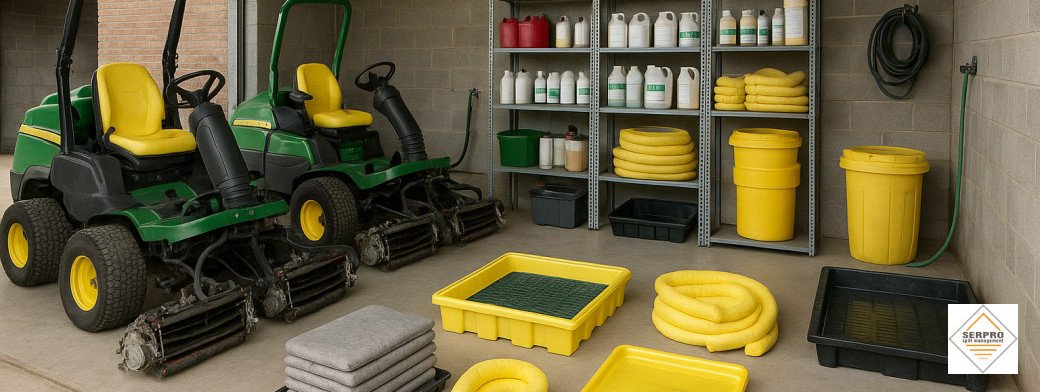
Maintenance sheds should keep a small, clearly organised range of spill management products that match the liquids used on site and allow staff to act quickly. For most golf course workshops and storage areas, that means absorbents for oils, fuels and mixed liquids, compact spill kits for first response, and drip trays placed under parked equipment, containers and transfer points. Having the right tools close to likely spill areas helps contain leaks early, reduce slip risks and stop liquids reaching drains or wash-down areas.
A practical setup usually includes products for both everyday drips and larger accidental releases. Greenkeeping sheds often handle diesel, petrol, hydraulic oil, lubricants, irrigation treatment products and cleaning chemicals, so the response equipment should reflect those risks rather than relying on one generic item for everything.
Core products to keep on hand
Start with absorbents. Oil-only pads or socks are useful around mowers, hydraulic equipment and fuel storage where hydrocarbons are the main concern. General purpose absorbents can deal with mixed workshop spills, while chemical absorbents may be needed where irrigation chemicals or other treatment liquids are stored. Absorbent rolls are especially useful in sheds because they can cover walkways, benches or wash-down edges quickly and can be cut to suit the spill size.
Next, keep spill kits in visible, labelled locations. A small kit near the fuel store, another in the workshop and one by the wash-down or chemical handling area can save time during the first few minutes of a spill. Kits should typically include absorbent pads, socks, disposal bags and gloves, so staff can contain, collect and segregate waste safely.
Finally, use drip trays as a preventive measure, not just a clean-up aid. Place them beneath parked ride-on mowers, pumps, drums, taps and decanting points to catch slow leaks before they spread. This supports better housekeeping and aligns with wider UK pollution prevention guidance focused on stopping oils and chemicals from escaping to ground or drains.
Who Should Be Responsible for Spill Response in Maintenance Sheds?
Responsibility for spill response in a golf course maintenance shed should be clearly assigned, not assumed. In practice, the duty usually sits with a named supervisor or workshop manager, supported by trained greenkeeping and maintenance staff who are most likely to discover a spill first. Everyone working in or around the shed should know how to raise the alarm, protect drains, use the correct absorbents and keep themselves safe, but not every member of staff should be expected to deal with every type of spill alone.
A simple approach works best: appoint a lead person for spill preparedness, identify deputies for each shift, and make first-response duties part of routine shed procedures. This helps prevent confusion when fuel, hydraulic oil, fertiliser liquids or irrigation chemicals are released near machinery, storage areas or wash-down points. Clear roles should also link to the right safety equipment, including gloves, disposal bags, drain covers and labelled spill stations stocked for the liquids kept on site.
Key personnel to identify
The most effective spill response plans name specific people and define their responsibilities. Typically, this includes:
- Maintenance shed supervisor or course manager: owns the procedure, checks stock, arranges inspections and decides when outside help is needed.
- Designated spill responders: trained staff who can contain and clean up minor spills using pads, socks, rolls, drip trays or spill kits suited to oil, general liquids or chemicals.
- All shed users: report spills immediately, isolate the area if safe, and avoid washing contaminants into drains.
Training requirements for staff
Training should be practical and matched to the materials on site. Staff need to understand the difference between oil, fuel and chemical spills, where response equipment is stored, and when a spill is beyond their competence. This should sit alongside wider risk control measures under HSE COSHH guidance and good housekeeping to reduce slip risks, as outlined by the HSE.
At minimum, training should cover safe reporting, drain protection, correct absorbent selection, waste segregation and incident recording. Short refresher sessions after inspections or near misses can help keep responsibilities clear and response times quick.
How Should Waste from Spills Be Separated and Handled?
Waste from spills should be separated by both what was spilled and what was used to clean it up. On a golf course maintenance site, that usually means keeping oil and fuel waste apart from fertiliser liquids, irrigation chemicals and general wash-down debris. Absorbents, contaminated soil, used PPE and damaged containers should be treated according to the substance involved, not mixed into one bin. This helps reduce disposal errors, lowers the risk of cross-contamination and supports safer handling under your COSHH arrangements.
As a practical rule, identify the spill first, then bag or containerise the waste in clearly labelled streams: hazardous, non-hazardous and any recyclable packaging that is genuinely clean. If there is any doubt about the contents, treat the waste as hazardous until it has been checked. Staff should wear suitable gloves, prevent waste reaching drains and use secure disposal bags or lidded containers so soaked absorbents and debris can be moved without leaking.
Waste separation procedures
Set out a simple procedure in the shed and spill station. Used absorbent pads, rolls, socks or granules that contain oil, diesel, hydraulic fluid or chemicals should be collected separately from uncontaminated packaging, sweepings or ordinary rubbish. Chemical spill waste should not be mixed with oil-only absorbents, and neither should be mixed with general maintenance waste. If a spill reaches soil, sand or other loose material, collect that material into a dedicated hazardous waste container if contamination is present.
Label each bag or container with the spill type, date and area. Keep full bags in a secure holding point away from drains and weather until collection. This approach aligns with wider UK pollution prevention guidance from GOV.UK.
Disposal methods for hazardous and non-hazardous waste
Hazardous waste may include fuel-soaked absorbents, oil-contaminated materials, pesticide or irrigation chemical residues, and PPE contaminated by harmful substances. These should be stored safely and removed by an authorised waste contractor. Review the product safety data sheet and your COSHH information before disposal.
Non-hazardous waste may include clean outer packaging, uncontaminated cardboard or other materials that have not come into contact with the spill. These can go into the appropriate general or recycling stream, but only if they are genuinely clean and dry. Never wash spill residues into yard drains or wash-down areas to “dispose” of them.
How Can Spill Management Arrangements Be Checked During Routine Inspections?
Spill management arrangements should be checked through a simple, documented inspection routine that confirms equipment is present, accessible, suitable for the liquids on site and still fit for use. In a golf course maintenance shed, that means looking at spill kits, absorbents, drip trays, bunded storage, drain protection, housekeeping standards and waste segregation, then recording any defects and corrective actions.
Routine inspections help show whether spill controls will work when needed, rather than only looking adequate on paper. They also support good practice under UK pollution prevention guidance and day-to-day health and safety management, particularly where fuels, hydraulic oils, fertiliser liquids and irrigation chemicals are stored or handled.
Routine spill inspection checklist
- Check spill kits are clearly labelled, easy to reach and not blocked by tools, bins or machinery.
- Confirm the right materials are stocked for the risks present, such as oil-only absorbents for hydrocarbons, general purpose absorbents for mixed workshop spills and chemical absorbents where irrigation chemicals are handled.
- Inspect absorbent pads, rolls and socks for damage, dampness or missing contents.
- Check drip trays beneath parked equipment, pumps, drums and transfer points are correctly positioned and not already full.
- Make sure drain covers or other drain protection measures are available near wash-down and storage areas.
- Look for leaks, staining, residue, slippery patches and poor housekeeping around containers and floors, in line with HSE slips and trips guidance.
- Inspect bunds and storage areas for cracks, standing liquid, rainwater build-up or signs of overflow.
- Check disposal bags, gloves and waste containers are available for used absorbents and contaminated debris.
- Verify inspection findings and control measures align with site assessments under COSHH where relevant.
How often should checks be carried out?
Visual housekeeping checks are best done daily or weekly, with a more formal recorded inspection each month. Additional checks should follow deliveries, chemical handling, maintenance work, heavy rain near external storage, or any spill incident.
Documentation and follow-up
Use a standard checklist and keep dated records of what was inspected, what was missing and who completed the action. Photos can help track recurring issues. If you need a practical format, inspection aids such as inspection tools can help standardise checks across sheds, wash-down points and storage areas.
Conclusion: The Importance of Proactive Spill Management
Proactive spill management is an essential part of running a safe, efficient and environmentally responsible golf course maintenance shed. Across greenkeeping facilities, common liquids such as fuel, hydraulic oil, fertiliser liquids and irrigation chemicals can quickly create slip risks, damage surfaces, contaminate drains and increase clean-up costs if they are not controlled properly. A practical approach built around good housekeeping, suitable storage, routine inspections and the right spill response equipment helps reduce disruption while protecting staff, visitors and the surrounding course environment.
The key points are straightforward: identify where spills are most likely to happen, store liquids with suitable containment, keep wash-down and transfer areas under control, and make sure staff know how to respond. Measures such as bunding, drip trays, clearly labelled spill stations, absorbent pads, absorbent rolls, absorbent socks, drain covers, gloves and disposal bags can all support a faster and more organised response when used as part of a wider site procedure. This should sit alongside sensible waste segregation and safe handling of used absorbents and contaminated materials.
It is also important to remember that spill management is not only about reacting after a leak has happened. Preventive checks, tidy storage areas and regular reviews of working practices are just as valuable. UK guidance from GOV.UK on pollution prevention for businesses, the Control of Pollution oil storage guidance, and HSE COSHH essentials provides a useful framework for managing these risks responsibly.
If your golf course maintenance shed has not reviewed its spill arrangements recently, now is a good time to do so. Putting best practices in place before an incident occurs is the most effective way to limit harm, improve day-to-day safety and keep maintenance operations running smoothly.