
Published: 3 September 2026
Last updated: 2 September 2026
Why Do Superbike Workshops Need Effective Spill Management?
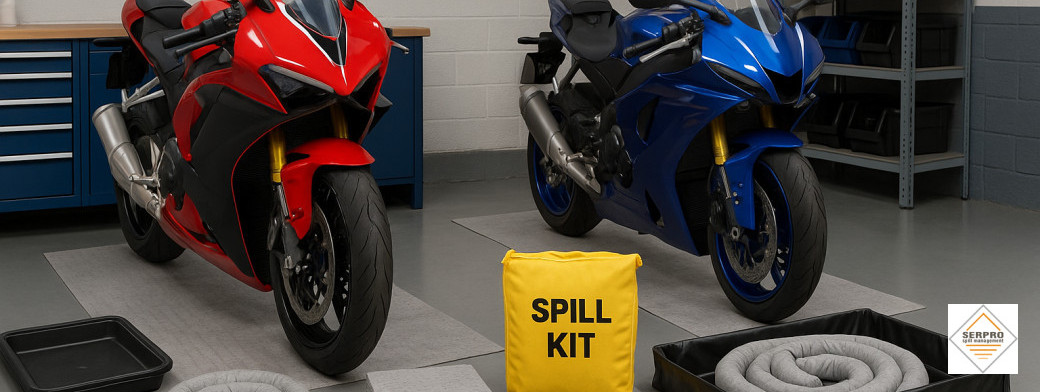
Superbike workshops need effective spill management because they are fast-moving technical spaces where race bikes are built, serviced and prepared using high-performance fluids that can quickly create slip risks, fire concerns, contamination issues and costly delays. In this context, a superbike workshop means a professional race garage or support workshop where mechanics handle engine oil, fork oil, brake fluid, coolant, fuel, chain lubricants and cleaning chemicals during maintenance and rapid setup work. Practical spill control usually combines absorbent pads, rolls, socks, chemical or oil-only absorbents, and drip trays so leaks can be contained at source, floors kept clear and waste separated for safe handling. In the UK, this sits within wider duties around emergency planning, housekeeping and safe fuel handling, as outlined by the HSE’s guidance on incidents and emergencies and its advice on the safe use of petrol in garages.
Spill preparedness matters in superbike environments because even a small release can spread under benches, around tyre warmers, beneath stands or into walkways just when a team is working against the clock. High-performance fluids are chosen for demanding mechanical conditions, but that also means they may be slippery, staining, flammable or awkward to clean once they reach the floor. A workshop that plans ahead can respond faster, protect staff, reduce disruption and keep the workspace presentable between jobs.
Which Fluids Create the Main Risks?
The most common workshop spill types include engine oil during servicing, fork oil during suspension work, brake fluid during bleeding, petrol during fuelling controls, chain lubricant overspray and general cleaning liquids. Each behaves differently, so teams usually benefit from keeping a mix of absorbent products nearby rather than relying on one item for every task.
What Should Be Ready Before a Spill Happens?
Good preparation means placing absorbents where leaks are most likely to start: under bikes, near workbenches, beside fluid storage points and in refuelling or wash-down areas. Pads and rolls help with quick wipe-ups, socks help stop spread along the floor, and drip trays catch drips during strip-downs or overnight storage. Clear labelling, routine checks and a simple response plan make it easier for mechanics to act immediately instead of searching for supplies after a spill has already spread.
What Are the Common High-Performance Fluids Used in Superbike Workshops?
Superbike workshops commonly handle several high-performance fluids that need careful day-to-day management: fork oil, engine oil, brake fluid, fuel and chain lubricants. Each behaves differently when spilled, and each can affect safety, housekeeping and turnaround speed in a busy race garage. Knowing where these fluids are used helps teams choose the right absorbents, keep work areas clean and respond quickly during servicing.
Fork oil is used in suspension setup and rebuild work. It is typically clean, slippery and easy to spread across benches or floors during strip-downs, so technicians often benefit from tidy work mats, drip trays and nearby general purpose absorbents for mixed workshop spills.
Engine oil is one of the most familiar workshop fluids, appearing during oil changes, leak checks and engine work. Fresh or used oil can create slip risks and stain surfaces, which is why many teams keep oil-only absorbents close to service bays for quick containment around bikes and storage areas.
Brake fluid is used in braking system bleeding and maintenance. Although handled in smaller volumes, it needs prompt clean-up because it can spread quickly and contaminate nearby surfaces and components.
Fuel, including petrol used during refuelling, draining or testing, demands especially careful control because of both spill and fire risk. In UK workshops, handling should reflect good practice set out in HSE guidance on the safe use of petrol in garages.
Chain lubricants are another regular source of residue. Overspray and drips can build up around rear stands and floor areas, so frequent wipe-downs and absorbent placement help maintain a cleaner, faster workspace.
Where Do Spills Typically Occur in Superbike Workshops?
Spills in superbike workshops most often occur where high-performance fluids are handled quickly and repeatedly: at workstation areas beside the bike, at fueling stations, across maintenance zones, and in cleaning areas. Common causes include hurried fluid top-ups, disconnected lines, overfilled containers, chain lubrication overspray, brake bleeding, fork service work, and contaminated washdown run-off. In practice, the highest-risk spots are the places where mechanics move fast, tools are shared, and several jobs happen at once.
These spill points are predictable, which makes them easier to control with good layout and the right absorbents close by. Keeping absorbent rolls near benches and bike stands helps catch drips before they spread underfoot, while clearly marked spill kits are useful near fuel and fluid handling points for a faster first response.
Common spill hotspots in the workshop
Workstation areas around paddock stands and benches often collect engine oil, fork oil, brake fluid and chain lubricant. Small drips from open parts, removed filters or bleeding lines can quickly create slip risks on smooth floors.
Fueling stations are another obvious hotspot, especially during refuelling, decanting or temporary fuel storage. Even minor splashes need prompt attention, and handling practices should reflect HSE guidance on the safe use of petrol in garages.
Maintenance zones see repeated spills during servicing, strip-downs and fluid changes. Drip trays, absorbent socks and routine floor checks help stop leaks spreading into walkways and neighbouring bays.
Cleaning areas can also be overlooked. Degreasers, rinse water, oil residue and washdown waste may carry contamination towards drains, so teams should consider controls in line with UK pollution prevention guidance. Across all areas, tidy housekeeping supports safer footing, as highlighted by HSE advice on slips and trips.
What Absorbents Should Be Kept Nearby for Quick Response?
Superbike workshops should keep a small, clearly organised spill response setup within easy reach of each work bay. For most day-to-day incidents, that means absorbent pads for drips and wipe-ups, absorbent socks to stop fluids spreading, drip trays under likely leak points, and compact spill kits for a faster, more complete response. This combination helps teams deal with engine oil, fork oil, brake fluid, coolant residues, chain lubricants and small fuel-related contamination before it creates slip risks, cross-contamination or unnecessary downtime.
The best approach is to match the absorbent to the fluid and the task. Oil-only products suit hydrocarbons such as engine oil and fuel traces, general purpose absorbents are useful for mixed workshop housekeeping, and chemical absorbents may be needed where more aggressive fluids are handled. In UK workshops, quick access, good housekeeping and clear emergency planning support safer operations, in line with HSE guidance on slips and trips and incident planning.
Core items to keep close to the bike and bench
- Absorbent pads for catching fresh drips during servicing, bleeding brakes, topping up fluids and cleaning small floor spills quickly.
- Absorbent socks to ring around a spill, protect walkways and contain leaks beneath benches, trolleys or parked bikes.
- Drip trays under engines, forks, fuel systems and parts-washing areas to intercept leaks before they reach the floor.
- Spill kits with pads, socks, gloves, disposal bags and simple instructions, ideally stored in clearly marked spill stations.
For faster setups, place these items at the point of use rather than in a distant store cupboard. A tidy, labelled station near the garage entrance or central work area makes checks easier and encourages a consistent response. It is also sensible to separate used absorbents by waste type and review stock during routine inspections, especially before race weekends or intensive rebuild periods.
Who Should Be Responsible for Spill Management in the Workshop?
Spill management should never sit with one person alone. In a superbike workshop, responsibility is best shared between a designated spill response team, the workshop manager and all technicians working around oils, fuels, brake fluid and cleaning chemicals. The workshop manager should set the plan, assign roles and check that the right equipment is available, while day-to-day staff should know how to raise the alarm, make an area safe and use the correct absorbents for the liquid involved.
For fast, controlled response, the designated spill response team should be clearly named on shift rotas and noticeboards. They do not replace general staff awareness; instead, they lead the initial response, decide whether a spill can be handled in-house and direct others to isolate ignition sources, protect drains and fetch the correct spill kits. In a race workshop, where turnaround times are tight, that clarity helps prevent delays as well as slips, contamination and poor waste handling.
Training requirements
Everyone in the workshop should receive basic spill training as part of induction, with refresher sessions covering likely fluids, absorbent selection, drain protection and safe clean-up. Staff handling specialist liquids should understand when to use oil-only, general purpose or chemical absorbents, and how to bag used materials safely in suitable disposal bags. Training should also reflect UK guidance on slips, trips and contamination control.
Communication protocols
Communication protocols should be simple and immediate: report the spill, identify the liquid if known, cordon the area and notify the responsible lead. Clear signage, labelled spill stations and a short escalation procedure help avoid confusion. Where there is risk to drains, fire safety or wider pollution, the response should align with HSE and GOV.UK guidance rather than relying on informal judgement alone.
How Should Waste from Spills Be Separated and Handled?
Waste from spills in a superbike workshop should be separated by both liquid type and contamination level, then stored, labelled and disposed of through appropriate waste routes. In practice, that means keeping oil-soaked absorbents apart from fuel-contaminated materials, separating chemical spill waste such as brake fluid or cleaning agents, and isolating any debris that may be suitable for recycling. Good waste segregation reduces handling risks, supports cleaner work areas and helps teams follow UK pollution prevention expectations set out in GOV.UK guidance for businesses.
As a rule, used pads, rolls, socks, gloves and granules should never all be thrown into one mixed bin after a spill response. If the spill involved oils or lubricants only, keep that waste in clearly marked containers or disposal bags for oily waste. If the spill involved more aggressive workshop fluids, use a separate stream and suitable chemical absorbents, then bag and label the waste so it can be assessed for the correct collection route.
Practical Waste Segregation Steps
- Separate oil-only absorbents from fuel, solvent or brake-fluid contaminated absorbents.
- Keep used PPE, sweepings and broken packaging apart from recoverable materials.
- Label containers by waste type and spill origin to avoid confusion during busy workshop periods.
- If a spill may reach drains, deploy drain covers early and treat any recovered waste as controlled contaminated material.
Disposal Methods and Recycling Options
Suitable disposal methods depend on what has been absorbed. Oily absorbents, fuel-contaminated materials and chemical spill residues will often need collection by a licensed waste contractor. Free liquid should be recovered separately where possible rather than left in saturated fibres, as this can improve handling and reduce waste volume.
For recycling options, uncontaminated cardboard, plastic outer packaging and some empty containers may be recyclable if kept clean and separated from spill waste. Teams should check with their waste provider which workshop materials can enter recycling streams and which must remain in hazardous or specialist disposal routes.
What Routine Inspections Should Be Conducted for Spill Preparedness?
Routine inspections for spill preparedness in a superbike workshop should be frequent, practical and tied to how quickly fluids are handled during service work. In most teams, that means a quick daily visual check, a more detailed weekly inspection and an additional check before race weekends, test days or any intensive strip-down. Regular inspections help confirm that absorbents, containment items and waste arrangements are ready before fork oil, engine oil, brake fluid, fuel residues or chain lubricant reach the floor.
The aim is not just to tick a box, but to keep response times short and floors safe. This supports good housekeeping, reduces slip risks and helps prevent liquids reaching drains or walkways, in line with HSE guidance on slips and trips and wider UK advice on pollution prevention for businesses.
Inspection frequency
Set inspection intervals around workshop activity. A sensible baseline is:
- daily checks at the start of each shift or garage set-up
- weekly documented inspections of spill stations and storage areas
- pre-event and post-event checks for mobile pit and paddock equipment
- immediate rechecks after any spill response or heavy fluid-handling task
Checklist items to review
- spill kits are complete, accessible and suited to the fluids present
- absorbent pads, rolls and socks are dry, clean and adequately stocked
- drip trays are positioned under likely leak points and emptied when needed
- drain covers, gloves and disposal bags are present and easy to reach
- waste containers are labelled and segregated for oily, general or chemical waste
- spill stations have clear, visible signage, supported by clear spill station labelling
- aisles, exits and work mats are free from contamination and obstructions
Training refreshers
Training refreshers should be built into routine inspections, not treated separately. Use short toolbox talks to remind mechanics and support crew who responds first, which absorbents suit which fluid, where drain protection is kept and how used materials should be bagged and stored. Brief refreshers after incidents, staff changes or layout changes help keep procedures familiar and fast.