
Published: 10 August 2026
Last updated: 21 June 2026
Why is Spill Management Critical in Fire Station Appliance Bays?
Spill management in fire station appliance bays is the planned control, clean-up and safe disposal of liquids released from emergency vehicles and bay activities, so floors stay safe, equipment areas stay tidy and pollutants do not reach drains. In practice, that means preparing for common spills such as diesel drips, hydraulic oils, coolant, foam residues and wash-down run-off, then using suitable controls such as absorbent pads, rolls and socks, drip trays, drain protection and clearly labelled spill kits. In a UK workplace, this matters not only for housekeeping and slip prevention, but also because stations must manage contamination responsibly in line with guidance on slips and trips and pollution prevention for businesses.
Appliance bays are busy, hard-working spaces where vehicles return wet, warm and sometimes carrying residues from operational use. Small leaks can build up around parking positions, pump areas, lockers and wash-down points, creating slippery patches or spreading contamination on tyres and boots. Good spill management is therefore part of routine station readiness: it helps crews deal with everyday drips quickly, keeps bays presentable and reduces the chance of fluids entering surface water drains or being tracked into adjoining areas.
Typical spills found in appliance bays
The most common bay contaminants are usually minor but frequent. Diesel drips may appear beneath parked appliances or during refuelling. Hydraulic oils can escape from lifting or rescue equipment carried on vehicles. Coolant leaks may show up after engine use or maintenance checks, while foam residues and wash-down liquids can leave slick surfaces if not removed promptly. Each fluid behaves differently, so stations often benefit from keeping oil-only absorbents for hydrocarbons, general purpose absorbents for mixed housekeeping tasks and chemical absorbents where more specialist liquids may be present.
Why housekeeping and inspections matter
Housekeeping is the foundation of effective spill control. Clean floors, designated storage points, visible spill stations and prompt removal of used absorbents make it easier to respond before a small drip becomes a larger hazard. Routine inspections should check for fresh leaks, full drip trays, worn absorbent stock, blocked access to spill kits and any risk to nearby drains. This regular approach helps make spill response practical and consistent, rather than something considered only after a more serious incident.
What Types of Liquids Are Commonly Spilled in Appliance Bays?
In fire station appliance bays, the liquids most commonly spilled are diesel, hydraulic oil, engine coolant and foam residue. These fluids usually escape during refuelling, vehicle checks, maintenance, wash-downs or when appliances return from incidents with contaminated equipment and hose gear. Even small drips matter because they can create slip risks, damage surfaces, spread contamination through the bay and, if they reach drains, cause environmental harm.
Each fluid presents a slightly different housekeeping problem, so it helps to identify what is on the floor before choosing absorbents. Oil-based leaks such as diesel and hydraulic fluid are typically managed with oil absorbents, while mixed spills, coolant splashes and foam residues are often better suited to general purpose absorbents. Good practice also includes prompt clean-up, drain protection and safe handling in line with HSE guidance on vehicle-related fuel risks: INDG331.
Diesel
Diesel is one of the most frequent bay contaminants. Spills commonly happen during refuelling, from overfilled tanks, loose caps, leaking fuel lines or minor drips after appliances are parked. Although diesel is less volatile than petrol, it still creates a very slippery surface and can be tracked across pedestrian routes and into vehicle cabs. If it enters drainage systems, it may pollute watercourses and require more extensive clean-up.
Hydraulic oils
Hydraulic oil can leak from lifting gear, stabiliser systems, pumps or other vehicle-mounted equipment. These spills are often noticed after operational use or during inspections, when seals, hoses or connectors have started to fail. Hydraulic oils leave persistent slicks that increase the risk of slips and can soak into porous surfaces if not dealt with quickly. Used oil may also carry contaminants, which makes controlled clean-up and disposal especially important.
Coolants
Engine coolants are usually spilled during topping up, servicing, hose failures or radiator leaks. In appliance bays, coolant can spread widely because it is thinner than oil and may run towards thresholds and drains. Besides making floors slippery, some coolants can be harmful to the environment and should not be washed away casually. Their bright colouring can help identification, but they still need prompt containment with suitable absorbents.
Foam residues
Foam residues often appear after training, equipment testing, decontamination or wash-down routines. While they may seem less serious than fuel or oil, they can leave floors wet and slick, interfere with housekeeping and contribute to drain contamination if rinsed away without control. In some cases, residues may also mix with dirt, oils or road grime, creating a broader clean-up issue than the initial spill alone.
Where Do Spills Typically Occur in Fire Station Appliance Bays?
Spills in fire station appliance bays most often occur directly under vehicles, around parked appliances, and beside the equipment used to keep them operational. The highest-risk spots are where fluids can drip, splash or be transferred during routine tasks, including parking positions, maintenance points, refuelling areas and wash-down zones. In practice, small but repeated leaks from diesel, oil, coolant, hydraulic fluid or foam residue are often more common than one large incident, which is why these locations need regular checks and quick access to containment supplies.
Another frequent problem area is around equipment and storage points. Hose reels, pumps, portable tools, battery charging areas, cleaning supplies and fluid containers can all contribute to minor spills if items are handled in a hurry or put away while still wet. Keeping spill stations close to these work areas helps staff respond quickly before contamination spreads across the bay floor.
Routine vehicle maintenance is a common cause of spills, especially when checking engines, topping up fluids, changing parts or inspecting hydraulic systems. Even a controlled task can leave drips behind once a vehicle is moved. Placing drip trays beneath known leak points or service areas can help capture fluid before it reaches walking routes or drainage channels.
Refuelling is another predictable source of contamination. Small overfills, nozzle drips and transfers from fuel cans can quickly create slip risks, particularly on smooth bay floors. Wash-down after incidents can also leave residues that mix with dirt and oil.
The key housekeeping point is to monitor these areas consistently. Frequent inspection of vehicle standing areas, equipment zones and refuelling points makes it easier to spot recurring leaks early, improve housekeeping routines and keep absorbents where they are most likely to be needed.
What Absorbents Should Be Available for Spill Management?
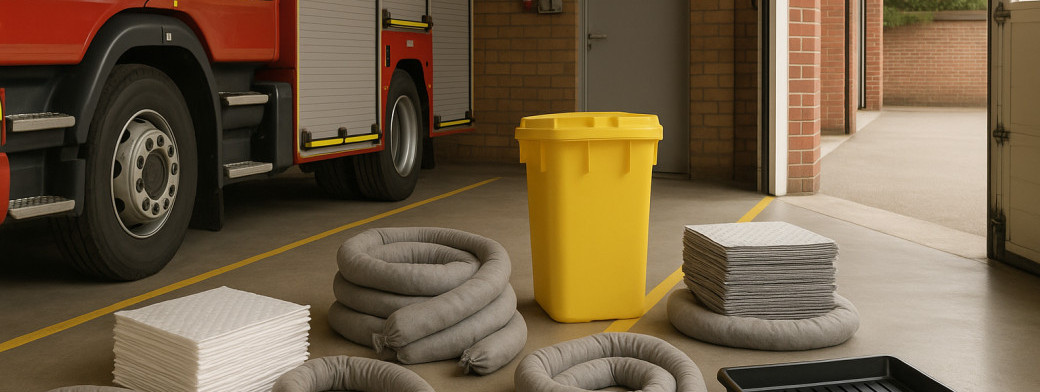
Fire station appliance bays should keep a small range of absorbents ready for the fluids most likely to appear during daily operations, including diesel, engine oil, hydraulic fluid, coolant, wash-down water and occasional foam residue. In practice, that means having absorbent pads, absorbent rolls and absorbent socks available in clearly marked spill points, so staff can deal with drips, spreading leaks and larger floor contamination quickly as part of normal housekeeping.
The most effective approach is to stock a variety rather than rely on one format alone. Different spills behave differently: some need fast surface coverage, some need containment around wheels or plant, and some are better managed with targeted wiping and pick-up. Keeping several absorbent types on hand helps bays stay tidy, reduces slip risk and supports a more organised response before liquids reach thresholds, channels or drains.
Essential absorbent types to keep on hand
- Pads: best for small drips, spot leaks and finishing clean-up after the main spill has been contained. They are useful under parked appliances, beneath hose connections, near pumps and around maintenance areas where oil or coolant may drip intermittently.
- Rolls: suited to wider floor coverage and walkways where contamination has spread over a larger area. Absorbent rolls can be cut to length, laid along vehicle sides or placed in wash-down zones to manage recurring wet patches and fluid tracking.
- Socks: used to contain and direct spills before they spread. They work well around the base of appliances, across bay door thresholds, beside drains and around stored equipment, helping form a quick barrier while other absorbents are applied.
Why variety matters
A mixed stock allows staff to match the absorbent to the spill: oil-only products for hydrocarbons, general purpose absorbents for mixed workshop liquids, and chemical absorbents where stronger or less predictable substances may be present. This layered approach is practical for everyday station housekeeping and aligns with wider UK good practice on keeping floors safe and preventing pollutants from entering drainage systems.
Who Should Respond to Spills in Appliance Bays?
Spills in appliance bays should be handled by trained station personnel who can assess the risk, make the area safe and use the right absorbents for the liquid involved. In practice, this usually means the first competent person on scene takes immediate control of minor spills, while larger, unknown or higher-risk incidents are escalated to a supervisor or designated lead. The aim is to stop slips, contain the fluid, protect drains and keep communication clear from the outset.
Not everyone needs the same level of involvement, but everyone working in or around the bay should know the basics: how to spot a spill, how to raise the alarm, where the nearest spill kits are kept, and when not to intervene. Staff should receive suitable instruction in identifying common vehicle-related fluids, selecting absorbents such as oil-only, general purpose or chemical grades, using PPE, isolating the area and reporting the incident. Refresher safety training helps keep these responses consistent.
Typical spill response roles
A practical appliance bay response often involves several people with different responsibilities:
- All staff: spot leaks early, report them quickly and avoid walking contamination through the bay.
- First responder: assess immediate danger, protect others from slips, place absorbents or socks to contain spread, and keep liquids away from drains.
- Supervisor or officer in charge: decide whether the spill is routine or needs escalation, coordinate clean-up, and confirm waste is separated and disposed of correctly.
- Facilities or stores personnel: restock absorbents, gloves, disposal bags and drain protection after use.
Clear communication is essential throughout. Staff should say what has spilled, where it is moving, whether drains are at risk and what equipment is being used. Short, direct updates reduce confusion, prevent duplication and support safer housekeeping. This fits well with wider UK good practice on preventing slips and avoiding pollution from workplace run-off.
How Should Spill Waste Be Separated and Disposed Of?
Spill waste in a fire station appliance bay should be separated by what has been absorbed: oil and fuel residues, chemical liquids such as coolant or cleaning agents, and non-contaminated general waste. This matters because used absorbents can change category once they have come into contact with a hazardous substance. Keeping waste streams separate helps reduce disposal errors, supports safer handling, and makes it easier to meet UK waste duty of care requirements.
As a practical rule, staff should bag and label used pads, socks, granules, wipes and PPE according to the fluid involved. Oil-only materials used on diesel, lubricants or hydraulic oil should be kept apart from absorbents used on chemicals or mixed unknown liquids. Where bays handle detergents, foam residues or coolant, it is sensible to keep suitable chemical absorbents available so that any resulting waste can be identified and managed correctly from the start.
Separate Waste by Spill Type
- Oil waste: absorbents contaminated with diesel, engine oil, hydraulic oil or oily wash-down residues.
- Chemical waste: absorbents used on coolant, degreasers, cleaning chemicals, battery-related liquids or unknown substances.
- General waste: only clean, uncontaminated packaging or housekeeping materials that have not contacted spilled liquids.
Using the right disposal bags is important because it helps prevent leaks, keeps contaminated absorbents contained during movement, and supports clearer segregation for contractors or internal waste teams. Bags should be robust, suited to the waste type, and stored close to spill response points so used materials are not left loose on the bay floor.
Regulatory considerations should not be overlooked. In the UK, hazardous spill waste may need to be stored, described and consigned separately from ordinary refuse, depending on the substance absorbed. Station managers should align procedures with site waste policies and the wider guidance on pollution prevention for businesses. Waste should never be washed into drains, mixed for convenience, or placed in general bins if contamination is present. When in doubt, treat the waste cautiously, label it clearly and confirm disposal routes with an authorised waste contractor.
How Can Routine Inspections Enhance Spill Preparedness?
Routine inspections improve spill preparedness by making sure appliance bays stay tidy, spill-control items remain accessible, and small warning signs are dealt with before they become larger housekeeping or safety issues. In a fire station appliance bay, regular checks help staff spot diesel drips, hydraulic oil seepage, coolant leaks, foam residue, blocked drainage points and low stock levels in absorbent supplies. This supports faster response to minor spills and helps reduce slip risks, cross-contamination and avoidable disruption.
A simple inspection routine also makes spill response more reliable. If spill stations are clearly labelled, fully stocked and positioned near likely risk points, staff can act quickly without searching for pads, socks, gloves or disposal bags. Using suitable inspection tools during planned checks can help record recurring problem areas, identify trends and support better housekeeping decisions over time.
Checklist for routine inspections
- Check floors for fresh drips, staining, wet patches or slippery residue.
- Inspect parking positions, pump areas and under-vehicle zones for repeated leaks.
- Confirm absorbent pads, rolls, socks and small spill kits are present and in usable condition.
- Make sure gloves, disposal bags and drain protection items are easy to reach.
- Verify spill stations are clearly signed and not blocked by equipment or stores.
- Look at drip trays for overfilling, damage or poor placement.
- Check drains and wash-down areas for contamination risks.
- Record issues and assign follow-up actions promptly.
What to look for during inspections
Inspections should focus on both obvious spills and early indicators of future problems. Repeated spotting in the same bay may point to a vehicle fault or poor tray positioning. Saturated absorbents, missing stock, damaged containers or unclear labelling can all slow response times. It is also worth checking whether wash-down routines are spreading residues towards drains, as good pollution prevention depends on controlling contaminated run-off as well as keeping floors safe.
How inspections prevent spills and improve response times
Regular checks help prevent spills by catching leaks early, improving storage layout and ensuring absorbents are matched to the fluids most likely to appear in the bay. They also improve response times because staff know where equipment is, what condition it is in and whether replacements are needed. This aligns with wider UK good practice on floor safety and contamination control, including HSE guidance on slips and trips and GOV.UK advice on pollution prevention for businesses.
What Are the Best Practices for Housekeeping in Appliance Bays?
The best housekeeping practices in appliance bays are simple, consistent and easy for crews to follow: clean little and often, deal with drips before they spread, keep the right absorbents close to likely spill points, and make spill response equipment clearly visible. In a fire station bay, where diesel, oil, coolant, hydraulic fluid, foam residue and wash-down water may all appear during normal operations, good housekeeping helps reduce slip risks, protects drains and keeps the area ready for use.
A practical routine usually works better than a reactive one. Daily visual checks, prompt removal of contamination and clear storage for cleaning tools all help prevent small leaks from becoming wider floor hazards. This supports the wider principles in HSE guidance on slips and trips and aligns with UK pollution prevention advice on stopping oils and chemicals from reaching the environment.
Build regular cleaning routines into bay checks
Regular cleaning routines should be part of normal appliance bay inspections rather than treated as a separate task. Sweep debris, remove wet patches, check under parked vehicles for fresh drips and inspect wash-down areas after use. Keeping suitable housekeeping tools nearby makes it easier to deal with contamination straight away, especially around entry routes, pump areas and parking positions where fluids often collect.
Keep absorbents readily available at the point of use
Absorbents should be easy to reach, not locked away in a distant store. A sensible setup may include pads for quick wipe-ups, rolls for larger floor areas, socks to contain spreading liquid and drip trays for known leak points. Use oil-only absorbents for hydrocarbons and general purpose or chemical absorbents where mixed fluids may be present. Positioning supplies close to appliance bays encourages faster first response and limits the chance of contamination being walked through the station.
Use clear spill station labelling
Clear spill station labelling is important so anyone can identify the nearest response point without delay. Well-marked spill stations help staff find absorbents, gloves, disposal bags and drain protection quickly, while also making stock checks easier during routine inspections. Labels should show what the station contains and which fluid types it is intended for, helping reduce confusion during busy periods and supporting a tidier, safer appliance bay.