
Published: 3 November 2026
Last updated: 24 August 2026
Why is Spill Management Critical for Swimming Pool Plant Rooms?
Spill management is critical in swimming pool plant rooms because these enclosed service areas store and dose hazardous chemicals used to keep public pool water safe, and even a small leak can quickly create risks to people, property and the environment. A swimming pool plant room is the operational space that houses pumps, filters, tanks, pipework and chemical dosing equipment, typically handling chlorine, acids, alkalis and other water treatment chemicals. In practice, preparedness means having suitable containment and clean-up measures nearby, such as spill management equipment, compatible chemical absorbents, drip trays and drain protection, while working within UK duties under COSHH and pollution prevention guidance from GOV.UK.
Public swimming pool plant rooms use several chemical groups that need careful handling. These commonly include chlorine-based disinfectants, pH-correcting acids, alkalis such as sodium hydroxide, and other water treatment chemicals used for balance, coagulation or cleaning. If these liquids escape from dosing lines, delivery points, pumps, bunded areas or storage containers, they can cause burns, harmful vapours, slippery floors, equipment corrosion and dangerous chemical reactions if incompatible substances mix.
Why preparedness matters
The importance of spill management is not only about cleaning up after an incident. It is about reducing exposure, isolating the source where safe, preventing chemicals from reaching drains, and making sure staff know what they can and cannot respond to. In a busy public facility, that supports worker safety, protects contractors and pool users, and helps maintain service continuity.
Preparedness also supports compliance. Pool operators are expected to assess hazardous substances, provide suitable controls, train staff and manage waste correctly. A clear spill response arrangement, backed by compatible absorbents, labelled stations and routine checks, helps demonstrate a practical approach to safety and environmental protection rather than relying on improvised action when a leak occurs.
What Are the Common Sources of Chemical Spills in Pool Plant Rooms?
In public swimming pool plant rooms, chemical spills most often start at three points: dosing systems, chemical storage areas, and routine maintenance work. Typical liquids include sodium hypochlorite, acids for pH correction, alkalis and other water treatment chemicals. In practice, many incidents are caused not by major tank failure but by smaller, repeated events such as split tubing, leaking pump heads, loose drum connections, overfilling, poor decanting and accidental knocks during servicing. These smaller leaks still matter because they can create slip hazards, damage surfaces and increase the risk of incompatible chemicals mixing.
Dosing equipment is one of the most common sources because it contains multiple potential failure points: injection lines, non-return valves, peristaltic pump tubes, calibration points and chemical feed connections. A realistic scenario is a hypochlorite line cracking and weeping onto the floor behind a dosing panel, or an acid dosing pump seal failing slowly until liquid collects under the unit. Keeping suitable spill kits and local containment such as drip trays near these assets can help staff deal with minor leaks quickly while following site procedures.
Storage and handling are also frequent spill points
Storage areas present another regular source of spills, especially where drums or carboys are moved, changed over or stored on uneven surfaces. Common examples include a container being punctured by poor handling, a cap not being tightened after delivery, or residue running down the side of a drum during transfer. Maintenance activity adds further risk: disconnecting dosing lines, cleaning strainers, replacing pumps, or draining pipework can all release trapped chemical. According to HSE, slips and trips are the single most common cause of non-fatal workplace injury, and contamination from spills is a recognised contributor in work areas such as plant rooms (HSE slips and trips; HSE guidance on spill response and floor safety).
While published UK statistics rarely isolate swimming pool plant rooms as a standalone category, incident patterns across chemical handling environments consistently show that hose failures, connection leaks, transfer errors and housekeeping lapses are among the most common causes. That is why drain protection, including quick-access drain protection, should be considered wherever a leak could reach gullies or surface water drains.
What Should Be Included in a Spill Response Kit?
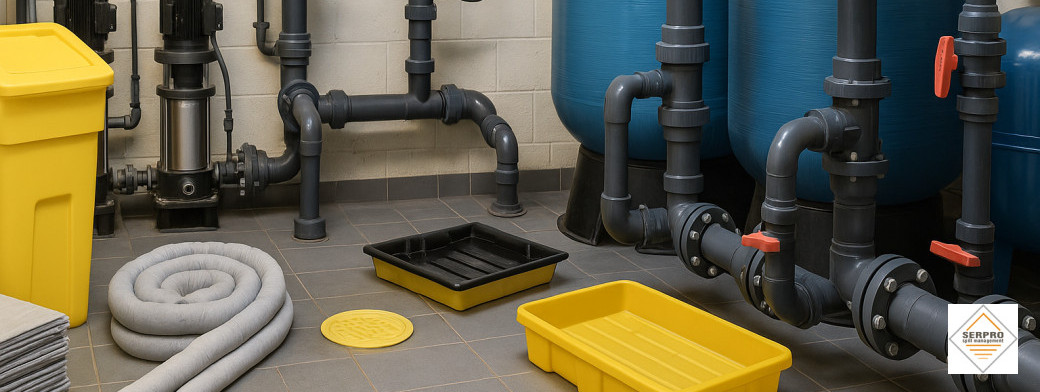
A spill response kit for a public swimming pool plant room should include the core items needed to contain, control and clean up small chemical dosing leaks quickly and safely. In practice, that means keeping absorbent pads, rolls and socks, suitable drip trays, disposal bags, and compact small spill kits close to dosing pumps, pipework, chemical containers and transfer points. The exact contents should reflect the chemicals on site and the findings of your COSHH assessment, with clear instructions that responders must not mix chemicals or improvise.
These supplies need to be readily available because even a minor leak can spread across a smooth plant room floor, create a slip hazard, damage equipment or enter drainage if not contained promptly. Fast access matters: if staff have to search cupboards or stores in an emergency, valuable time is lost and the spill may worsen.
Essential spill response items
- Absorbent pads for wiping up drips, splashes and small pooled spills.
- Absorbent rolls for covering larger floor areas or protecting walkways during clean-up.
- Absorbent socks for surrounding leaks, containing spread and protecting thresholds or drains.
- Drip trays to sit beneath dosing pumps, containers, valves and connection points where leaks often begin.
- Small spill kits positioned near the hazard for immediate first response.
- Disposal bags and ties for segregating used absorbents and contaminated waste.
- Gloves and basic PPE appropriate to the substances handled, in line with site procedures.
Storage and maintenance
Store supplies in clearly labelled, easy-to-reach locations, ideally using dedicated spill stations in or just outside the plant room. Keep contents dry, visible and separated from unrelated maintenance stock. Check kits during routine inspections, replace used or damaged items immediately, and make sure staff know what is in each kit, where it is kept and when specialist help is required.
Who Should Be Trained to Handle Chemical Spills?
Anyone who works in or around a public swimming pool plant room should receive spill-response training to a level that matches their role. In practice, this usually means plant operators, duty managers, maintenance staff, cleaners working near chemical stores, and any supervisor responsible for site safety. Not everyone should carry out the same actions, but everyone should know how to recognise a leak, raise the alarm, isolate the area if safe to do so, and avoid making the incident worse by mixing incompatible chemicals or using the wrong absorbents.
Staff responsibilities should be clearly defined in site procedures. Trained plant room or technical staff may deal with very small, manageable leaks only where the COSHH assessment and local procedure say this is safe. Managers and supervisors should oversee incident reporting, access control, replenishment of spill materials and review of lessons learned. Other staff, including reception or leisure team members, should know evacuation routes, emergency contacts and when a spill requires specialist assistance rather than an in-house response.
What training should cover
Training should be practical and site-specific, not just a box-ticking exercise. It should cover the chemicals used on site, likely leak points around dosing lines and containers, safe isolation steps, PPE selection, spill kit location, drain protection, and waste segregation after clean-up. It should also explain why chlorine-based products, acids and alkalis must never be mixed, and when an incident must be escalated immediately. Employers can support competence through refresher sessions and formal instruction such as spill response training services.
How often should staff be trained?
Induction training should be given before staff are expected to work near hazardous chemicals, with refreshers at regular intervals and whenever chemicals, equipment, layouts or procedures change. Many sites also benefit from short drills to test response times, communication and spill station readiness. The HSE’s COSHH guidance supports the need for suitable information, instruction and training so staff understand both the hazards and the controls in place.
Most importantly, training should be built around current COSHH assessments. These assessments identify the substances present, the risks from exposure, and the control measures staff must follow, making them the foundation for a proportionate and safer spill response plan.
How Can Routine Inspections Prevent Chemical Spills?
Routine inspections help prevent chemical spills in public swimming pool plant rooms by finding small faults before they become leaks, floor contamination or unsafe mixing incidents. Regular checks around dosing pumps, pipework, storage areas and drainage points make it easier to spot wear, corrosion, loose fittings, poor housekeeping and missing spill-control items early, so corrective action can be taken before a release spreads.
In practice, inspections should focus on the places where dosing leaks usually start: connection points, pump heads, hoses, valves, bunded storage, transfer areas and any surface where drips could create slip risks. They should also confirm that spill response materials are suitable for the chemicals on site, clearly labelled, easy to reach and supported by safe working arrangements under COSHH and good housekeeping guidance such as the HSE’s advice on slips and trips.
What should be checked during inspections?
A practical inspection should cover both equipment condition and spill preparedness. Check chemical containers for damage, staining or swelling; inspect dosing lines for cracks, brittleness or seepage; and look for residue around joints, pumps and injection points. Confirm that drip trays, absorbent socks, pads or small spill kits are present where minor leaks are most likely, and that drain protection is available if a spill could reach gullies or channels. Review housekeeping too: clutter, wet floors and blocked access can turn a minor dosing leak into a wider incident. Where needed, a formal review from inspection services can help identify weak points in storage and containment arrangements.
Routine inspection checklist
- Check dosing pumps, hoses, valves and fittings for leaks or corrosion.
- Inspect chemical containers, lids, labels and secondary containment.
- Confirm drip trays and containment are clean, correctly positioned and undamaged.
- Verify spill kits, absorbents, gloves and disposal bags are stocked and labelled.
- Check drains, channels and covers are protected where necessary.
- Look for residue, staining, wet patches and slip hazards.
- Ensure incompatible chemicals are stored and handled separately.
How should findings be documented?
Record the date, area checked, defects found, immediate actions taken and who is responsible for follow-up. Photographs can help track recurring issues such as repeated drips or deteriorating fittings. Close the loop by logging when repairs were completed, spill materials were replaced and procedures were updated. This creates a clear audit trail and supports stronger spill prevention across the plant room.
What Are the Best Practices for Waste Separation After a Spill?
The best practice after a chemical dosing spill in a public swimming pool plant room is to separate waste by contamination type, package it safely, and dispose of it through the correct waste route. Spill waste should never be treated as ordinary rubbish if it contains chlorine-related chemicals, acids, alkalis, contaminated absorbents or damaged PPE. Clear separation reduces the risk of dangerous chemical reactions, protects anyone handling the waste, and supports safe disposal in line with site procedures, COSHH controls and UK pollution prevention guidance.
In practical terms, staff should identify what has been spilled, what materials were used to contain it, and whether any packaging, debris or wash-down residue has become contaminated. Using designated disposal bags and clearly labelled containers helps prevent incompatible wastes from being mixed and makes onward handling by specialist contractors much safer.
Types of waste generated from chemical spills
Waste from a spill may include saturated absorbent pads, rolls or socks, contaminated granules, disposable gloves, overshoes, damaged chemical containers, floor sweepings, and residues collected from drip trays or temporary containment. There may also be contaminated water, sludge, or debris from nearby surfaces. If drain protection has been used, any recovered liquid should be assessed separately and must not be allowed into foul or surface water drains without approval. The GOV.UK pollution prevention guidance is a useful reference point.
How should waste be separated and disposed of?
Keep different chemical wastes apart, especially acids, alkalis, oxidising pool chemicals and any unknown residues. Do not mix used absorbents from separate spills into one bag unless compatibility is confirmed. Bag solid contaminated waste in designated disposal bags, seal them securely, and label them so the contents and hazard are clear. Store filled bags in a safe interim area away from other chemicals until collection or disposal is arranged.
Where larger quantities are involved, or where waste classification is uncertain, use a specialist waste management service. Keeping waste streams separate helps reduce disposal errors, supports documentation, and lowers the chance of secondary incidents during handling and transport.
How to Ensure Compatibility and Safety When Handling Chemicals?
Ensuring compatibility and safety when handling pool treatment chemicals starts with one rule: only store, dose, contain and clean up substances according to their specific hazards, and never mix chemicals unless the process is explicitly designed for it. In public swimming pool plant rooms, incompatible contact between chlorine-based products, acids, alkalis and other water treatment chemicals can quickly increase risk to staff, plant and the wider building. A suitable COSHH assessment should define the hazards, segregation needs, response steps and personal protective equipment for each product in use.
Compatibility matters because a spill response that is safe for one liquid may be dangerous for another. For example, absorbents, containers, tools and temporary containment methods should be selected with the chemical involved in mind, rather than treated as interchangeable. Sites reviewing their procedures should align storage, transfer and cleanup arrangements with their wider chemical handling controls, including clear labelling, separation of products and safe access to emergency equipment.
Understanding chemical compatibility
Chemical compatibility means checking whether substances can be stored near each other, transferred through the same area, or managed with the same spill materials without causing a harmful reaction. In pool plant rooms, this is especially important where dosing systems use oxidisers, acids and alkalis in close proximity. Even minor leaks can become more serious if they enter shared bunds, drains or waste containers.
Why chemicals must not be mixed
Mixing chemicals is one of the main avoidable causes of escalation during a leak or spill. Combining incompatible products can release heat, fumes or corrosive by-products, and can also make waste harder to isolate and dispose of safely. Staff should therefore use separate, clearly identified absorbents, tools and disposal bags where required, and avoid using one spill kit across unknown substances without checking the product guidance and site procedures.
Safety protocols during handling
Safe handling protocols should include trained responders only, immediate isolation of the source where safe to do so, protection of drains, and prompt housekeeping to reduce slip risks. Suitable gloves, eye protection, spill station labelling and access to the right safety products all support a more controlled response. Routine checks should also confirm that containers are sound, dosing lines are secure, and emergency instructions remain visible and up to date.