
Spill Control in Fulfilment Centres: Batteries, Packaging Inks and Damaged Goods
Last reviewed: 13 November 2026
A leaking parcel can create more than a mess in a busy fulfilment centre. One damaged bottle of cleaning liquid can spread across a conveyor, while a broken container of ink can contaminate neighbouring orders. A damaged lithium-ion battery presents a different problem altogether: it may be a fire hazard, not simply a liquid spill to be absorbed.
Goods-in, picking, packing and returns teams therefore need a straightforward way to recognise what has escaped, keep people out of danger and decide whether they can deal with the incident themselves. The right response depends on the substance involved, not just the size of the spill.
Where do fulfilment centre spills happen?
In distribution and e-commerce warehouses, damage often comes to light when a pallet is broken down, a parcel is opened for inspection or a returned product is checked. Bottled toiletries, household cleaners, printer inks, paints and food liquids may all arrive together, but they cannot necessarily be cleaned up in the same way.
Pay particular attention to goods-in bays, returns desks, packing stations, conveyor transfer points and areas where damaged goods are held. A small leak can be carried considerable distances by trolley wheels, footwear or conveyor equipment before anyone sees the original damaged package.
One useful starting point is to map the areas where liquid-bearing goods are handled and record the likely substances, nearby drains and who can authorise a clean-up. SERPRO's spill response procedures guide provides a practical framework for this.
Damaged lithium-ion batteries need a different response
Lithium-ion batteries are widely found in laptops, power tools, mobile phones and returned consumer electronics. A battery that is crushed, swollen, unusually hot, hissing, smoking or visibly leaking must not be treated as an ordinary chemical spill. Internal damage can lead to thermal runaway, with rapid heating, fire and the release of hazardous gases.
Do not assume that placing a chemical absorbent pad on a leaking battery makes it safe. If a battery shows signs of overheating, smoke or other serious damage, keep staff clear, raise the alarm and follow the site's battery fire and emergency procedures. Do not handle, puncture, recharge, open or move a suspect battery unless a competent person has assessed that doing so is safe. Call the emergency services where fire or immediate danger is present.
Site arrangements should cover identification, isolation, escalation and specialist storage or collection of damaged batteries. The required controls will depend on the battery type, condition and the operation concerned. The Environment Agency's waste battery guidance for permitted facilities illustrates why damaged lithium-ion batteries may need fire-resistant, appropriately vented containment and segregated quarantine arrangements. That guidance is written for permitted waste facilities, so it should inform rather than replace a fulfilment centre's own fire risk assessment and specialist advice.
Lead-acid and other battery chemistries have different hazards. An absorbent or neutraliser should only be used where the substance is positively identified, the product is compatible and the response is covered by an appropriate assessment and procedure. For planning purposes, SERPRO's chemical spill response checklist prompts teams to check identification, compatibility, PPE and escalation arrangements.
Packaging inks, cleaning products and mixed returns
An ink spill is not always the same as a paint or solvent spill. Some inks are water-based; others contain solvents or ingredients that create flammability or exposure concerns. Similarly, a split bottle of shampoo may call for a very different response from a leaking strong cleaning chemical.
Check the product label and, where available, its safety data sheet (SDS) before selecting a method. An SDS helps identify hazards, suitable protective equipment, incompatible materials and emergency measures; it is not a substitute for the site's risk assessment. See the HSE's guidance on chemical safety data sheets.
For an identified, manageable non-hazardous liquid, suitable general-purpose absorbents may be useful for collecting spills around packing benches or damaged cartons. Where the liquid is corrosive or otherwise chemically aggressive, consider chemical absorbents only after confirming compatibility. A product's colour or its description as 'universal' is not enough to establish that it is suitable for an unknown substance.
Flammable liquids call for additional controls: isolate ignition sources where safe, restrict access and use only equipment and clean-up methods permitted by the site procedure. Do not use ordinary absorbents or tools in a situation where their suitability for the hazard has not been assessed. If the contents of a parcel are unknown, leaking or reacting, stop work and escalate rather than guessing.
Put spill control equipment where it will be used
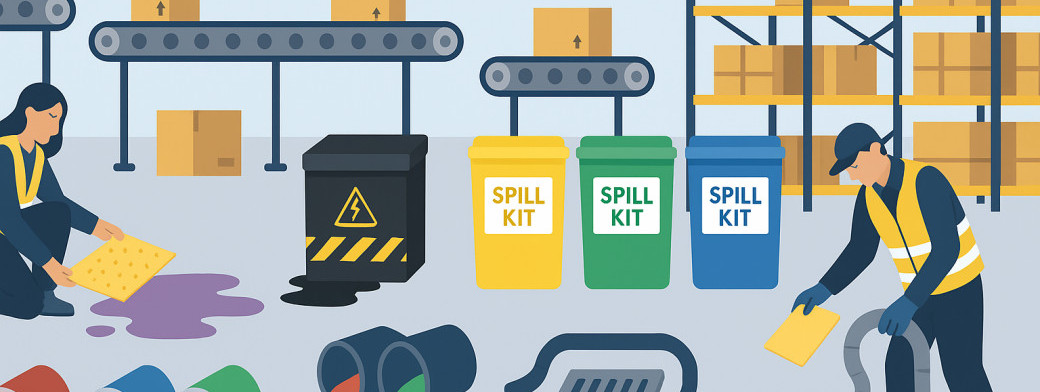
One enormous spill kit at the far end of a warehouse is rarely as useful as properly chosen equipment close to the areas where incidents happen. A sensible arrangement might include a compact kit for routine liquid spills at goods-in, separate materials for identified chemicals and accessible equipment at the returns area.
- Absorbent pads and socks: For compatible, identified liquids; socks can limit spreading while pads collect accessible residues.
- Spill kits: Select contents and absorbency for the expected liquids and realistic spill volumes rather than relying on a single kit for every hazard. Explore SERPRO's spill kit range.
- Drip trays: Useful beneath suitable containers awaiting inspection or transfer, provided the tray material and capacity are appropriate. See drip trays.
- Drain protection: At loading bays and external handling areas, accessible drain covers can provide a temporary barrier where their use is safe and appropriate.
For damaged-battery incidents, ordinary spill kits are not a replacement for the site's specialist fire safety and battery isolation arrangements.
A practical first-response routine
Staff need to recognise when they can clean up a minor spill and when they must stop. A simple approach is:
- Stop and identify: Pause nearby handling or conveyors if safe, and establish what has leaked. Do not open unknown or potentially dangerous packages merely to investigate.
- Protect people: Isolate the area, warn others and identify any fire, chemical exposure or slip hazard.
- Escalate when needed: Follow specialist procedures for damaged batteries, unknown chemicals, fumes, flammable liquids or other high-risk incidents.
- Prevent spreading: If trained and safe to do so, stop the source and protect nearby drains or goods using compatible containment equipment.
- Recover and clean: Use the approved absorbent or recovery method, remove residues and check that the floor is safe before restarting operations.
- Record and restock: Log the cause, affected goods and waste route, then replace used response materials.
Agency staff, seasonal workers and contractors should receive relevant site instructions before starting work, particularly around returns handling and who to contact when a parcel appears hazardous. Short practical refreshers and realistic exercises help test whether those instructions work under normal operating pressures.
Waste segregation and follow-up
Used absorbents take on the hazards of the substances they collect. Keep materials contaminated with inks, solvents, cleaning chemicals or battery contents separate from ordinary packaging and recycling, then classify and dispose of them through the correct waste route. Not every contaminated absorbent is automatically hazardous waste, and not every waste container needs UN approval: the requirements depend on the waste and how it is stored or transported.
Damaged lithium-ion batteries should never be put into general waste or ordinary mixed recycling. Obtain suitable advice on isolation, storage and specialist collection. For other spills, record where the liquid went, whether drains were threatened, how the affected stock was handled and whether changes to storage or packaging could prevent a repeat incident.
Make equipment checks part of normal inspections, not just an occasional audit. SERPRO's spill kit inspection checklist can help teams spot empty kits, inaccessible supplies and unsuitable equipment before they are needed.
Keeping fulfilment operations moving safely
Good spill control is less about having a large quantity of absorbents on site and more about recognising the hazard and having the right procedure and equipment nearby. A split bottle of water-based product may be straightforward to manage. A hot, swollen battery or an unidentified leaking chemical package is not.
For fulfilment centres, the most useful improvements are clear segregation of damaged goods, sensible kit placement, trained staff and a reliable route for escalating incidents that cannot be cleaned up safely by the local team.
Further guidance
- HSE: Chemical safety data sheets
- Environment Agency: Waste batteries – acceptance and damaged battery precautions
- Environment Agency: Waste batteries – storage and handling
This article provides general information. Site-specific risk assessments, emergency plans, safety data sheets and applicable legal requirements take precedence.
