
Last reviewed: 13 November 2026
Timber mills and joinery plants often contain hydraulic oil, resins, adhesives, wood preservatives and fine wood dust in close proximity. A spill may create more than a slippery floor: some substances release hazardous vapours, while combustible dust and flammable liquids introduce fire and explosion concerns.
Identify the fluid before choosing the clean-up method
Small, known hydraulic oil leaks beneath presses, loaders and saw systems can often be managed with suitable oil-only absorbents and drip trays. Repeated drips need maintenance attention rather than continually replacing pads.
Adhesives, hardeners and resin systems can behave very differently. Epoxy components, isocyanate-containing products, solvent-based coatings and wood preservatives require separate assessments. Do not apply neutralisers or ordinary absorbents until compatibility and the product response guidance have been checked.
Fire safety changes the response
Wood dust itself can present explosion hazards in the right conditions. Solvent vapours may ignite around unsuitable equipment or hot work. An oil or chemical spill near dust extraction equipment requires particular care: assess ignition sources and avoid techniques that disperse contaminated dust or vapours.
The HSE woodworking hazardous substances guidance and fire and explosion guidance cover risks that a standard spill checklist might miss.
Set up work areas for prevention
- Inspect transfer lines, presses, adhesive dispensers, containers and hydraulic hose connections.
- Keep incompatible resins, solvents and cleaners segregated with suitable containment.
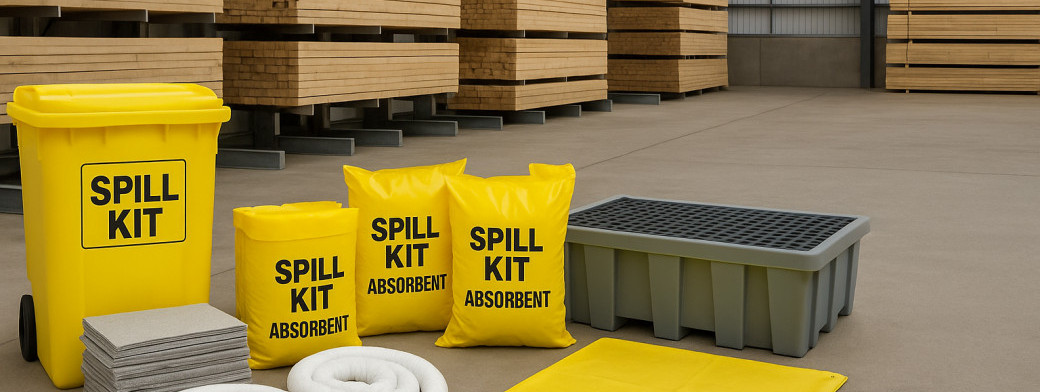
- Provide spill kits for known manageable liquids where responders can reach them safely.
- Keep emergency access routes and extraction equipment unobstructed.
- Train staff to escalate unknown chemical or flammable releases rather than improvising.
Handle residues and waste correctly
Cured resin, uncured resin, solvent-wet materials and oily absorbents may have different classification and storage requirements. Segregate waste by its contamination, label it and prevent escape to drains. Safe disposal is a separate decision from how quickly an absorbent soaks up the liquid.
The aim is to protect production and personnel without turning a manageable leak into a chemical, fire or dust incident.
