
Last reviewed: 13 November 2026
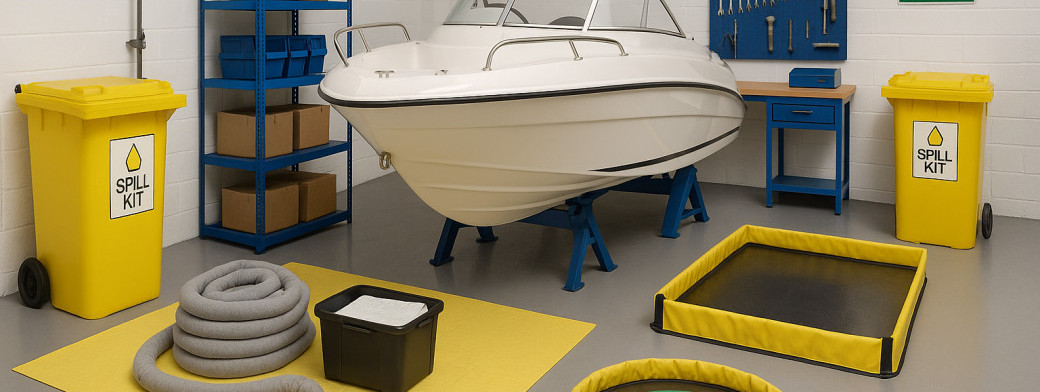
Marine engineering workshops deal with engines, propulsion systems, hydraulic lines and cooling circuits, often close to a slipway or open water. A leak that would remain on a factory floor can become a pollution incident if it reaches a dock drain or the harbour.
Separate hydrocarbon leaks from coolant and cleaning fluids
Typical sources include gearbox oil, engine lubricants, diesel, hydraulic systems, antifreeze or coolant mixtures and parts-washing chemicals. Oil-only products are appropriate for many hydrocarbon residues, but not for every coolant or cleaner. Check the substance and the absorbent specification before use.
Drips commonly appear at disconnected hoses, draining sumps, temporary storage vessels and stripped-down machinery. Use suitable drip trays for identified low-volume drips and maintain hoses, pumps and seals to reduce recurring losses.
Protect slipways, gullies and the water edge
Map where workshop drains discharge. Keep drain covers and appropriate absorbent socks near likely escape routes, with clear limits on when staff may deploy them safely. Work over water may require additional marine pollution arrangements; an industrial spill kit on the quay cannot be relied upon to recover oil that has dispersed into a harbour.
Arrange secure storage for fuel, oil and recovered waste. Bulk containment capacity and legal duties depend on the installation and jurisdiction. In England, use GOV.UK oil storage guidance as a starting point rather than assuming one rule covers every marine site.
Set clear response and disposal boundaries
- Stop the task and identify the liquid before attempting clean-up.
- Keep ignition sources away from fuel and solvent releases.
- Escalate discharges to water under the marina or port incident plan.
- Keep contaminated absorbents and recovered liquids segregated.
- Review spill equipment following vessel maintenance and refuelling activities.
SERPRO spill kits can assist with small, safe workshop releases. Follow GOV.UK pollution prevention guidance for England and any site-specific marine permissions or emergency arrangements for incidents affecting water.