
Last reviewed: 13 November 2026
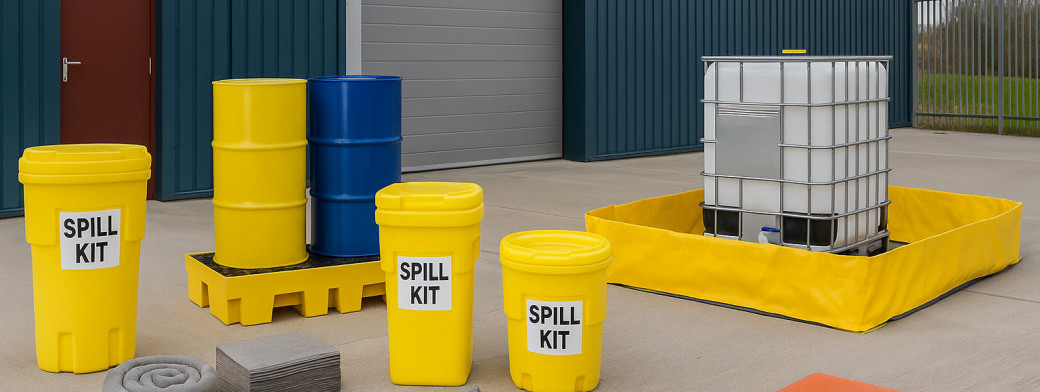
IBC and drum decanting points are often the busiest liquid-transfer locations on a site. Hoses are connected and removed, valves are opened and smaller containers are filled. Even a slow leak can spread under pallets or reach a drain; a failed hose or overfill can release far more liquid than a portable spill kit can manage.
Design containment around the actual transfer
Identify every product being decanted, its storage volume, compatibility, viscosity and hazards. Place containers on stable, load-rated surfaces and protect them against vehicle impact. Where appropriate, use correctly sized bunds or spill pallets with compatible materials and a clear inspection route.
Check that secondary containment is suitable for the location and number of containers. A drip trays is useful for a small coupling drip but does not replace properly designed containment for bulk storage. Keep valves closed when idle and consider engineered overfill controls for higher-volume transfers.
Plan the connection, filling and disconnection stages
Most avoidable drips occur at transfer points. Check hoses, fittings, pumps, caps and receiving-container capacity before starting. Provide a safe way to drain residual liquid from hoses and keep incompatible products separated. Know whether the nearest floor drain leads to a foul sewer, interceptor, surface water or a contained system.
For small, safely manageable releases, appropriate spill kits, absorbent socks and drain covers may protect the surrounding area. More serious chemical, flammable or reactive releases require isolation, the site emergency response and competent personnel rather than blanket use of general-purpose absorbents.
Make inspections useful
- Inspect bund walls, grates and pallets for damage or accumulated liquid.
- Confirm hose compatibility, seals and valve positions.
- Keep delivery and decanting instructions beside the station.
- Record overfills, near misses and recurring drips.
- Segregate used absorbents and recovered liquids by actual hazard classification.
For sites in England, see GOV.UK guidance on storing oil where relevant, plus HSE COSHH guidance and HSE guidance on DSEAR. Requirements vary by substance and jurisdiction.