
Last reviewed: 13 November 2026
Ports and freight terminals move drums, containers, fuels and other bulk liquids through areas exposed to vehicles, weather and nearby water. A leak on a hardstanding yard may reach a harbour or surface water drain before a response team arrives, so spill planning needs to be part of cargo handling and terminal design.
Know which operations create the highest risk
Review tanker and vessel loading, container handling, temporary storage, crane and vehicle hydraulic systems, fuel transfer and damaged cargo in transit. A split package containing unidentified liquid is not a routine oil spill; the consignment information and site hazardous goods procedures must guide the response.
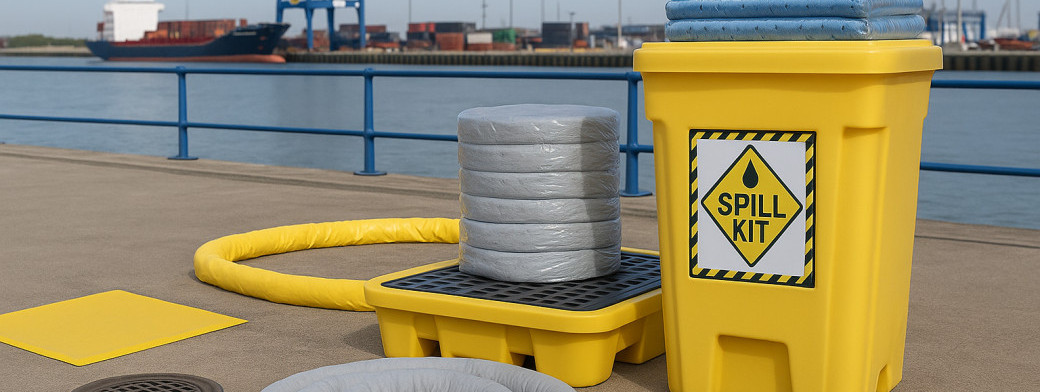
For known manageable hydrocarbon drips, oil-only absorbents can help protect surfaces. Where substances are water-based or chemically hazardous, use materials compatible with the actual liquid. Site spill kits should reflect the terminal’s cargo and maintenance activities.
Prevent releases reaching docks and drainage
Identify surface water drainage, quay edges, bunded storage and any trade effluent routes. A portable drain cover may be useful for an isolated gully where the procedure permits it; it is not a substitute for engineered drainage controls or a port pollution contingency plan.
Bulk transfer systems should have maintained hoses, correct couplings and suitable containment, with clear transfer supervision and emergency shut-off arrangements. Plan for changes in tide, wind, rain and vessel movement when assessing an incident that may reach water.
Safety comes before rapid deployment
- Stop or isolate the transfer where safe and alert terminal control.
- Keep vehicle and crane movements away from the affected area.
- Identify the substance from the cargo documentation before selecting absorbents.
- Use trained personnel for response near water and hazardous cargo.
- Recover, classify and document waste and report pollution through the correct channels.
The Maritime and Coastguard Agency port contingency guidance is relevant to marine pollution arrangements. Inland freight terminals also need site-specific drainage and environmental controls.
A terminal spill plan works best when cargo information, emergency contacts and containment arrangements are already in place before the load arrives.