
Last reviewed: 13 November 2026
Cold stores have two very different kinds of leak: routine water on a floor and failures involving refrigeration systems. A drip from a defrost line can cause a straightforward slip hazard; a release of ammonia refrigerant may create a serious toxic exposure emergency. The response plan must distinguish the two immediately.
Separate refrigerant incidents from liquid housekeeping
Ammonia may be used as a refrigerant in industrial cold storage. A suspected release requires alarm activation, evacuation or isolation as appropriate, and action by competent, authorised personnel under the site emergency plan. Ordinary absorbents are not a safe response to a gas or pressurised refrigerant leak.
Other refrigerants can also displace oxygen or create additional hazards. Staff should not investigate unfamiliar smells or enter a potentially contaminated plant room merely to protect equipment. Follow the system-specific emergency instructions.
Glycol, compressor oil and defrost water
Secondary cooling circuits may contain glycol mixtures. Identify the concentration and additives before selecting clean-up materials; a large release may require pumping and controlled recovery rather than pads. Glycol-containing water must not be assumed safe to discharge to a surface water drain.
Leaks of compressor or hydraulic oil can be contained with suitable oil-only absorbents where the substance is compatible. Drip trays may help at predictable service drip points, but permanent leaks require repair.
Defrost water, meltwater and cleaning residues can turn to ice or leave dangerous wet walking routes. Check doors, condensate drains, refrigeration trays and floor falls. Restrict access and use cleaning and drying methods suitable for low temperatures rather than leaving saturated absorbents underfoot.
Prepare people and equipment for the conditions
- Identify alarm routes and emergency exits that remain usable in cold conditions.
- Keep site-specific evacuation and plant isolation procedures current.
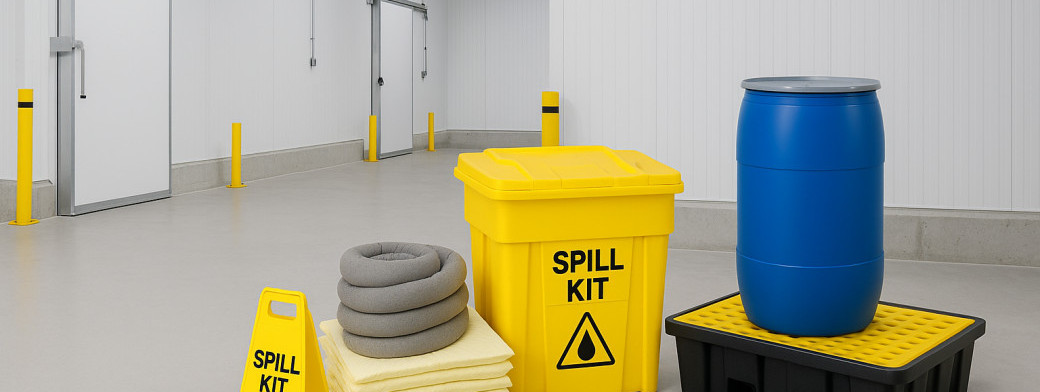
- Position spill kits in accessible maintenance areas for manageable known liquids, not inside an unsafe machinery room.
- Assess frost, thermal conditions and glove suitability for each task.
- Train operators to distinguish a floor-cleaning job from an emergency refrigeration incident.
HSE warehousing and storage guidance addresses cold-store hazards. A cold store spill plan should never imply that every leak can be cleaned with a pad and a bucket.