
Last reviewed: 13 November 2026
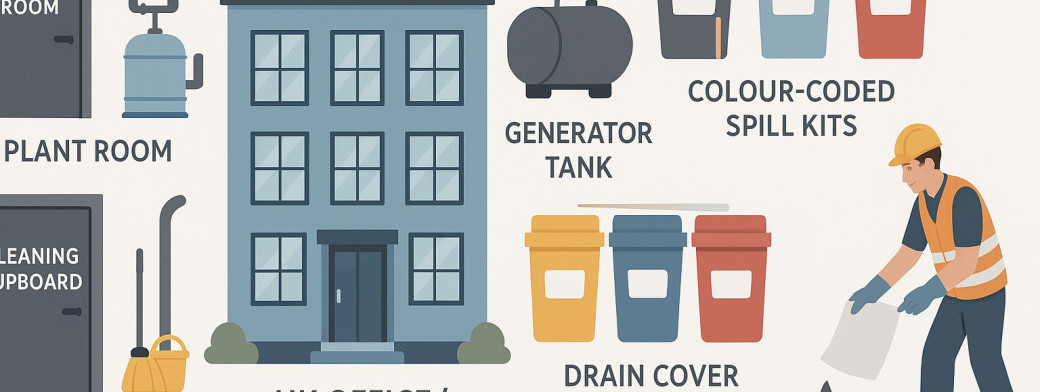
Office buildings don't usually resemble industrial processing sites, but their back-of-house rooms can hold sizeable quantities of liquids. Emergency generator diesel, heating-system water, cleaning chemicals and plant-room lubricants may all create hazards out of sight of the main reception area. The response plan should reflect those spaces rather than rely only on a general cleaning cupboard.
Look beyond the public floors
Walk through plant rooms, generator areas, loading docks, cleaning stores and external service yards. Check pumps, hose connections, fuel lines, drain routes and bunded areas. A small leak in a locked plant room can continue for hours if nobody notices it; remote leak alarms and planned inspections may be more effective than adding another pad to a shelf.
Establish where a leak might travel. Basement floor drains, lift pits and service ducts can change the consequences. Where there is a potential discharge to land or water, the Environment Agency's guidance for England is a useful starting point, with other UK nations having their own requirements.
Diesel and generators need specific planning
Generators may run infrequently, so fuel hoses, storage containers and bunds should still be checked on a schedule. A drip tray can help control a minor maintenance drip, but larger diesel tanks may require secondary containment designed for the relevant regulations and site requirements.
Don't assume a minor fuel leak can be cleaned while the generator is operating. Isolate ignition and other hazards in accordance with the site procedure; significant fuel releases may require specialist or emergency responders.
Cleaning cupboards are a different risk
Detergents, descalers, bleach-containing products and floor strippers require clear labelling and correct segregation. Never mix unknown cleaners or incompatible chemicals. The HSE COSHH guidance helps employers assess substance-specific risks and controls.
Some known routine spills may be handled using compatible absorbents. More aggressive chemical releases need trained responders and verified compatible equipment. Keep public access restricted until cleaning and appropriate decontamination are complete.
Match the kit to each room
An oil-only absorbent can be useful for known diesel or lubricant residues, while water-based leaks may need general purpose materials. Spill kits placed near accessible plant areas reduce delays, but their location must account for locked doors and emergency access. A large uncontrolled release cannot be solved merely by purchasing a larger kit.
For suitable external drainage points, site-approved drain protection can help during a manageable spill. Drain routes and disposal arrangements should be agreed with facilities management rather than improvised during an incident.
Assign roles and record what happens
Front-of-house staff should know how to raise the alarm and keep visitors clear; facilities engineers or trained contractors should deal with relevant plant and chemical incidents. Confirm responsibilities with landlords, managing agents and service providers so no important part of the response is assumed to belong to someone else.
After an incident, classify used absorbents and recovered liquid, arrange appropriate disposal and check affected equipment. Record recurring faults and review supplier or maintenance arrangements. An effective plan protects both building occupants and the people who service the systems behind the scenes.