
Last reviewed: 13 November 2026
An automotive workshop can have diesel beneath a vehicle, water-mix coolant around a radiator and AdBlue leaking from a stored container on the same day. These liquids differ in composition, so choosing the right clean-up material matters as much as responding quickly.
Know your workshop liquids
Engine oils, fuels, hydraulic oils and lubricants are hydrocarbon-based; many brake fluids, screenwash products, antifreeze coolants and AdBlue are not. AdBlue is an aqueous urea solution, not a fuel or oil. Oil-only absorbents therefore should not be assumed to collect it. Brake fluid and cleaning chemicals also need their own compatibility checks, especially near painted surfaces or other vulnerable materials.
Keep product safety information accessible and use the COSHH assessment to guide staff handling hazardous substances. Petrol and some solvents can introduce a significant fire risk; those releases must follow site-specific emergency procedures rather than routine mopping.
Reduce drips before they reach the floor
Oil filters, sump plugs, hose connections and removed components can leave predictable drips during servicing. Position drip trays under the work, select suitable containers for waste fluids and inspect workshop floors throughout the day. A recurring hydraulic leak needs a mechanical repair, not a permanent pile of pads.
Stored coolant and AdBlue containers should be secure and compatible, with taps and caps checked regularly. Follow the container manufacturer's advice on storage and contamination. For bulk storage, consider the appropriate secondary containment requirements rather than treating a small drip tray as a bund.
Which absorbents belong in a garage?
Oil-only absorbents can be useful for oil and fuel residues, including in wet conditions. For compatible water-based liquids such as some coolants or AdBlue, general purpose absorbents may be more appropriate. Aggressive cleaners or unusual fluids need verified chemical compatibility; a generic kit does not cover everything.
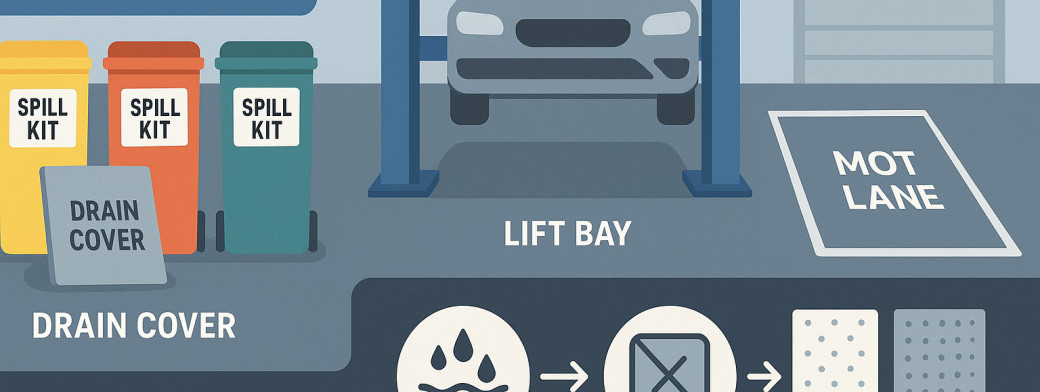
Keep a suitable spill kit close to service bays and another near storage or vehicle reception if the layout warrants it. Absorbent socks may help limit spread towards walkways. Drain covers can help protect suitable gullies when trained staff can deploy them safely.
Respond differently to fuel and water-based spills
For a small, identified, manageable leak, isolate the area, stop the source if safe, use the correct materials and remove remaining slippery residue before reopening. Do not allow workshop fluids to enter surface-water drainage. Fuel spills involving vapour or ignition risks need additional controls and may require emergency assistance. Never assume that any powered cleaning equipment is safe to operate in a potentially flammable atmosphere.
AdBlue can leave crystalline deposits when it dries. Recover the liquid and clean remaining deposits using a method suitable for the surface, product guidance and local drainage arrangements. Do not wash concentrated liquid into a surface-water drain as an easy disposal route.
Handle the waste properly
Separate used absorbents and recovered liquids by what they contain. Oily waste, coolant, solvent residues and AdBlue-contaminated materials may require different classification and collection routes. Store them in suitable closed containers and use the approved waste contractor.
Give technicians clear first-response instructions, inspect spill kits regularly and record recurring leaks. The best workshop spill plan is simple enough to follow while the workshop is busy, yet clear about when staff must stand back and call for help.