
Last reviewed: 13 November 2026
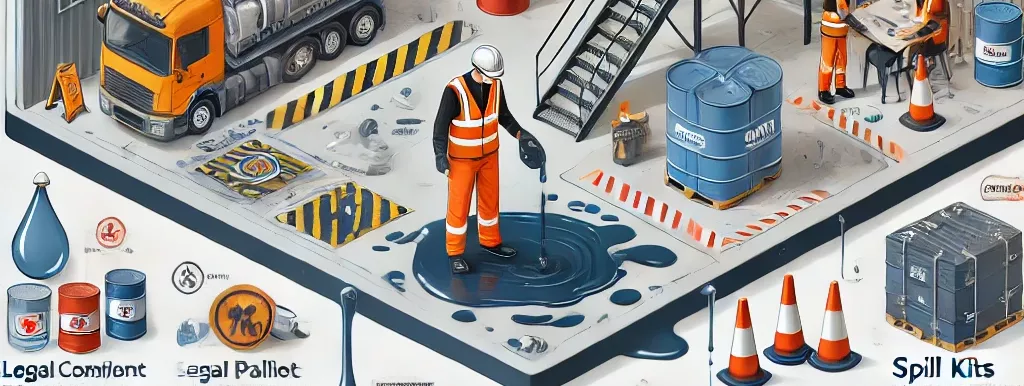
Most workplaces would rather prevent a spill than clean one up. A leaking drum, damaged hose or overfilled machine sump can interrupt work, create a dangerous floor and, if the liquid reaches a drain, cause a pollution incident. The good news is that many of these problems can be anticipated.
Spill management is not about putting absorbent pads in every cupboard. It is about knowing what liquids are on site, keeping them secure, and making sure staff can respond safely when something escapes.
Why even small leaks deserve attention
A thin film of oil on a smooth floor can create a slip hazard before anyone notices it. Water-mix coolants may leave equally slippery surfaces. Some cleaning chemicals pose skin or eye risks, while fuel releases raise additional fire concerns. A small drip beneath a machine may also be a warning of an equipment fault that will become more expensive if ignored.
For outdoor areas, storage compounds and loading bays, the concern extends beyond the workplace. Liquids can travel across hardstanding into a surface-water gully and potentially reach streams or other receiving waters. England's pollution-prevention guidance explains the importance of identifying drainage routes and controlling potential pollutants.
What does the law require?
There is no single UK law saying every business must own a particular spill kit. Duties arise from the hazards and activities involved. Workplace safety law requires employers to assess and control risks; COSHH applies where hazardous substances present relevant exposure risks. Environmental legislation, storage rules and waste duties may also apply, depending on the substance and location.
Oil-storage requirements vary across the UK. For instance, specified above-ground oil containers of 201 litres or more at businesses in England may fall within the relevant oil-storage rules, subject to exemptions. Consult the current England guidance or the regulator for the relevant UK nation rather than assuming one threshold or bund rule applies everywhere.
Preventing the spill is the first job
Start with storage and transfer. Use suitable containers, protect exposed taps and pipework from vehicle damage, keep hoses in good condition and train staff not to leave transfers unattended where this creates risk. Clearly label containers, separate incompatible chemicals and check drip points during routine inspections.
Well-placed drip trays can collect small recurring leaks beneath equipment. Where a large container is stored, a correctly specified bund or secondary containment system may be needed. A tray sized for maintenance drips is not the same as containment designed for a complete tank failure.
Choosing equipment for a spill response
For manageable liquid releases, absorbent pads, rolls and socks can help collect or confine the spill. An appropriate spill kit brings the necessary materials together at a known location.
Match the kit to the liquid. Oil-only absorbents are intended for many hydrocarbon spills; general purpose products suit many day-to-day liquids; chemical-grade absorbents may be required for certain more aggressive substances. None should be used on an unknown or incompatible chemical without assessment. Where surface-water drains are vulnerable, include compatible drain protection in the response plan.
A response people can actually follow
- Warn others and isolate the area. Don't let people walk or drive through the spill.
- Identify the substance. Check labels, safety data sheets and the site's risk assessment. If it cannot be identified safely, escalate.
- Stop the source if safe. Do not take unnecessary risks with pressurised lines, vapours or incompatible chemicals.
- Contain and recover. Trained responders should use the approved materials and protect drains where safe.
- Classify and dispose of the waste. Keep potentially hazardous residues separate and use the authorised collection route.
- Record what happened. Investigate the cause and replenish the kit.
Make inspections part of normal work
A monthly paperwork exercise will not identify every leaking valve. Encourage staff to report new drips as soon as they appear, and organise more detailed checks at intervals appropriate to the site. Review spill kits after use, inspect containment for cracks or standing liquid and confirm that staff know where to find response equipment.
A practical spill-management system protects people, stock and the environment because it is used every day—not because it produces an impressive policy document. Start with the most likely leak points and improve the controls from there.