
Published: 9 September 2026
Last updated: 25 August 2026
Why is Spill Control Essential in Theme Park Maintenance Areas?
Spill control is essential in theme park maintenance areas because it is the planned process of preventing, containing, cleaning and safely disposing of leaked or spilled liquids before they harm people, rides, equipment or the environment. In this setting, that means managing common liquids such as hydraulic oil, lubricants, fuel, coolant, battery fluids, paints, degreasers and cleaning chemicals around ride plant rooms, workshops and service vehicles. Effective spill control typically combines good housekeeping, inspection routines, clearly labelled spill stations, suitable absorbents, drip trays, absorbent socks, pads, rolls and drain protection, alongside safe waste handling and incident planning in line with UK health, safety and pollution-prevention guidance.
In practical terms, spill control matters because maintenance areas sit close to both critical machinery and visitor routes. A small oil leak from a ride hydraulic line, a workshop drum, or a service van can quickly create slip hazards, contaminate surfaces, damage components and enter surface water drains if it is not contained early. The Health and Safety Executive highlights the need for emergency planning in event environments and for controlling contamination that leads to slips, trips and falls, while GOV.UK guidance stresses preventing oils and chemicals from polluting land and water.
Why planning matters
Spill planning is what turns a reactive clean-up into a controlled response. Theme parks often have multiple maintenance zones, contractors, mobile engineers and changing workloads, so likely spill points should be identified in advance and matched with the right materials nearby. Oil-only absorbents may suit fuel and hydraulic leaks, general purpose absorbents can help with mixed maintenance spills, and chemical absorbents may be needed for harsher fluids. Keeping drain covers, gloves, disposal bags and simple response instructions at likely spill points helps staff act quickly while reducing confusion.
This approach supports safer floors, faster clean-up and better protection for drains, work areas and public-facing spaces. It also helps parks align day-to-day maintenance with HSE advice on incident and emergency planning, slip prevention, and GOV.UK guidance on pollution prevention for businesses.
What Types of Liquids Are Commonly Found in Theme Park Maintenance Areas?
Theme park maintenance areas commonly contain several liquids that can create both slip hazards and pollution risks if they are spilled. The most frequent examples are hydraulic oils used in ride systems, lubricants for moving parts and bearings, cleaning fluids used in workshops and washdown tasks, and fuel from service vehicles such as vans, utility buggies, generators and grounds equipment. Each behaves differently when released, so maintenance teams usually need the right absorbents, containment and housekeeping arrangements close to the point of use.
In practice, these liquids are found across ride plant rooms, engineering workshops, storage areas and vehicle bays. Oil-based spills may spread quickly over smooth floors, while water-based or mixed cleaning products can leave surfaces unexpectedly slippery. This is why sites often keep oil-only absorbents for hydrocarbons and general purpose absorbents for mixed maintenance spills, alongside drip trays, absorbent socks and clear spill response points.
Liquids linked to rides and mechanical equipment
Ride maintenance often involves hydraulic systems, gearboxes and greasing points. Hydraulic oils can leak from hoses, seals, rams or reservoirs, especially during servicing or component failure. Lubricants, including greases and light machine oils, are also common around chains, bearings and drive assemblies. Even small drips can build up on floors, platforms or access routes over time.
Liquids found in workshops and cleaning areas
Engineering workshops may handle degreasers, detergents, surface cleaners and other cleaning fluids. Some are water-based, while others contain solvents or additives that need more careful segregation during clean-up and disposal. These products may be used at benches, parts-washing stations or floor-cleaning points, creating a different spill profile from oil alone.
Liquids associated with service vehicles
Back-of-house transport and maintenance fleets bring further risks, particularly fuel from service vehicles, engine oil, coolant and screen wash. Refuelling, parking, loading and minor repairs are typical spill points. Because these areas may connect to external drainage, quick containment is important to reduce slip risks and help prevent pollution.
Where Do Spills Typically Occur in Theme Parks?
Spills in theme park maintenance areas most often occur where equipment is serviced, fluids are stored or transferred, and vehicles are parked between jobs. In practice, that usually means ride maintenance zones, workshops, and service vehicle parking areas. These locations can see leaks from hydraulic systems, lubricants, fuel, coolants, cleaning products and wash-down residues, all of which can create slip risks for staff and, if not contained, pollution risks for drains and surrounding ground.
Because these are predictable spill points, it makes sense to keep response materials close by rather than in a single remote store. Clearly marked spill kits, absorbent pads, socks and disposal bags can help teams act quickly, while drip trays can be placed under plant, parts and parked vehicles to catch slow leaks before they spread. This practical approach also supports good housekeeping in line with HSE guidance on slips and trips and wider UK pollution prevention expectations set out by GOV.UK.
Common spill hotspots behind the scenes
Ride maintenance zones are a frequent source of drips and small spills because engineers work around hydraulic oils, greases, gearboxes and moving assemblies. During inspections, parts changes or hose disconnection, even a controlled task can leave residue on floors or platforms.
Workshops also present regular spill risks, especially near benches, fluid storage areas, wash stations and waste collection points. Oils, solvents, detergents and other maintenance liquids can be knocked over or transferred between containers.
Service vehicle parking areas are another common problem spot. Vans, utility carts, generators and plant may leave oil, diesel or coolant drips while stationary, particularly overnight. If these areas slope towards drains or pedestrian routes, quick containment becomes even more important.
What Spill Control Materials Should Be Kept Nearby?
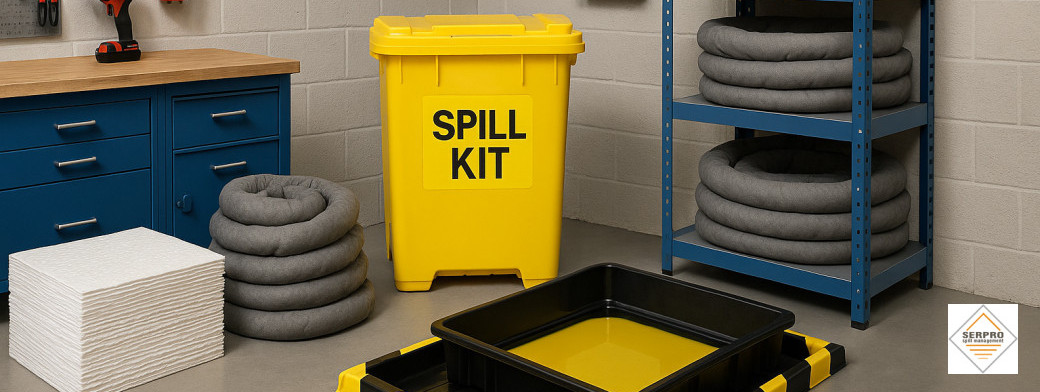
Theme park maintenance areas should keep a small, clearly labelled set of spill control materials close to the points where leaks and drips are most likely to happen. For rides, workshops and service vehicles, that usually means having absorbent pads, spill kits, drain covers and disposal bags ready for immediate use, alongside gloves and simple instructions. The aim is to contain the liquid quickly, protect staff and visitors from slip risks, and stop oils or chemicals reaching surface water drains.
In practice, the right materials will depend on the liquids handled in each area. Hydraulic oil, lubricants and fuel residues are common around ride maintenance and service bays, while workshops may also use cleaning fluids and more aggressive substances that call for dedicated chemical absorbents. For general leaks, absorbent pads are useful for fast pick-up and wipe-downs, while absorbent rolls can cover walkways, benches or larger contaminated patches.
Core items to keep at likely spill points
Each spill station should be matched to the task nearby rather than stocked at random. A sensible setup may include:
- Absorbent pads for quick response to drips, splashes and small pooled spills
- Spill kits sized for the area, such as compact kits for ride platforms or vehicle bays
- Drain covers to protect gullies and intercept spills before they enter drainage systems
- Disposal bags for separating used absorbents and contaminated debris after clean-up
- Gloves and basic PPE suitable for the liquids handled in that location
It also helps to place materials near hydraulic power units, workshop doors, refuelling points, washdown areas and parked service vehicles, so staff do not have to search for equipment during an incident. This supports the practical housekeeping approach encouraged by HSE guidance on slips and trips and wider UK pollution prevention advice. During inspections, check that stocks are complete, dry, easy to reach and appropriate for the substances used in that specific maintenance zone.
Who Should Be Responsible for Spill Response?
Spill response in theme park maintenance areas should never sit with one person alone. Responsibility needs to be shared clearly between maintenance staff, contractors and emergency response teams, with each group knowing what it can handle, when to isolate an area and when to escalate. In practice, the safest approach is a simple response structure: whoever discovers the spill makes the area safe and raises the alarm, trained staff deal with minor spills using the correct materials, and larger, hazardous or uncontrolled incidents are passed immediately to specialist responders.
For rides, workshops and service yards, this division of responsibility helps reduce both pollution risks and slip hazards. It also supports the kind of incident planning expected in workplaces under UK health and safety guidance, including HSE advice on incidents and emergencies and slips and trips prevention.
Key roles in practice
Maintenance staff are usually the first line of response. They should know where spill kits, drain covers, absorbent pads, socks and disposal bags are kept, how to stop a leak if it is safe to do so, and how to protect nearby drains or walkways. Their role is typically to manage small, routine spills from oils, lubricants or cleaning fluids and to report every incident properly. Regular spill response training helps make that response faster and more consistent.
Contractors should be responsible for spills arising from their own equipment, deliveries or maintenance work, but only within the site rules set by the park. Clear inductions, permit controls and contractor coordination are important so responsibilities do not become blurred.
Emergency response teams should take over where there is fire risk, chemical exposure, a larger release, drain contamination or any situation beyond the competence of on-shift staff. That escalation point should be written into the spill plan and understood by everyone on site.
How Should Spill Waste Be Separated and Disposed Of?
Spill waste in theme park maintenance areas should be separated according to what was spilled, what absorbents or clean-up materials were used, and whether the waste is hazardous or non-hazardous. In practice, that means keeping oil, fuel, solvents, chemicals and contaminated absorbents apart from general waste, then packaging each waste stream in suitable containers or disposal bags for safe handling and collection. This helps reduce cross-contamination, supports safer storage, and makes it easier to meet environmental compliance duties.
For rides, workshops and service vehicles, the key rule is simple: treat spill residues, used pads, socks, rolls, gloves and sweepings as potentially contaminated until they have been assessed. A small hydraulic oil leak may create a different waste stream from a coolant, detergent or battery-related spill, so teams should not mix everything into one bin. Clear labelling at spill stations and waste holding points helps maintenance staff and contractors make the right decision quickly.
Separate waste by contamination type
Hazardous and non-hazardous waste should always be segregated. Used absorbents contaminated with oils, fuels, solvents, paints or aggressive chemicals will often need to be managed as hazardous waste, while clean packaging or uncontaminated housekeeping materials may be non-hazardous. If there is any doubt, it is safer to isolate the waste and confirm classification before disposal rather than mixing it with general refuse.
Use appropriate disposal bags and containers
Appropriate disposal bags should be kept with spill kits so waste can be bagged immediately after clean-up. Heavy-duty, clearly marked bags are useful for contaminated absorbents and PPE, while sealed containers may be more suitable for leaking items, saturated materials or sharp debris from workshop incidents. For a practical overview of handling and temporary storage, see waste handling.
Follow local regulations and site procedures
Disposal must comply with local regulations, waste carrier requirements and site-specific procedures. In the UK, that includes checking whether waste is hazardous, storing it securely, keeping transfer documentation where required, and preventing any release to drains or ground. Maintenance teams should align their spill response with wider pollution prevention guidance on GOV.UK, especially where oils, chemicals and vehicle-related liquids are involved.
How Can Spill Arrangements Be Checked During Routine Inspections?
Spill arrangements in theme park maintenance areas should be checked through routine, documented inspections that confirm three things: the right materials are in place, staff can respond quickly, and emerging hazards are identified before a leak becomes a slip, pollution or downtime issue. In ride plant rooms, workshops and service vehicle bays, inspections help verify that absorbents, drain protection and waste containers are available where hydraulic oil, lubricants, fuels, coolants and cleaning fluids are most likely to escape.
A practical inspection should combine housekeeping checks with response testing. This means reviewing spill stations, checking access routes, confirming clear labelling, and making sure pads, rolls, socks, drip trays, drain covers, gloves and disposal bags are present, usable and suited to the liquids handled in each area. A regular programme, supported by clear inspection routines, makes it easier to spot gaps before they affect staff safety or create visitor-facing slip risks nearby.
Use checklists for spill control materials
Checklists help maintenance teams inspect consistently across different locations. Each checklist should confirm stock levels, condition and suitability of spill control materials, including oil-only absorbents for hydrocarbons, general purpose absorbents for mixed housekeeping spills, and chemical absorbents where stronger fluids are used. It should also cover drip trays under parked service vehicles or hydraulic components, absorbent socks around leak-prone equipment, and drain covers near surface water or washdown points.
Evaluate spill response readiness
Inspections should also test whether response arrangements work in practice. Are spill kits positioned close to likely spill points? Can staff and contractors identify who responds first, how an area is isolated, and where waste is placed after clean-up? Short readiness checks, backed by periodic spill control audits, can reveal whether arrangements are realistic for busy maintenance periods, shutdowns and overnight repairs.
Identify potential spill hazards early
Routine inspections are a good time to identify potential spill hazards such as worn hoses, poor decanting practices, overfilled containers, damaged flooring, blocked drainage points and badly stored liquids. This supports wider good practice on slips, trips and contamination control set out by the HSE and pollution prevention guidance on GOV.UK. The aim is not just to check stock, but to confirm the whole spill arrangement still matches the real risks on site.