
Published: 9 September 2026
Last updated: 24 August 2026
Why is Spill Control Essential for Small Food Retailers?
Spill control is essential for small food retailers because it is the planned way a convenience store, deli or similar business prevents, contains, cleans and disposes of liquid spills in back-room areas such as stockrooms, prep spaces and bin stores. In this setting, common spills include cooking oils, sugary syrups, drinks, food residues and cleaning products, all of which can create slip hazards, damage stock, contaminate surfaces or enter drains if not managed quickly. Practical spill control usually means keeping suitable absorbents, drip trays, absorbent socks, small spill kits, gloves and disposal bags close to likely risk points, while following UK duties on workplace safety, hazardous substances and pollution prevention.
For small retailers, back-room spills are easy to underestimate because they often happen during deliveries, decanting, restocking, cleaning or waste handling rather than on the shop floor. Yet these areas are busy, tight on space and frequently have smooth floors, making even a minor leak a real risk. The Health and Safety Executive (HSE) highlights the need to control contamination and reduce slip risks in retail settings through good housekeeping, prompt clean-up and suitable floor management. For a practical overview of containment options, businesses can review spill control measures and products alongside HSE guidance on slips and trips in retail and broader advice on preventing workplace slips.
The types of spills matter because different liquids behave differently. Oils can spread into thin, slippery films; syrups can leave sticky residues that continue attracting dirt; and cleaning chemicals may need more careful handling, storage and disposal. Where substances could affect worker health, employers should consider their duties under COSHH, including assessing risks and using suitable controls. If spills could reach outside areas, gullies or drains, retailers should also consider UK pollution prevention guidance.
In practice, effective spill control is about preparation as much as response: identifying where leaks start, choosing the right absorbent for the liquid involved, separating contaminated absorbents from normal food waste and making sure staff know what to do. That approach helps small food retailers protect staff, maintain hygiene standards and reduce disruption in the back room.
What Types of Liquids Are Commonly Spilled in Back-Room Areas?
In small food retail back rooms, the liquids most often spilled are food oils, sugary syrups, drinks, cleaning chemicals and waste liquids from deliveries, storage or housekeeping. These spills matter because they can quickly create slip risks, contaminate stock, attract pests and, in some cases, expose staff to irritating or hazardous substances. A sensible response starts with knowing which liquids are most likely on site and matching them with suitable absorbents, containment and cleaning routines.
Back-room areas in convenience stores, delis and similar shops tend to combine stock handling, food preparation support and cleaning storage in a compact space. That means a single leak from a bottle, drum, carton or waste container can spread across smooth flooring, under shelving or towards doorways and drains. As the HSE notes in its guidance on slips and trips in retail, contamination on floors is a common cause of accidents, especially where spills are not spotted and dealt with promptly.
Common liquids that cause back-room spills
- Oils and fats: cooking oil, infused oils, dressings, grease residues and oily waste from damaged containers or decanting.
- Syrups and sugary liquids: coffee syrups, dessert toppings, honey, molasses, soft drink concentrates and leaking juice cartons.
- Cleaning agents: detergents, sanitisers, degreasers, bleach-based products and other stored chemicals used for housekeeping.
- Dairy and chilled liquids: milk, cream, yoghurt drinks and melted product from damaged chilled stock.
- General food and drink liquids: sauces, brines, vinegar, soups and liquids released from split packaged goods.
- Waste liquids: bin juices, mop water and residues from cleaning or waste handling.
Each type behaves differently. Oils can spread into a thin, hard-to-see film that remains slippery even after a quick wipe. Syrups and sugary liquids are sticky, encouraging repeat foot traffic contamination and making wheels or trolley castors track residue further into the store. Cleaning agents may present an added health concern as well as a slip risk, so storage, handling and response should reflect COSHH principles where relevant.
Some spills also create environmental risks if they reach outside areas or surface water drains, particularly oils and chemicals. For that reason, even small retailers should think beyond mopping alone and use suitable absorbent materials, segregation and disposal methods that fit the liquid involved.
Where Do Spills Typically Occur in Small Food Retailers?
Spills in small food retailers most often occur in the back-room areas where goods are received, handled, opened, stored or discarded. In practice, the highest-risk spots are usually stockrooms, preparation areas and bin stores, because these spaces combine frequent movement, limited floor space, stacked products and a mix of liquids such as cooking oils, syrups, sauces, cleaning products and food waste. As the HSE’s retail guidance on slips and trips makes clear, contamination on walking surfaces is a common cause of incidents, especially where spills are not spotted and dealt with quickly.
These spill points are not just about what is stored there, but how the area is used. Deliveries are unpacked in a hurry, containers are moved between shelves, ingredients are decanted, and waste is transferred to external bins. Each step increases the chance of drips, leaks, knocked containers or split packaging. Keeping spill kits, absorbents and clear clean-up routines close to these work areas helps staff respond before a small leak becomes a slip hazard or spreads towards drains.
Stockrooms
Stockrooms are a common source of spills because products are often stacked tightly, moved on trolleys or opened during put-away. Bottles can leak, syrup containers can split at the seams, and oil residue may build up on shelf edges or pallet bases. Poor visibility, crowded aisles and damaged packaging all make it easier for small leaks to go unnoticed until someone walks through them.
Preparation areas
Preparation areas are high risk because liquids are actively handled there. Staff may pour oils, open pouches, rinse equipment or move ingredients between containers, creating more chances for drips and splashes. Floors can also become contaminated by repeated minor spills rather than one obvious incident. Where cleaning chemicals are used nearby, employers should also consider controls under COSHH essentials.
Bin stores
Bin stores are another frequent spill location, especially where food waste bags, used oil containers or leaking packaging are held before collection. Liquids can escape from overfilled sacks, damaged bins or poorly sealed containers, and outdoor routes may spread contamination back indoors on wheels and footwear. This also matters from a pollution-prevention perspective if liquids could reach surface drains, as outlined in GOV.UK guidance for businesses.
What Spill Control Products Should Be Kept Nearby?
Small food retailers should keep a compact set of spill control products close to the places where leaks are most likely to start, such as shelving for cooking oils, syrup storage, cleaning cupboards, delivery unpacking points and bin-store doors. The aim is simple: staff should be able to contain and clear a minor spill straight away, reduce slip risk, and stop liquid spreading into walkways, drains or stored stock.
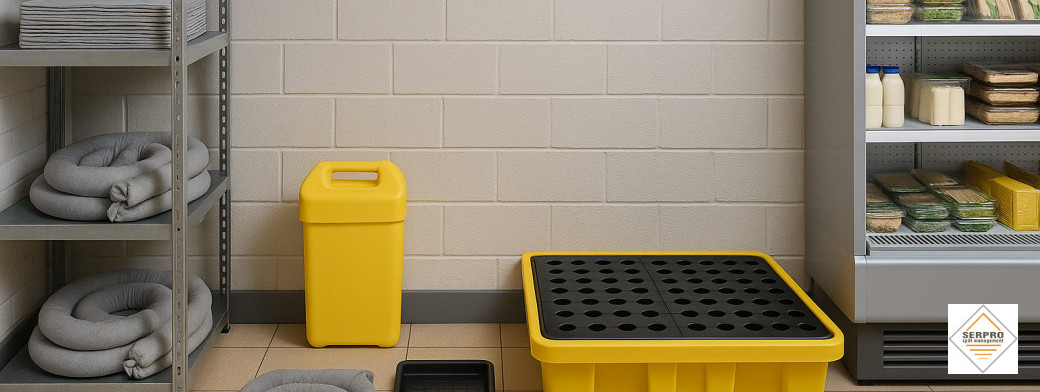
For most back-room areas, the essentials are absorbent pads, drip trays and a small spill kit. Each serves a different purpose: pads deal with fresh spills quickly, trays catch drips before they reach the floor, and kits bring together the basic items needed for a safe first response. Where different liquids are stored, it also helps to match products to the likely hazard and keep them clearly labelled for easy use.
Recommended spill control products
- Absorbent pads – Useful for wiping up and lifting small spills of oils, syrups, water-based liquids and cleaning products from smooth back-room floors. Pads are quick to grab, easy to place directly over a spill and practical for routine housekeeping around shelves, fridges and decanting areas.
- Drip trays – Best placed under containers, taps, pumps, drums or bottles that may leak slowly over time. A tray helps contain drips at source, protects the floor beneath stored liquids and reduces the chance of unnoticed contamination building up under racking or worktables.
- Small spill kits – A compact kit gives staff a ready-made response point for minor incidents. It will typically include absorbent materials, disposal bags and gloves, allowing a spill to be contained, cleaned and bagged without staff searching different cupboards for supplies.
- Absorbent socks – Helpful for surrounding a spill, blocking it from spreading under shelving, and guiding liquid away from doorways or sensitive areas. They are especially useful where uneven floors or crowded storage layouts make spills harder to control.
- Gloves and disposal bags – These support safer clean-up and help staff separate used absorbents from general waste where needed, particularly if the spill involves cleaning chemicals or contaminated liquid.
Keep these items visible, labelled and close to the risk point rather than in a distant office. That practical approach supports the wider slip-prevention principles set out by the HSE for retail and helps small stores respond quickly before a minor leak becomes a larger housekeeping problem.
Who Should Be Responsible for Spill Response?
Spill response should never sit with one person alone. In a small food retail setting, responsibility is shared: managers set the procedure, supervisors coordinate the response, and all staff are expected to spot, report and deal with minor spills safely within their training. This matters in back-room areas, where oils, syrups, cleaning liquids and leaking deliveries can quickly create slip risks, contaminate stock or reach drains if nobody acts promptly.
In practice, the most effective approach is to name key people for each shift while making spill awareness part of everyone’s job. A duty manager or shift lead should usually take overall control, check whether the spill involves food products, oils or cleaning chemicals, and decide whether a small spill kit, absorbent pads, socks or drain protection is needed. Other team members should know how to make the area safe, fetch the correct equipment and keep people away until the floor is clean and dry.
Key roles in a small retailer
- Owner or store manager: sets the spill procedure, provides equipment, and makes sure inspections and restocking happen.
- Duty manager or supervisor: leads the response on shift, assesses the spill and assigns tasks.
- General staff: report spills immediately, isolate the area and handle minor incidents if trained.
- Cleaning or back-room team: carry out clean-up, disposal and final floor checks where this is part of their role.
Training is essential because speed without understanding can make matters worse. Staff should know the difference between a routine food spill and a substance that may require extra controls under COSHH, as well as the basic slip-prevention principles set out in HSE guidance on retail slips and trips. Short refreshers, clear labels at spill stations and practical drills can help teams respond consistently. If training needs tightening up, structured spill response training can help make responsibilities clear across every shift.
How Should Waste from Spills Be Separated and Handled?
Waste from back-room spills should be separated by what has been spilled and what the absorbent has come into contact with. In small food retail settings, that usually means keeping recoverable food waste apart from used pads, rolls, socks, gloves and other materials that have absorbed oil, syrup, cleaning chemicals or mixed residues. Once an absorbent is contaminated, it should not go into general food waste or recycling. Clear separation helps reduce cross-contamination, supports safer handling, and makes disposal decisions easier.
As a practical rule, staff should first stop the spread, then sort the waste into labelled bags or containers. Uncontaminated food items that are simply damaged may follow the site’s normal food waste route, but food that has been in contact with floor dirt, cleaning agents, or used absorbents should be treated as contaminated waste and kept separate. This is especially important in stockrooms and prep-adjacent back-room areas, where leaks can quickly mix with packaging debris, broken containers and chemical residues.
Separate food waste from contaminated absorbents
If a spill involves edible liquids such as milk, sauces or syrups, any loose product that can be safely collected without contamination may be handled as food waste. However, absorbent pads, absorbent rolls or granules used to clean it up should go into a separate disposal bag once saturated. The same applies to cardboard, cloths or packaging that has soaked up the spill. Keeping these streams apart avoids sending contaminated materials into the wrong bin and helps maintain cleaner waste storage areas. For wider site routines, it helps to align spill response with your usual waste handling procedures.
Handle hazardous waste carefully
Where the spill includes cleaning products, degreasers or other substances covered by COSHH, treat the used absorbents and PPE as potentially hazardous waste. Store them in sealed, clearly labelled containers or bags, away from drains and food storage, until collection. Do not wash residues into surface water drains, and do not mix chemical spill waste with ordinary refuse. The HSE COSHH guidance and GOV.UK pollution prevention guidance are useful references when deciding how to store and dispose of these materials. If you are unsure, check the product safety data sheet and use a licensed waste contractor where required.
How Can Spill Control Arrangements Be Checked During Routine Inspections?
Spill control arrangements should be checked as part of routine back-room inspections by confirming that equipment is present, easy to reach, suitable for the liquids stored on site, and in good condition. For small food retailers, regular checks help reduce slip risks, support cleaner housekeeping, and make sure staff can deal with oils, syrups, cleaning products and other leaks before they spread. Inspections also show whether spill response arrangements still match current stock, storage layouts and working practices.
In practice, this means looking beyond whether a spill kit simply exists. Inspectors should check that absorbent pads, rolls, socks, drip trays, gloves, disposal bags and any drain protection are stored where spills are most likely to happen, such as near shelving, decanting points, chillers, cleaning cupboards and bin-store doors. The HSE’s retail guidance on slips and trips and general workplace slip prevention advice both support regular attention to contamination, cleaning and floor safety.
Routine inspection checklist
- Check spill kits are clearly labelled and not blocked by stock, cages or waste.
- Confirm the right absorbents are available for the liquids on site, such as general purpose, oil-only or chemical absorbents where needed.
- Inspect absorbent pads, rolls and socks for damage, damp storage or missing contents.
- Make sure drip trays are positioned under known leak points and are not already overfilled.
- Check gloves, disposal bags and simple instructions are included and usable.
- Confirm any drain covers or drain protection can be accessed quickly if a spill could reach a drain.
- Review whether staff know who responds, how to isolate the area and how contaminated waste is separated from food waste.
- Record findings and actions, using a simple schedule such as a routine inspection checklist.
Why maintenance matters
Maintaining spill control equipment is as important as providing it. A half-empty kit, saturated absorbents or a cracked drip tray can delay response and allow a minor leak to become a slip incident or a pollution problem. Regular inspections should therefore trigger restocking, replacement and updates to local procedures. Where cleaning chemicals are stored, checks should also align with your wider COSHH arrangements, and where liquids could escape outdoors or enter drains, teams should consider the pollution prevention principles set out on GOV.UK.
Conclusion: The Importance of Proactive Spill Control
For small food retailers, proactive spill control is a practical part of keeping back-room areas safe, organised and fit for daily use. Oils, syrups, cleaning liquids and leaking waste can quickly turn a stockroom, prep area or bin store into a slip risk if they are not managed early. As covered throughout this article, the most effective approach is not to wait for a larger incident, but to reduce the chance of spills spreading in the first place through good housekeeping, sensible storage, clear routines and the right spill-response materials kept close to where they are needed.
Simple measures make a real difference: using absorbent pads, rolls or socks for fast containment, placing drip trays under likely leak points, protecting drains where pollution could occur, and separating contaminated absorbents from normal food waste. Small teams also benefit from clear labelling, colour-coded checks and straightforward staff instructions so that everyone knows what to do when a spill happens. This supports the wider principles set out in HSE guidance on slips and trips in retail, broader workplace slip prevention, and COSHH where cleaning products or other substances may be involved.
The key message is consistency. A modest but well-planned setup is often more useful than an overcomplicated one that staff do not use properly. Review your back-room risk points, keep suitable supplies accessible, inspect storage and waste areas regularly, and refresh procedures as stock lines or layouts change. If you need a starting point for improving your setup, explore practical spill control options and build them into everyday routines. Proactive spill control helps protect staff, reduces disruption and supports a cleaner, safer retail environment.