
Last reviewed: 13 November 2026
A film or television set might contain a temporary power compound, scenic workshop, vehicle unit, catering tents and a constantly changing crew. Diesel, hydraulic oil, paint, adhesives and cleaning chemicals can appear in the same production, yet they call for different controls. The location team needs a simple plan agreed before filming starts.
Assess locations as they change
Walk the site before generators, access platforms or fuel stores arrive. Identify slopes, soft ground, nearby water, public areas and drainage. Assign responsibility for each contractor’s equipment and confirm who can stop work. Temporary locations should not be assumed to have the containment or drainage found at a permanent industrial site.
Keep supplies with the work
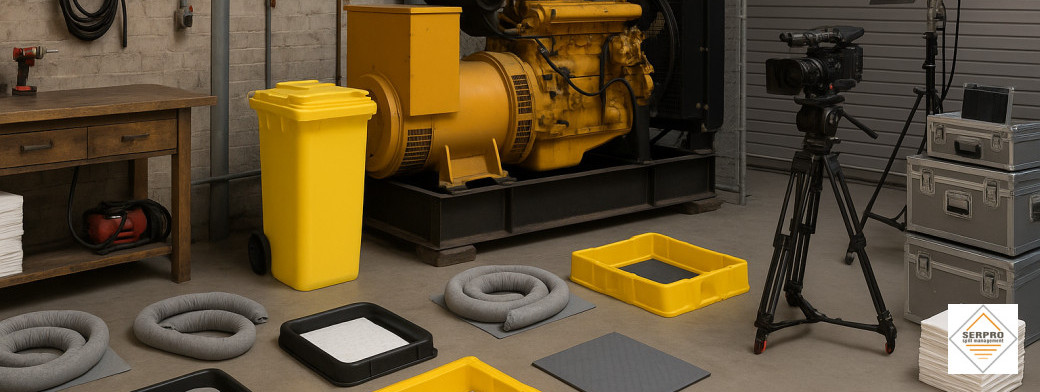
Use correctly sized drip trays under predictable generator and plant drips. Keep spill kits supplies close to service areas and select oil-only absorbents for known hydrocarbons, or compatible chemical absorbents where risk assessments identify other liquids. Prevent wind from blowing loose absorbents across the set. Paint, thinners and resins may introduce flammability or reaction hazards; review safety data sheets under HSE COSHH guidance.
Generators and refuelling operations need fire precautions as well as ground protection. If there are strong vapours, uncontrolled release or ignition concerns, halt work and use the production’s emergency arrangements rather than continuing with routine absorbent clean-up.
Make the response visible to a temporary crew
- Tell department heads who reports and manages a spill.
- Mark drains and prevent washing contaminated liquids into them.
- Set aside secure containers for used absorbents and waste fluids.
- Check temporary work areas at wrap and before handover.
- Include significant incidents in the production’s wider emergency plan.
The HSE event emergency planning guidance is a useful reference for event-style emergency arrangements. For locations in England, the Environment Agency pollution-prevention guidance (England) explains wider environmental duties. A well-positioned kit is valuable only when people know when it is safe to use it.