
Published: 13 August 2026
Last updated: 21 June 2026
Why is Spill Control Essential in Construction Site Welfare Units?
Spill control is essential in construction site welfare units because these cabins and facilities support everyday site activities while concentrating several common spill risks in a small area. Welfare units are the toilets, canteens, drying rooms, wash stations, offices and rest areas used by workers on site, and they often contain or sit beside liquids such as cleaning chemicals, hand soap, wastewater, paints, fuels, oils and diesel for heaters or generators. Even minor leaks can create slip hazards, contaminate unmade ground or drains, and disrupt safe working, so practical controls such as absorbent pads, absorbent rolls, socks, drain protection and drip trays should be part of routine housekeeping. In the UK, spill planning should also reflect duties under environmental and workplace safety guidance, including pollution prevention guidance for businesses and HSE advice on slips and trips.
In simple terms, welfare units need spill control because they combine frequent foot traffic with stored liquids, temporary services and changing ground conditions. A small detergent splash near a sink, a leaking diesel can beside a generator, or a dripping waste container outside a cabin can quickly become a safety and environmental issue if it is not contained and cleaned promptly.
What types of spills are most common?
Typical spills in and around welfare units include cleaning fluids, disinfectants, bleach-based products, handwash liquids, tea and food preparation waste, paint residues, oils, lubricants and diesel from bowsers, cans or portable equipment. Water leaks also matter: although less polluting, they can still cause slips, soften surfaces and spread contamination across floors or access steps.
Why do products and procedures matter?
Different liquids need different responses. General purpose absorbents may suit mixed housekeeping spills, oil-only absorbents can help with hydrocarbons, and chemical absorbents may be more suitable for aggressive cleaning products. Drip trays under containers, clear spill station labelling, gloves, disposal bags and simple reporting routes help staff respond quickly without assuming one product alone makes a site compliant.
What are the main UK compliance considerations?
For UK sites, the key point is prevention as well as response: keep liquids stored securely, protect drains, inspect welfare areas regularly and separate waste for safe disposal. Site managers should align local procedures with environmental protection expectations and HSE housekeeping standards so spills are controlled before they harm people, surfaces or the surrounding ground.
What Types of Liquids Are Commonly Spilled in Welfare Units?
Common spills in construction site welfare units usually involve cleaning chemicals, fuels, oils, handwash liquids and wastewater from everyday use. Although many incidents are small, these liquids can still create slip risks, skin or eye irritation, fire concerns, and pollution if they reach drains or unmade ground. Keeping suitable small spill kits nearby helps teams deal with minor releases quickly and reduce the chance of wider contamination.
In practice, the liquids most often spilled are those handled routinely during cleaning, refuelling, maintenance and welfare use. The exact hazard depends on the substance, where it is spilled, and whether it can spread into walkways, soil or surface water. UK guidance on pollution prevention for businesses and HSE advice on slips and trips both underline the need to control contamination promptly.
- Cleaning chemicals such as bleach, detergents, descalers and disinfectants can irritate skin, eyes and airways, and some may react with other products if mixed.
- Fuels including diesel and petrol from cans or portable generators present fire risks, give off vapours, and can pollute soil and drains.
- Oils and lubricants from generators, plant or stored containers can make floors dangerously slippery and are harmful to the environment. For these releases, oil-only absorbents are often appropriate.
- Hand soap, sanitiser and washroom liquids may seem low risk, but they still create slip hazards on vinyl floors and steps.
- Wastewater from sinks, cleaning buckets or leaks may contain dirt, detergents or trace contaminants that should not be allowed to enter surface drains unchecked.
Where Do Spills Typically Occur in Welfare Cabins?
Spills in welfare cabins most often occur at handwash points, around portable generators or fuel storage, and in cupboards or shelving used for cleaning products and site consumables. These areas combine regular handling, confined layouts and frequent foot traffic, so even small leaks can quickly become slip hazards or spread towards thresholds, drains or unmade ground if they are not contained promptly.
In practice, the main causes are simple: overfilled containers, poor housekeeping, uneven surfaces, rushed refuelling, damaged caps, and liquids being stored or used without suitable secondary containment. UK guidance on preventing pollution and keeping floors safe supports a preventative approach, including keeping liquids controlled at source and stopping contamination from reaching drainage routes or surrounding ground.
Common spill points inside and around welfare units
Handwash and sink areas are a frequent source of water, soap and cleaning fluid spills. Splashes from basins, dripping dispensers and wet hands moving across the cabin can leave floors slippery, especially where there is limited matting or cleaning between breaks. In these spots, absorbent rolls can help manage minor recurring drips during cleaning and maintenance.
Generator positions and fuel handling areas are another common risk point, particularly where diesel cans are moved in and out or where refuelling takes place on uneven ground. Small overpours, leaking nozzles and residue on container sides can create repeated contamination. If there is any chance of liquid moving towards surface water drainage, keeping drain covers nearby is a sensible precaution.
Storage areas for detergents, disinfectants, oils and other liquids also see spills when bottles are stacked badly, lids loosen in transit, or products are mixed together without clear segregation. According to HSE guidance on slips and trips and GOV.UK pollution prevention guidance, tidy storage, prompt clean-up and protecting drains are key controls.
What Spill Control Measures Should Be Implemented?
Construction site welfare units should have simple, visible spill control measures in place wherever liquids are stored, used or moved. In practice, that means keeping spill kits, absorbents and containment products close to likely spill points such as generators, fuel cans, cleaning cupboards, sink areas and waste storage. The aim is to deal with small leaks quickly, reduce slip risks, and stop oil, chemicals or dirty wash water reaching drains or unmade ground, in line with UK pollution prevention and housekeeping guidance from GOV.UK and HSE.
A good setup starts with matching the control measure to the liquid and location. General purpose absorbents may suit handwash areas and cleaning products, while oil-only materials are better near diesel or generator servicing points. Spill response equipment should be easy to find, clearly labelled and checked as part of routine site inspections, so staff can respond before a minor leak becomes a wider contamination problem.
Keep spill response materials nearby
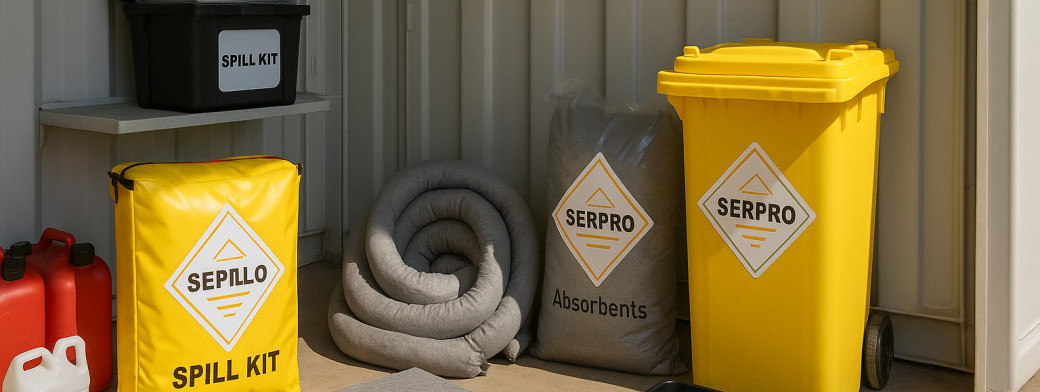
Small spill kits should be positioned inside or immediately beside welfare units, not stored in a distant compound. Kits are most useful when they include absorbent pads, rolls, gloves and waste handling items for quick first response. Where liquids could travel across thresholds or toward doorways, absorbent socks can be used to contain the spread and protect nearby drains or edges of hardstanding. Used absorbents and contaminated clean-up materials should then be placed into suitable disposal bags for segregation and safe handling.
Use drip trays to prevent spills before they spread
Drip trays are a straightforward preventive measure and should be placed under fuel cans, small chemical containers, portable generators and any item prone to drips during storage or refilling. Their role is to catch minor leaks, splashes and residues before they reach the floor, create slip hazards or soak into the ground. This is especially useful around temporary welfare setups, where uneven surfaces and frequent movement can increase the chance of small spills.
Support spill control with inspection and housekeeping
Spill measures work best when backed by regular checks. Inspect trays for collected liquid, replace used absorbents promptly, and make sure walkways, drains and wash areas stay clear. The Yellow Fish guidance is a useful reminder that anything entering a surface water drain can pollute the wider environment.
Who Should Be Responsible for Spill Response?
Spill response in construction site welfare units should be a shared responsibility, led by site management but understood by everyone on site. In practice, the site manager or supervisor should set the procedure, assign reporting lines and make sure suitable equipment is available, while workers, cleaners, delivery drivers and subcontractors should know how to spot a spill, make the area safe and report it immediately. A fast response matters because even small leaks from cleaning products, handwash supplies, diesel cans or generator areas can create slip risks and increase the chance of pollution.
The site manager is usually responsible for planning: deciding where spill kits, drip trays and drain protection should be placed, checking stocks, and making sure waste is handled correctly after a clean-up. Clear identification of equipment also helps, so staff can find what they need quickly; this is where spill station labelling is useful. Supervisors should also confirm which materials are suitable for likely spills, such as general purpose absorbents for everyday water-based liquids and mixed housekeeping spills.
Workers and other site users should not be expected to improvise. They need simple training on what to do first: stop the source if safe, protect nearby drains or bare ground, use the correct absorbents, and report the incident through the site’s procedure. This supports wider UK good practice on pollution prevention from GOV.UK and helps reduce contamination-related slip hazards highlighted by the HSE.
In short, one person should lead, but everyone should be aware. Welfare-unit spill control works best when responsibilities are clear, equipment is easy to identify, and all staff receive basic spill-response training as part of routine site induction.
How Should Waste from Spills Be Handled?
Waste from spills in construction site welfare units should be treated promptly, separated by type, and placed in suitable bags or containers before disposal. Used pads, granules, cloths, gloves and other materials may contain oil, fuel, cleaning chemicals or mixed liquids, so they should not be swept into general rubbish without checking what has been absorbed. The aim is to prevent leaks, avoid cross-contamination and reduce the risk of pollution around cabins, generators, wash areas and nearby drains.
As a rule, keep contaminated waste separate from ordinary site waste and label it clearly. Oil-contaminated absorbents should be kept apart from chemical spill residues, while mixed or unidentified waste should be isolated until a supervisor or waste contractor confirms the correct route. Using the right chemical absorbents in the first place can also make segregation easier, because the response materials are matched to the liquid involved.
Separate contaminated materials properly
After a spill is contained and cleaned, place used absorbents, disposable PPE and any heavily soiled items into appropriate disposal bags or lidded containers. Double-bagging may be sensible for wet or strongly contaminated waste. Free liquid should not be left in bags that can tear or leak; where necessary, use sealed containers suitable for the waste type. Keep waste away from drains and unmade ground, in line with UK pollution prevention guidance.
Use suitable bags and containers
Appropriate disposal bags and containers matter because they help prevent secondary spills during handling, storage and collection. Choose robust, clearly marked containers that can be closed securely and stored in a designated area until removal. If the spill involved hazardous substances, disposal should follow the site’s COSHH arrangements and waste procedures. A simple rule for welfare units is this: contain, separate, label and store safely until the waste can be collected through the correct disposal route.
How Can Routine Inspections Enhance Spill Preparedness?
Routine inspections improve spill preparedness by showing whether controls are actually in place, usable and understood before a leak or splash happens. In construction site welfare units, regular checks help confirm that spill kits, drip trays, absorbent materials and drain protection are positioned where small spills are most likely, while also supporting cleaner floors and safer housekeeping.
They also help sites stay consistent with UK good practice on pollution prevention and slip risk management. A quick inspection can identify missing pads, damaged containers, overfilled waste bags, blocked access to spill stations or liquids being stored too close to drains or unmade ground, all of which can increase the chance of pollution or injury. Relevant guidance from GOV.UK and HSE supports this practical, preventative approach.
Inspection Checklist for Spill Control Measures
- Check small spill kits are present, clearly labelled and easy to reach.
- Confirm absorbent pads, rolls and socks are dry, intact and suitable for the liquids kept nearby.
- Inspect drip trays under fuel cans, cleaning products, generators or other liquid containers.
- Make sure drain covers or other drain protection can be deployed quickly if needed.
- Look for leaks, staining, damaged caps, poor decanting practices or containers stored on uneven ground.
- Check gloves, disposal bags and basic instructions are included at the spill station.
- Verify waste from previous spills has been removed and separated appropriately.
Why Documentation Matters
Documenting findings and actions taken turns inspections into evidence of control rather than a box-ticking exercise. Records show what was checked, what defects were found, who corrected them and when replenishment or training was completed. This helps managers spot recurring issues, prove follow-up action and demonstrate a more reliable approach to spill preparedness and compliance during internal reviews or client audits.