
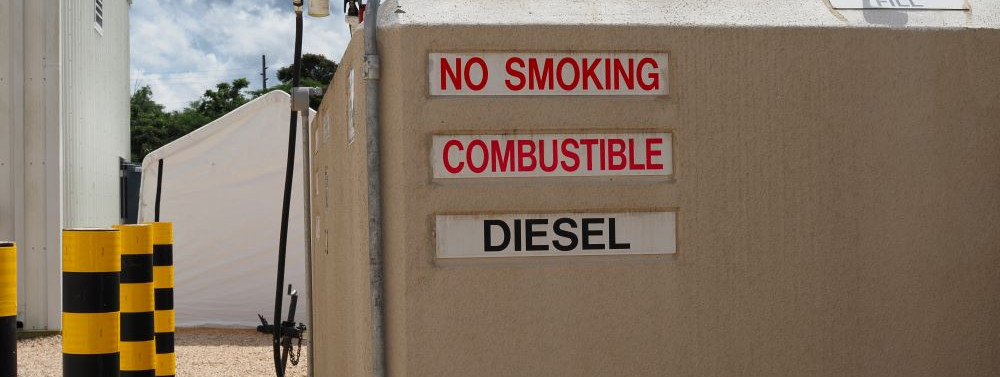
Above-Ground Oil Storage Rules in the UK (GPP2 Guide)
Last reviewed: 12 November 2026
If you store diesel, heating oil, lubricants or other oils in an above-ground tank, a leak could become an expensive problem surprisingly quickly. Oil can travel across a yard, enter a surface water drain or soak into the ground long before anyone notices. Good tank design, suitable secondary containment and regular checks help prevent that happening.
Guidance for Pollution Prevention 2 (GPP2): Above Ground Oil Storage Tanks explains good practice for reducing these risks. It is particularly relevant in Scotland, Wales and Northern Ireland. It is important, however, to distinguish guidance from law: GPP2 offers practical advice, while the precise legal requirements depend on where the oil is stored and how the site is used.
Which oil storage rules apply where?
There is no single set of above-ground oil storage rules covering every tank in the UK. The relevant regulations also differ for businesses, farms and domestic properties, and other requirements may apply to particular installations.
- England: The oil storage rules generally apply to qualifying business and public-sector containers with a capacity of more than 200 litres. Domestic installations have separate building-regulation requirements, with additional oil storage rules applying to larger containers. See the GOV.UK oil storage guidance.
- Wales: The Control of Pollution (Oil Storage) (Wales) Regulations 2016 set standards for qualifying storage, generally involving containers above 200 litres, with provisions also covering certain domestic installations. See the Welsh Government guidance.
- Scotland: Oil storage is regulated through SEPA's environmental authorisation framework, including General Binding Rules for different storage activities. Requirements can apply even to some containers below 200 litres. See SEPA's current oil storage guidance.
- Northern Ireland: The Control of Pollution (Oil Storage) Regulations (Northern Ireland) 2010, as amended, cover qualifying above-ground oil storage on commercial and other sites, generally where containers exceed 200 litres, with separate provisions for larger domestic tanks. See DAERA's oil storage guidance.
These are starting points, not a complete statement of every exemption or technical requirement. Check the rules that apply to your particular site before installing, altering or replacing a tank.
Why the position of an oil tank matters
A tank should be installed where it is unlikely to be struck by vehicles or machinery, and where any leak can be contained rather than reaching a drain or watercourse. An otherwise sound tank can still become a pollution risk if it is badly positioned.
Distance from water is particularly important. Locations within 10 metres of a watercourse or 50 metres of a well or borehole are often treated as higher risk in oil storage guidance, but these distances are not a universal permission to install a tank outside them. Drainage, ground conditions, flood risk and the applicable national rules must also be considered.
Before installing a tank, look at where an oil leak would actually travel. A surface water drain a few metres downhill may be a greater immediate risk than a watercourse further away.
Bunds and secondary containment: what capacity is needed?
A bund is a secondary containment system that catches escaping oil if the primary tank leaks or is overfilled. It might be built around the tank or incorporated into an integrally bunded tank. Suitable drip trays can provide containment for certain smaller storage arrangements where the relevant rules permit them.
For a single tank, a common minimum requirement is secondary containment capable of holding 110% of the tank's storage capacity. For example, a 1,000-litre tank would normally need at least 1,100 litres of effective bund capacity.
Where several containers share a bund, the usual calculation is the greater of 110% of the largest container or 25% of the combined storage capacity, although the exact provisions and any exceptions must be checked against the applicable regulations.
Capacity alone is not enough. Bund walls and floors must be suitable for the oil being stored, remain impermeable, and be maintained so that oil cannot escape through cracks, openings or drainage points. Rainwater collecting in an outdoor bund also reduces the space available to contain a leak and needs to be managed safely.
Installation, inspections and maintenance
Oil tanks, pipework, valves and dispensing points should be installed by competent people and protected from foreseeable damage. It is worth paying particular attention to filling connections and delivery areas: these are places where a spill can happen even when the tank itself is in good condition.
Regular checks should look for signs of deterioration, damage, corrosion, leaks, loose connections or oil collecting in the bund. Inspect the tank and accessible fittings before deliveries, and arrange periodic professional inspections appropriate to the installation and applicable guidance.
If a tank is taken out of service, arrange for it and any remaining oil or contaminated materials to be dealt with safely by competent contractors. A tank that appears empty may still contain residues capable of causing pollution.
Preparing for an oil spill
Even well-maintained systems can fail. An oil spill response plan should make it clear who to contact, how to raise the alarm, where drains are located and what staff can safely do to limit the spread of a spill.
For small, manageable spills, suitable oil-only absorbent pads, socks and booms can help contain and collect oil. Drain protection products may also help prevent contamination reaching surface water systems. Keep this equipment accessible near storage and transfer areas, and make sure staff understand its limitations.
Do not put staff at risk by asking them to tackle a large spill, a fire risk or an unknown substance. Where there is an immediate danger, isolate the area and call the emergency services as appropriate. If oil has entered, or may enter, land, drainage or water, seek prompt advice from the relevant environmental regulator and follow the site's reporting procedures.
Used absorbents and recovered oil must be assessed and disposed of correctly. Do not assume an absorbent can go into ordinary waste simply because the spill was small.
Practical steps to reduce oil storage risks
- Check which national regulations and site-specific requirements apply.
- Confirm the tank and its bund are suitable for the oil and the full storage capacity.
- Inspect tanks, pipework, valves and bunds regularly, especially around deliveries.
- Protect the storage area from vehicle impact and unauthorised interference.
- Keep suitable spill response equipment close to likely spill points.
- Train relevant staff and review the spill response plan when the site changes.
Where to find the full guidance
This article is an introduction, not a substitute for the regulations or technical guidance applicable to your site. The NetRegs oil storage resources include a reference to GPP2: Above Ground Oil Storage Tanks and related pollution-prevention publications.
If you are choosing bunds, drip trays or oil spill absorbents, SERPRO can help you compare practical containment products. The person responsible for the site should still confirm that the overall storage installation meets the relevant legal and technical requirements.
Editorial note: Guidance and legislation may change. The review date above records when this article was checked; always consult the latest information from the relevant regulator before relying on it for compliance decisions.