
Last reviewed: 13 November 2026
Aerospace maintenance, repair and overhaul stores may hold greases, lubricants, hydraulic fluids, adhesives, paints, cleaning solvents and other specialist materials. A spill can affect worker safety, inventory traceability and the suitability of materials for aircraft maintenance. Response arrangements should therefore join up engineering stores, safety and quality control.
Separate incompatible products and protect stock
Inspect chemical cabinets, dispensing benches, incoming goods, drums and waste-transfer points. Store products within their specified conditions and follow the manufacturer’s shelf-life and packaging instructions. A leaking container may contaminate other stock even when the floor looks clean.
Identify any affected parts, consumables and packaging under the organisation’s quality system. Do not return materials to service solely because the visible spill has been absorbed.
Make spill response chemical-specific
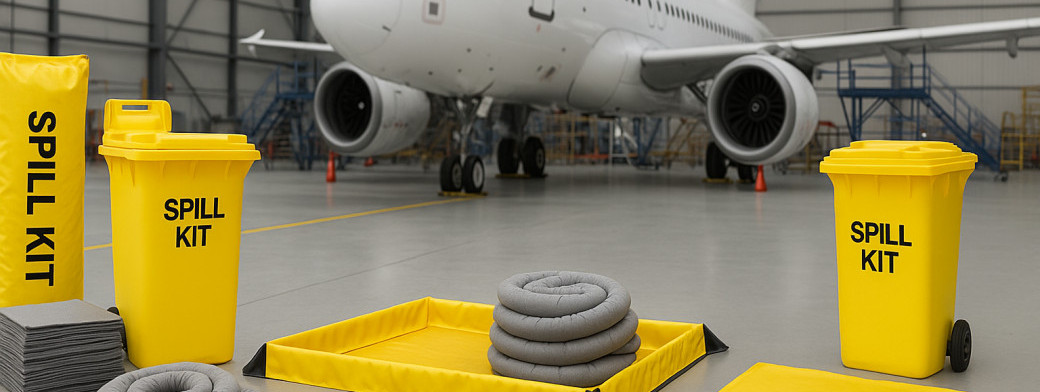
Use compatible drip trays for identified low-volume drips and correctly designed containment for stored bulk liquids. spill kits and chemical absorbents may support small, known spills, but only after safety data sheets and the site assessment establish suitability. oil-only absorbents can be useful for certain hydrocarbon lubricants but not for every aviation hydraulic fluid or solvent.
Flammable products, reactive adhesives and unknown chemicals may require evacuation, ignition control or specialist response. Storage and transfer arrangements should address HSE guidance on DSEAR and HSE COSHH guidance where applicable.
Control waste and maintain records
- Record the product identifier, batch or lot where relevant and the location of the leak.
- Quarantine affected inventory for competent quality assessment.
- Keep recovered solvents and chemical-contaminated absorbents in appropriate waste streams.
- Confirm spill kits are ready at goods-in, stores and dispensing areas.
- Include contractor and shift handover requirements in procedures.
HSE provides guidance on HSE guidance on DSEAR and HSE COSHH guidance. Aviation safety and maintenance approval arrangements must also be followed; a generic spill-control guide cannot replace the organisation’s approved technical procedures.