
Last reviewed: 13 November 2026
Council depots and fleet yards often combine diesel storage, vehicle servicing, gritting equipment, wash bays and outdoor drainage. The main challenge is that a leak can start in one area and reach a public surface-water system before anyone notices.
Find the risks along a normal depot working day
Walk through fuel deliveries, vehicle refuelling, workshop servicing, overnight parking and pressure washing. Pay attention to pump connections, oil stores, hydraulic equipment and vehicles returning with damaged hoses. Waste oil and recovered fluids need safe storage as well as a planned collection route.
AdBlue is a water-based urea solution, not an oil. Oil-only pads are therefore not automatically suitable. Check product information before selecting absorbents for AdBlue, coolant or other mixed workshop fluids.
Use the right protection at storage and transfer points
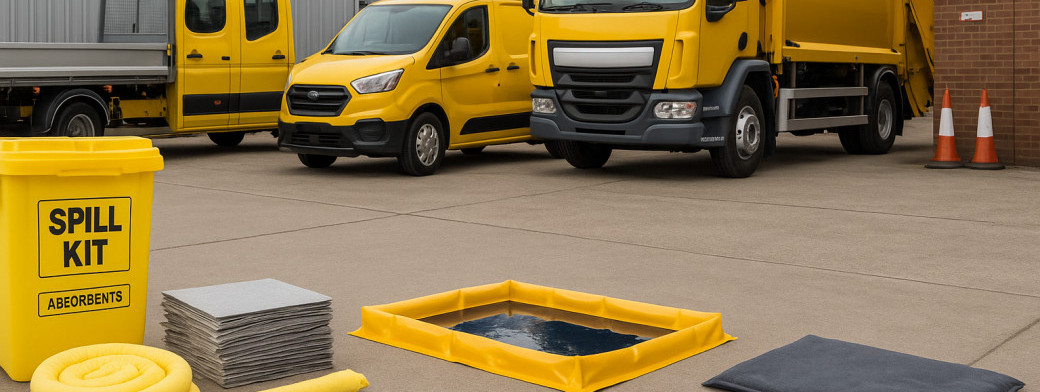
Keep fuel and oil containers protected from impact and provide suitable secondary containment where required. drip trays can catch small stationary drips but cannot replace a compliant bulk oil-storage arrangement. spill kits and drain covers should be available near credible minor spill risks.
A ruptured hose or active fuel release may present fire and traffic hazards; isolate the area and use the depot emergency procedure. Site responders should know which gullies discharge to surface water and which lead to a controlled system.
Inspect and document the arrangements
- Check bowsers, storage valves and fuel hose condition.
- Keep yard drains identified and free of obstructing waste.
- Inspect spill kits after use and replenish materials.
- Separate oily waste, recovered coolant and other contaminants according to their classification.
- Include contractors and visiting drivers in the reporting procedure.
Oil-storage requirements differ by substance, container, use and UK nation. Check GOV.UK oil storage guidance and GOV.UK pollution prevention guidance for England for relevant England-focused obligations and refer to HSE guidance on slips and trips for preventing slips in service areas.